
 E-Paper



Presidential polls explainer: How is a president elected?
Presidential polls: The president is elected indirectly by an electoral college comprising the members of parliament of both the Lok Sabha and the Rajya Sabha, and the members of legislative assemblies of all states as well as the national capital territory of Delhi and union territory of Puducherry.

 Prefer HTon Google


India is electing its 15th president on Monday, with National Democratic Alliance candidate Droupadi Murmu squaring off against opposition's joint nominee Yashwant Sinha.
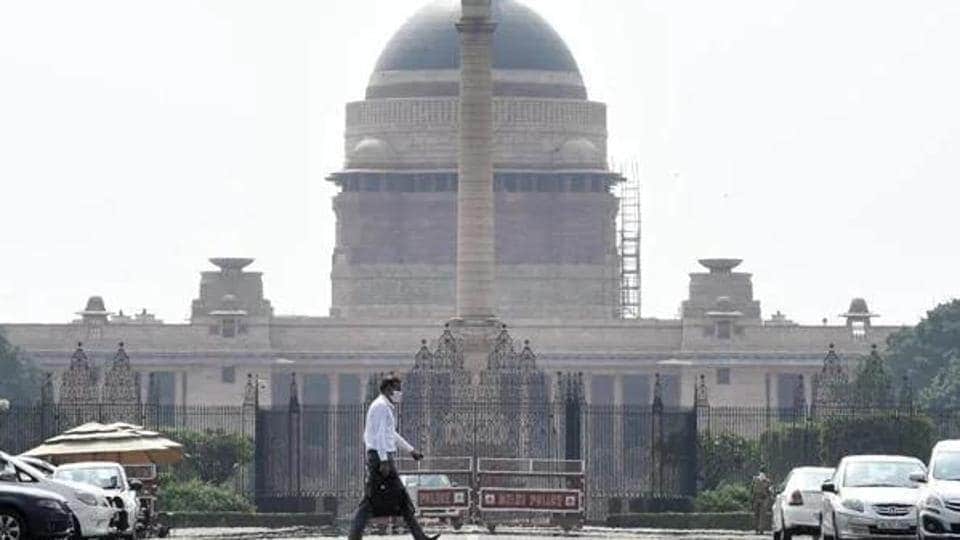
Unlike the Lok Sabha or Assembly elections where the citizens pick their representatives, the president of India is elected indirectly. In fact, the MPs and MLAs elected by the people in turn vote for their presidential candidates.
Let us explain the entire process of electing the president of India in ten points.
1. The president of India is elected indirectly by an electoral college comprising the members of parliament of both the Lok Sabha and the Rajya Sabha, and the members of legislative assemblies of all states as well as the national capital territory of Delhi and union territory of Puducherry. Under Article 324 of the constitution, the Election Commission of India has the authority to conduct the presidential elections. The electoral college has 776 members of parliament and 4,033 members of legislative assemblies with a total of 4,809 votes.
2. The voting for the presidential elections is taken place at a room in the Parliament and a room in all state legislative assembly secretariats.
3. The value of votes of the electors is based on the population of the states. It is calculated by dividing the population of the state by total number of elected members of the Assembly, and then to divide the quotient by 1,000.
ALSO READ: Here's a list of 14 presidents of India
4. The total value of all the members of each state assembly is worked out by multiplying the number of elective seats in the house by the number of votes for each member.
5. The total value of votes of all the states added together is divided by the total number of elected members of Parliament (Lok Sabha and Rajya Sabha) to get the value of votes of each MP.
6. The value of votes of MLAs differs from state to state. The value of the MPs is the same.
7. As the presidential election is held as per the system of proportional representation by means of single transferable vote, every elector has as many preferences as the candidates contesting the elections. The winning candidate has to secure the required quota of votes to be declared elected, i.e., 50% of valid votes polled +1.
8. The combined value of votes of state legislators is 5,43,231 and that of MPs is 5,43,200, hence the total number of votes is 10,86,431.
9. Since the anti-defection law is not applicable in the presidential election, the electors are not bound to vote along party lines.
10. The Election Commission will also provide a special pen to the electors for voting.


