
 E-Paper



After unity pitch in US, RSS chief praises India's asylum policy in Canada: 'Came as aggressors, but still thrive'
The RSS chief Mohan Bhagwat said if someone was persecuted anywhere in the world, the person was given asylum by India.

 Prefer HTon Google


Rashtriya Swayamsevak Sangh (RSS) chief Mohan Bhagwat, who was in Toronto for an event of the Hindu community, said India has always offered asylum to outsiders, even after they came as "aggressors". The RSS ideologue said Hindus respect and accept all religions and that's why even those who came as aggressors "thrive" today. He went on to say that India is home to Muslims, Christians, Jews and Parsis.
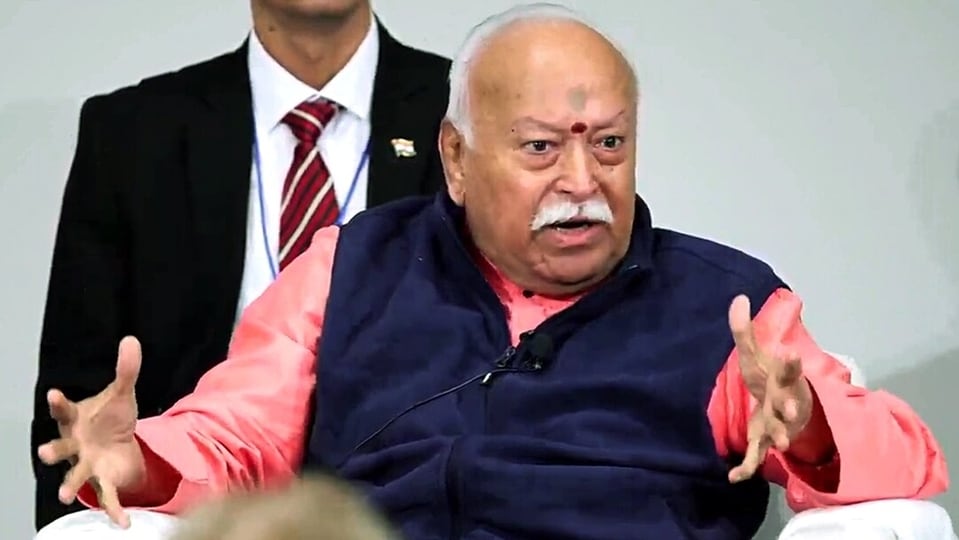
"Many came to Bharat from outside as aggressors, but they still thrive there, with all their specialties intact. They are now Bharatiya citizens. Muslims are there, Christians are there. Jews are there in small numbers because many migrated from Israel. Parsis are there. Many people come to Bharat for asylum," said Bhagwat.
Deep Dive

The RSS leader said if someone was persecuted anywhere in the world, the person was given asylum by India.
Addressing the 'Hindu Vishwa Bandhu - Embrace the World in Friendship' event, the RSS chief also hailed India's rise over the years as "Vishwaguru", a title often used by Prime Minister Narendra Modi to describe the country.
"One may call Bharat a superpower, but it was not one. It served the world and by its own character, it became 'Vishwaguru', not Mahashakti," he said.
RSS Chief Mohan Bhagwat highlighted the idea of Vasudhaiva Kutumbakam, or the belief that the entire world is one family. "While individuals in the material world may differ in body, shape, and complexion, in essence, we are all one. Therefore, serving others is our duty. We have gained this wisdom, which brings us enduring happiness and lasting contentment," he said.
ALSO READ: 'They should listen to Mohan Bhagwat’: CJP's Abhijeet Dipke says BJP in power because of RSS
Bhagwat also emphasised what he described as Bharat’s tradition of extending help to those in need, saying the country has historically offered assistance whenever called upon, and even without being asked.
He linked this outlook to the broader Hindu philosophy of recognising unity amid diversity and considering both living and non-living beings as part of a shared existence. He argued that diversity does not undermine unity in India; rather, the country’s traditions view diversity itself as an expression of underlying unity.
"This is our tradition, the DNA of Bharat. That is why you may have heard the saying—'If Hindus awaken, the world awakens'. They regard both the animate and the inanimate as their own. They have been taught to see unity in diversity. That is why diversity never poses a problem for unity in India; our tradition teaches us that not only is there unity in diversity, but diversity itself is a form of unity," said Bhagwat.
Prime Minister Modi is also expected to visit Canada this year. The event erupted with chants of "Modi, Modi" after former Canadian defence minister and former premier of Alberta, Jason Kenney hailed “renewed momentum” in the Canada-India relationship and said it will further be represented by the second visit of Prime Minister Modi to Canada later this year.


