
 E-Paper



Supreme Court dismisses PIL challenging key provisions of SC/ST Atrocities Act
The court said safeguards from its 2020 Prathviraj Chauhan ruling and later judgments were sufficient to address concerns over misuse of the law.

 Prefer HTon Google


The Supreme Court on Tuesday dismissed a challenge to the constitutional validity of some key provisions of the Scheduled Castes and the Scheduled Tribes (Prevention of Atrocities) Act, 1989, saying safeguards laid down in its earlier judgments were sufficient to prevent misuse of its stringent arrest provisions.
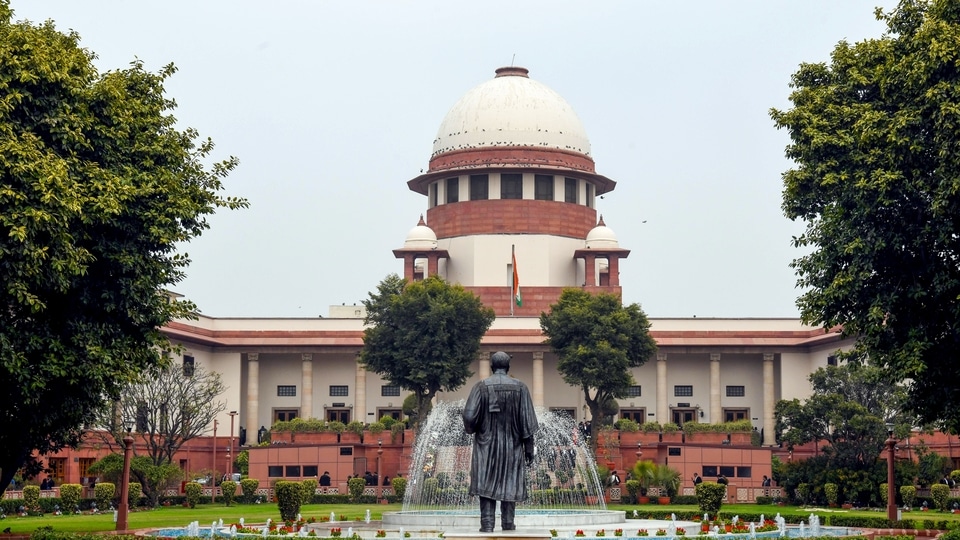
A bench headed by Chief Justice of India (CJI) Surya Kant said a three-judge bench had already laid down safeguards in the Prathviraj Chauhan case in 2020 and declined to entertain the petition filed as a PIL.
Also Read: The structural flaw in the Prevention of Atrocities Act
“Sufficient safeguards have been laid down by a decision of the three-judge bench in Prathviraj Chauhan case (2020). We are not interested in entertaining this petition which is purportedly in public interest,” the bench said. This case had challenged sections 18 and 18A of the Act which denied anticipatory bail and required no prior enquiry to be conducted by the police before registering FIR. This judgment laid down the safeguards that where the complaint under the Act does not make out a prima facie case, in such cases the bar under sections 18 and 18A shall not apply.
The court was hearing a PIL filed by 19 people led by Brijbhushan Saini, who claimed to be victims of allegedly false prosecutions under the Act.
Also Read: Samajwadi Party MP booked under SC/ST Act, files counter-FIR
Advocate Vishnu Shankar Jain, appearing for the petitioners, argued that the 1989 Act, amended in 2015 and again in 2018, contains stringent provisions allowing police to register a case on a complaint without conducting a preliminary inquiry. Section 18A also bars anticipatory bail for a person accused under the law.
“Section 18A of the Act is being widely misused,” Jain said, referring to its impact on Section 35 of the Bharatiya Nagarik Suraksha Sanhita (BNSS), 2023 which allows the police to analyse if a complaint discloses credible information. The provision says “a police officer may arrest a person against whom a reasonable complaint or credible information has been received, or where there is reasonable suspicion that the person has committed a cognisable offence punishable with imprisonment of up to seven years.” The petition said that such an enquiry by police is prohibited by section 18A.
The bench, also comprising Justices Joymalya Bagchi and V Mohana, said, “Instances of misuse can be separately looked into by the court. But that cannot be a ground to doubt the constitutional validity of the Act.”
Also Read: Effective awareness brought down SC/ST (Prevention of Atrocities) Act cases, says TN CM
The bench said the Prathviraj Chauhan judgment had held that in exceptional cases, the constitutional courts can exercise power under the Code of Criminal Procedure (now replaced by BNSS) to quash the cases so as to prevent misuse of provisions of the Act.
It also referred to the Supreme Court’s August 2024 judgment in the Shajan Skaria case, which held that the bar under Section 18 of the 1989 Act (expressly bars the application of anticipatory bail) would apply only where there is prima facie material indicating the commission of an offence.


