
 E-Paper



SC lifts complete ban on development activities within ESZs
The Supreme Court said that the activities within ESZs shall be guided by the Union government’s February 2011 guidelines and the 2022 office memorandum of an expert committee

 Prefer HTon Google


The Supreme Court on Wednesday lifted a complete ban on development activities within eco-sensitive zones (ESZs) of a minimum of one km around protected wildlife sanctuaries, national parks, and forests.
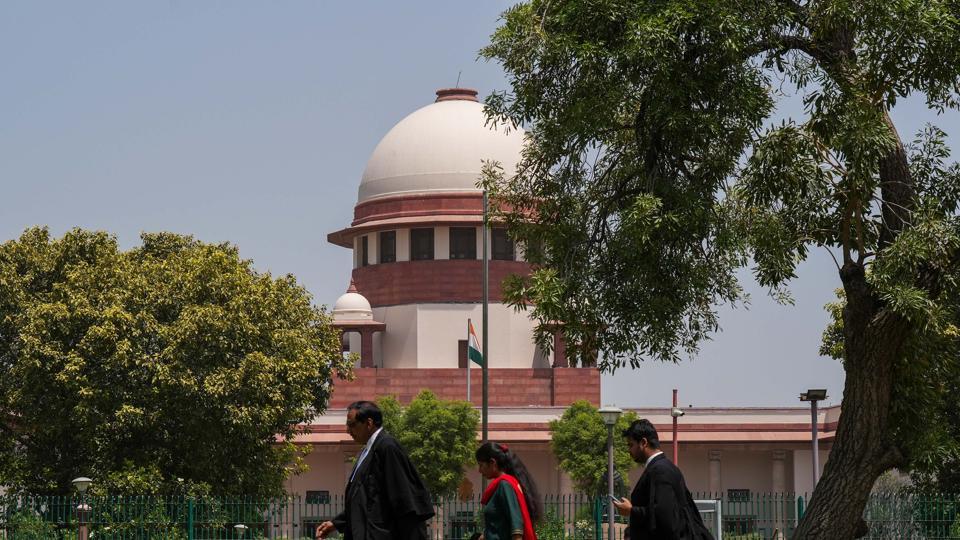
Modifying its June 2022 order, a bench led by Justice BR Gavai said that the activities within ESZs shall be guided by the Union environment, forests and climate change (MoEFCC) ministry’s February 2011 guidelines and the 2022 office memorandum of an expert committee on ESZ.
The bench, which also comprised Justices Vikram Nath and Sanjay Karol, said the 2022 ban will not be applicable to instances where appropriate notifications have been issued by the MoEFCC. The ban will not apply to ESZs that lie on inter-state borders or share common boundaries.
The court clarified that mining within national parks and one km from boundaries shall not be permissible.
It noted that MoEFCC’s February 2011 ESZ guidelines lay down the activities prohibited and those permitted under strict regulation.
The guidelines banned commercial mining in ESZs but allowed eco-tourism, the establishment of hotels and resorts, etc.
In June 2022, the Supreme Court directed all national parks and wildlife sanctuaries falling under protected forests to earmark a minimum distance of one kilometre as ESZ where prohibited activities, including mining and establishment of any new permanent structure, will not be permitted.
In its review plea, the Union government argued millions live in ESZs. It said the court’s directions last year will have ramifications on the lives of local communities living around national parks and sanctuaries, and ecological development works. Several state governments also requested an alteration of the court order.
The Kerala government told the court that forests account for nearly 30% of the state’s area. It cited the state’s population density and added much of its land was occupied and that the court’s order posed practical difficulties for Kerala.
The 2022 order also impacted the Kerala high court building, which is located within 200 metres of the Mangalavanam Bird Sanctuary.
Additional solicitor general Aishwarya Bhati, representing the Union government, submitted before the court that due to the restrictions on construction, the development of schools, hospitals, and dispensaries has suffered. She added the government will follow the 2011 guidelines in terms of the proscribed and permitted activities within the buffer zones.
Advocate K Parmeshwar, who assisted the court as amicus curiae, supported a modification of the June 2022 judgment. He referred to the Scheduled Tribes and Other Traditional Forest Dwellers Act and added it allows forest dwellers to undertake constructions for their basic amenities. “This law becomes otiose due to the ban on construction as most of them live in ESZs,” Parmeshwar said.



