E-Paper



The most innovative countries in the world
Will Donald Trump hurt America’s ranking?


 Prefer HTon Google


HAS PRESIDENT Donald Trump been good for American innovation? His administration has championed cutting-edge industries such as semiconductors and artificial intelligence (“Whoever wins AI, WINS!”). It has presided over an unprecedented data-centre boom, ensuring that the country has more available “compute” than any other. And the Genius Act, passed last year, set the regulatory foundation for stablecoins, digital currencies linked to the dollar. But Mr Trump has also attacked the country’s leading universities, restricted high-skilled immigration and cut funding to public institutions that support research. Academics complain of a “war on science”.
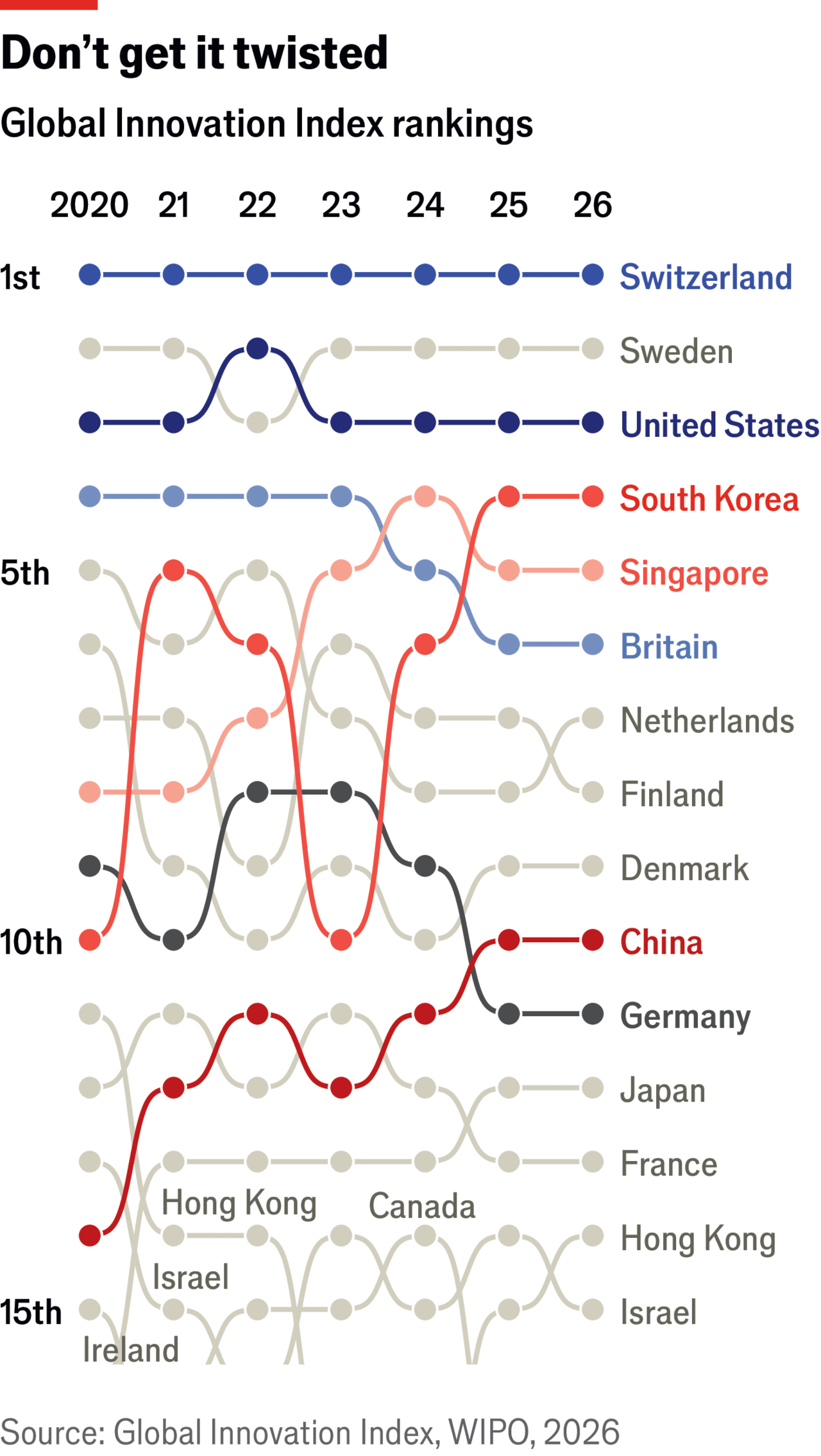
The overall effect on American ingenuity is hard to track. One place to look for clues is the Global Innovation Index, published each year by the World Intellectual Property Organisation (WIPO). It ranks 139 economies based on 79 indicators, from R&D spending to school test scores. Some of the data is not timely enough to capture Mr Trump’s influence. But a variety of measures refer to his first year back in office.
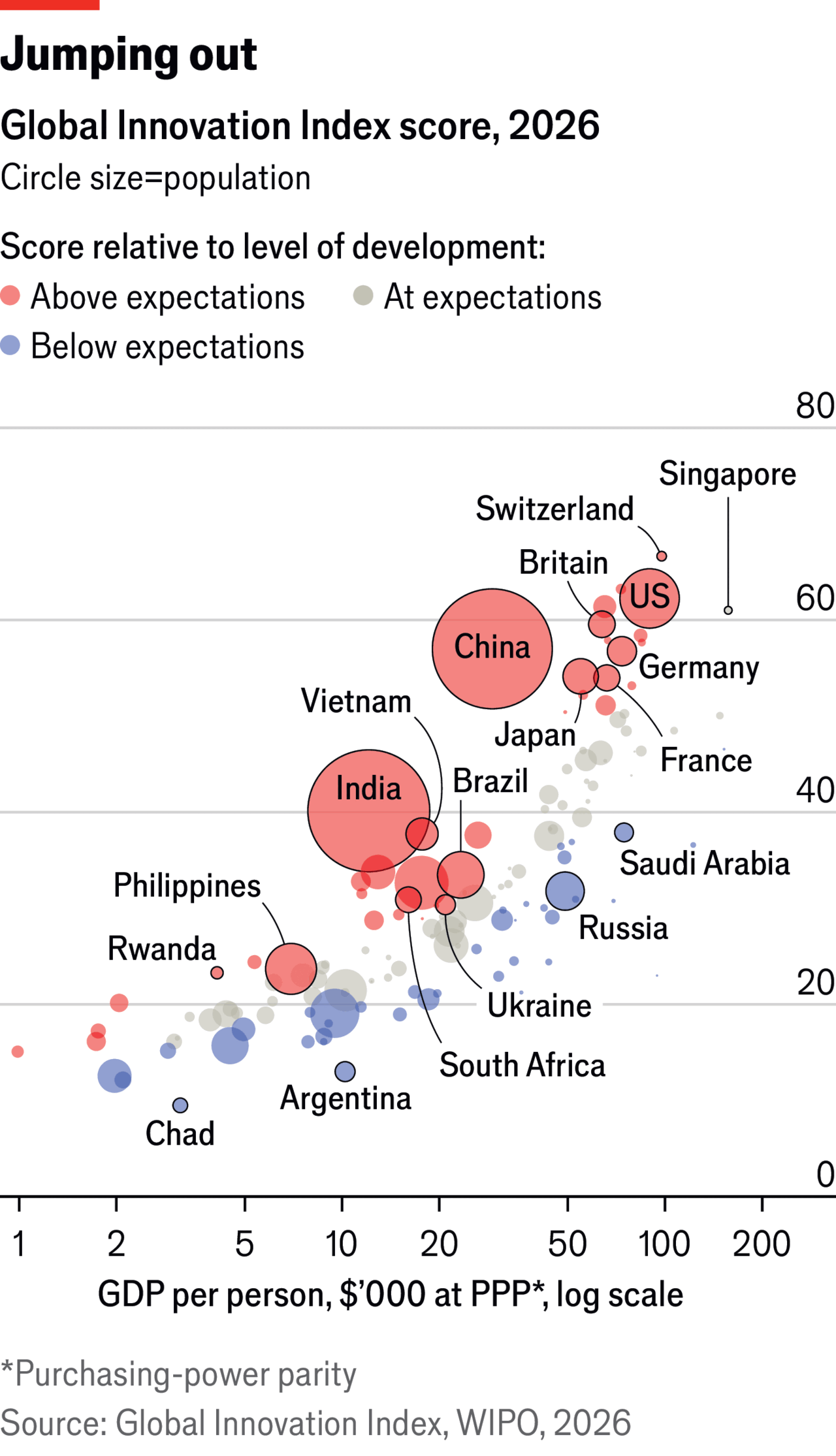
Overall America remains third, the rank it has held since 2023. Indeed the top of the innovation table shows remarkably little “innovation” in the pecking order. Switzerland is still first, just as it was last year and every other year since 2011. This stability partly reflects the index’s breadth: no one metric carries decisive weight.
It also masks some changes below the surface. America is capturing a bigger share of the world’s late-stage venture-capital deals, for example. But the innovation gap between it and fourth-placed South Korea has narrowed. And America’s ranking has slipped on several of the most up-to-date indicators since Mr Trump took office. One metric tracks the political, legal and operational risks faced by business. Last year America ranked 23rd on this measure. This year it fell to 36th.
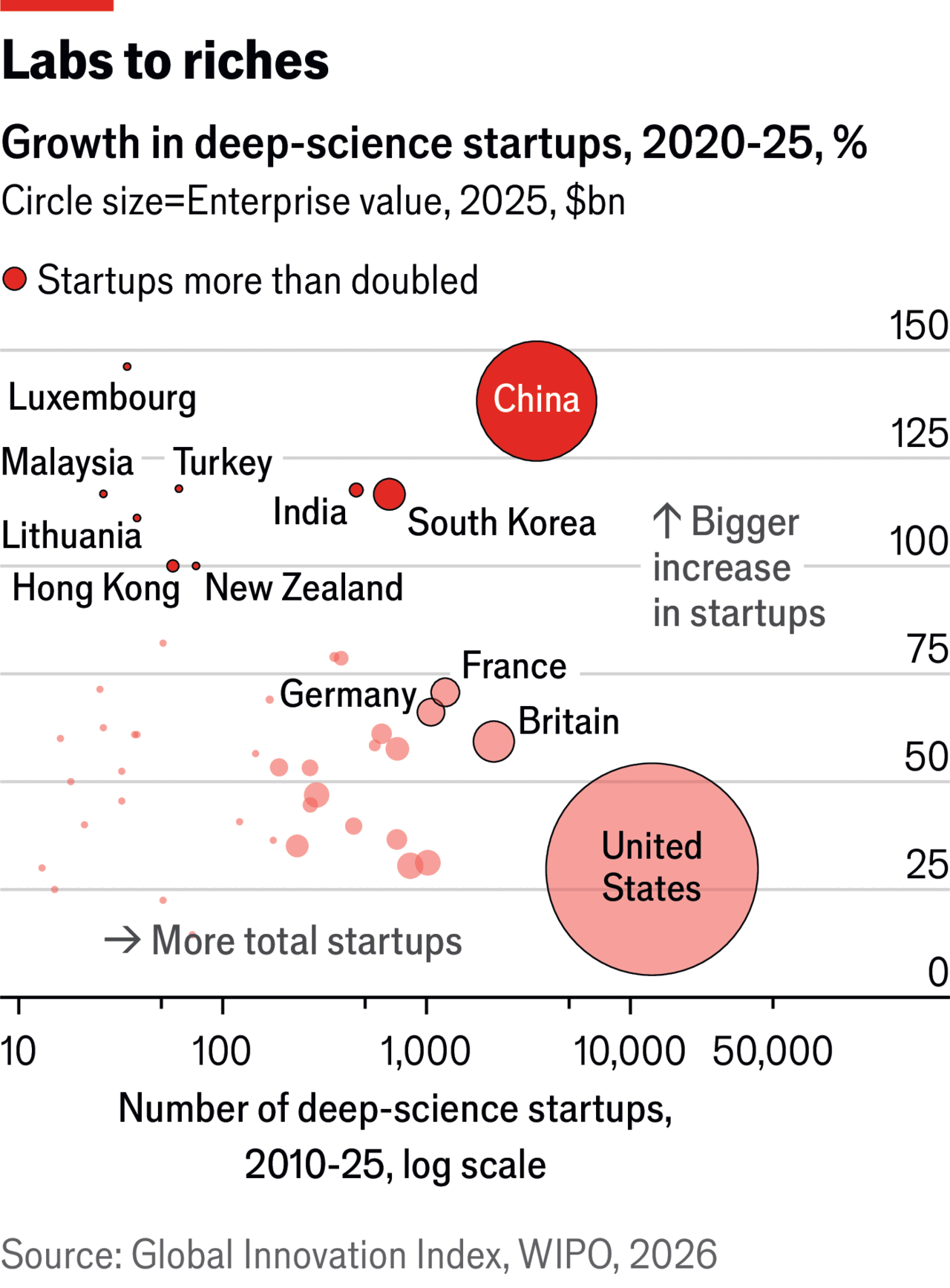
Uncle Sam is also facing tough competition at the frontier of innovation. Last year saw an uptick in “deep-science” entrepreneurship, which refers to capital-intensive companies working on physical technological advances in the non-digital world. America currently has the largest number of deep-science startups: 12,752, of which about half (54%) are still in the early stage of development. But China’s total is growing fast. Its contingent of 3,466 in 2025 is more than twice as big as it was five years before. That growth will please China’s government, which has signalled a strong preference for deep-tech firms over their “softer” consumer-facing rivals. It will also concern many policymakers and industrialists in America, who have woken up to the geopolitical importance of the world not yet eaten by software technologies.
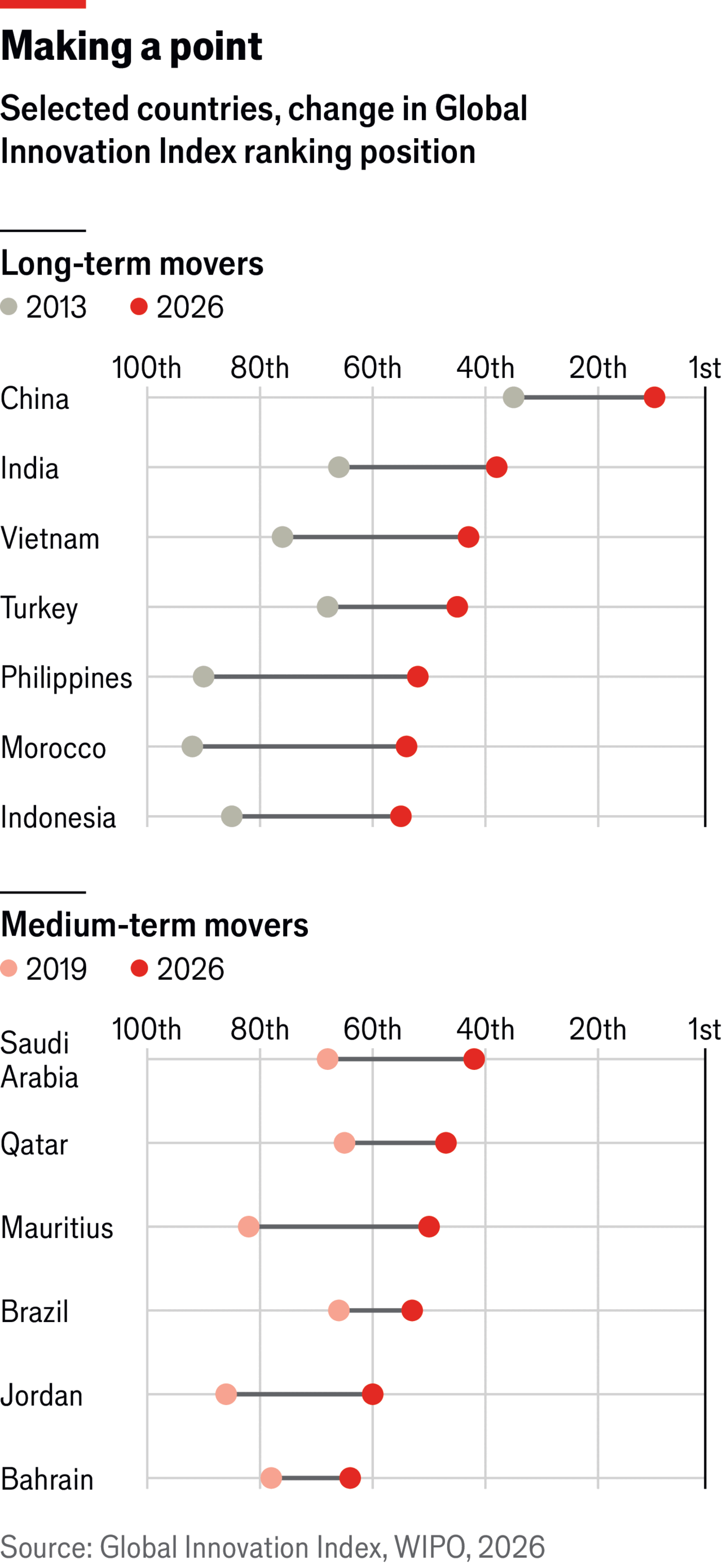
The Global Innovation Index takes a broad view of human ingenuity and creativity. Hard science is not the only way to climb up the annual rankings. Saudi Arabia’s position has improved from 68th in 2019 to 42nd this year. It now sits just below Greece—which surely would have topped the table in 350BC. The kingdom has benefited from a wide-ranging overhaul of its bureaucracy, which has improved the quality of its regulations, cut red tape and made it far easier to do business in the country. Its institutions ranked 104th on the index in 2019; they now rank 25th. Sometimes innovation requires unlocking the scientific mysteries of the universe. But plenty of helpful policy reforms are not that deep.