E-Paper



Covid-19: Urban hot spots drive surge, in greater need of jab scale-up
Nearly half (48%) of all Covid-19 cases reported in India in March are from urban areas, which are home to just 14% of the population, with cities having the largest proportion of new infections since June 2020, according to an analysis by Hindustan Times.

 Prefer HTon Google


The second wave of the coronavirus disease in India is seeing an alarming rise in infections coming from cities, with a majority of daily new Covid-19 cases coming from urban centres, something that was last seen at least 10 months ago, during the first wave of the pandemic.
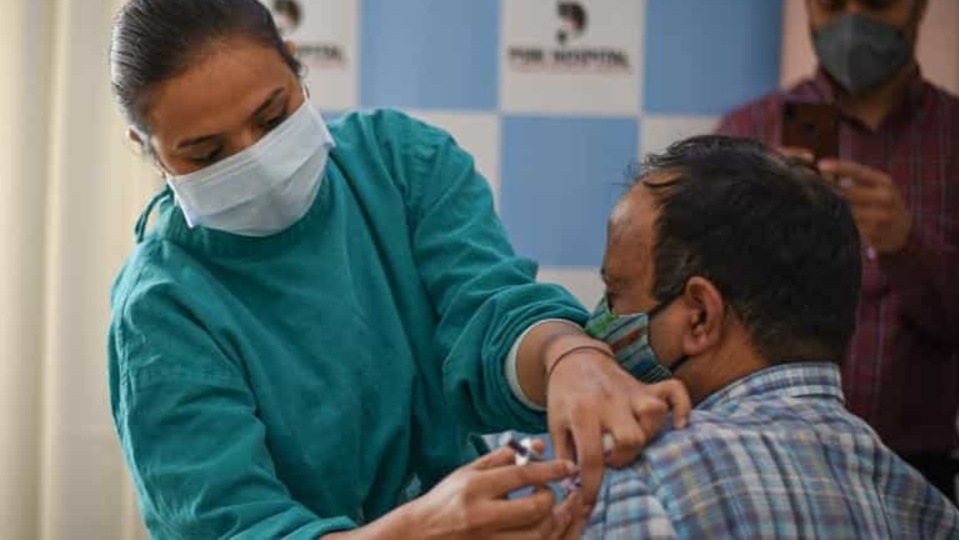
The numbers, experts say, highlight the need to focus sharply on getting the disease under control by expanding the vaccination drive in urban areas, especially large cities.
Nearly half (48%) of all Covid-19 cases reported in India in March are from urban areas, which are home to just 14% of the population, with cities having the largest proportion of new infections since June 2020, according to an analysis by Hindustan Times. In the first four days of April, a majority (51.9%) of new cases were reported from these urban areas.
Also Read| As India records 126,260 new Covid-19 cases, curbs in more states
The numbers are even more worrying when disaggregated at the city level. For instance, Mumbai, Pune, Thane and Nagpur together accounted for 59% of Maharashtra’s cases in the first four days of April. Add Chennai, Bengaluru, and Delhi to the mix, and the seven cities together accounted for 42% of India’s cases in the same period.
Data analysed by HT shows that urban areas reported 1.5 times the cases reported from rural regions in the country in the first four days of April. These same areas reported 1.4 times the cases in rural areas in March. This distribution is similar to trends seen at the start of the country’s first wave from March to June last year.
Experts said the numbers underline the need to prioritise the government’s vaccination efforts to urban regions and, in particular, focus on cities that are currently seeing a massive surge in infections to effectively combat the latest surge of infections. They also emphasised that expanding the eligibility for vaccination to include everyone over the age of 18 would further help to cover proportions of the population that are mobile, and thus likely to spread the disease further.
Dr Shahid Jameel, director of Trivedi School of Biosciences at Ashoka University, said while poor testing and reporting in rural areas could be one of the reasons behind a bigger surge in reported numbers from urban areas, the infection is likely to spread faster in urban areas because of a higher population density. The shift in the burden of cases to urban areas, he said, requires a reorientation of the vaccination strategy with a focus on areas showing a bigger surge. “Maharashtra is showing a surge, Nagaland is not. So to say that only people above 45 will be vaccinated in both places, to me it really does not address the issue based on data and based on the flexibility and nimbleness that you need to demonstrate.”
The urban-rural breakup was calculated by dividing India’s districts into three large groups – urban districts (less than 40% rural population), mixed districts (40% to 60% rural population) and rural districts (more than 60% rural population). The proportion of the rural population is based on the 2011 Census (the latest data available). District-wise data on the number of cases has been sourced from How India Lives.The classification is in line with how rural and urban districts are defined in the country.
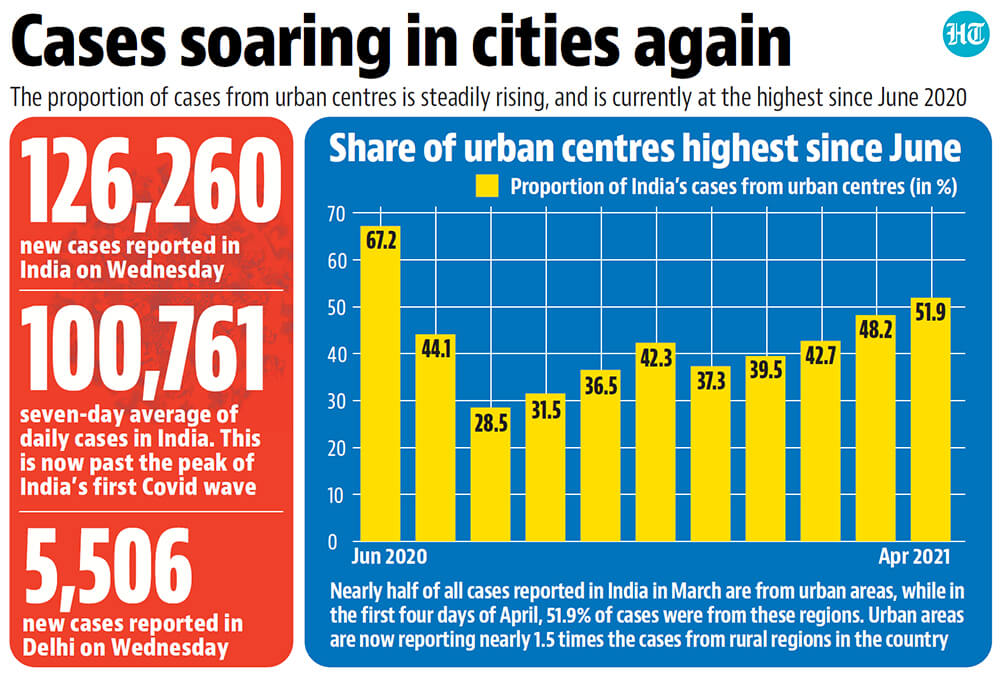
Of all new Covid-19 infections reported in April, 51.9% are from urban districts, the highest this proportion has been since June 2020 (when it was 67.2%). At the other end of the spectrum, rural districts constituted 33.6% of all infections in the month of April, their lowest share since June. From August to October last year, rural areas had a higher share of new cases than urban areas. It is not only in the distribution of cases that urban areas have rapidly overtaken rural areas in the past two months. They have also done so in terms of the spread of cases within their respective populations.
Another reason for the surge, Jameel said, could be the mutant strains of the virus . “The only logical thing that explains the surge at this point after India having gone through a fairly long first wave is that the behaviour of the virus has changed. And the behaviour of the virus can only change if there are mutants. And I do believe that this is the reason why urban areas are now back again showing higher percentage of cases.”
Also Read| PM Modi to interact with CMs on Covid-19 situation, vaccination strategy on Thursday
To be sure, not everyone agrees with the strategy of expanding the pool of recipients of the vaccine. The government, for one, does not, and has indicated that it will stick to its defined prioritisation protocol for vaccination. Dr Lalit Kant, former head of the department of epidemiology at the Indian Council of Medical Research (ICMR), said that given the slow pace of immunisation it is important to focus on the more vulnerable population. “The idea of vaccination is to decrease the number of people who die and the number of people who are hospitalised. It’s more important to immunise people who are at higher risk,” he said.
But easing the eligibility criteria could itself boost numbers (provided supply isn’t a constraint). Jameel said that one of the purposes of vaccination is to also control the pandemic. “Even the UK has turned the tide with vaccines. There is enough data to look at. Vaccines have to be deployed at scale. You can’t let the pandemic run wild,” he said.