
 E-Paper



Morsels with meaning: Swami Vivekananda’s relationship with food and hunger

 Prefer HTon Google


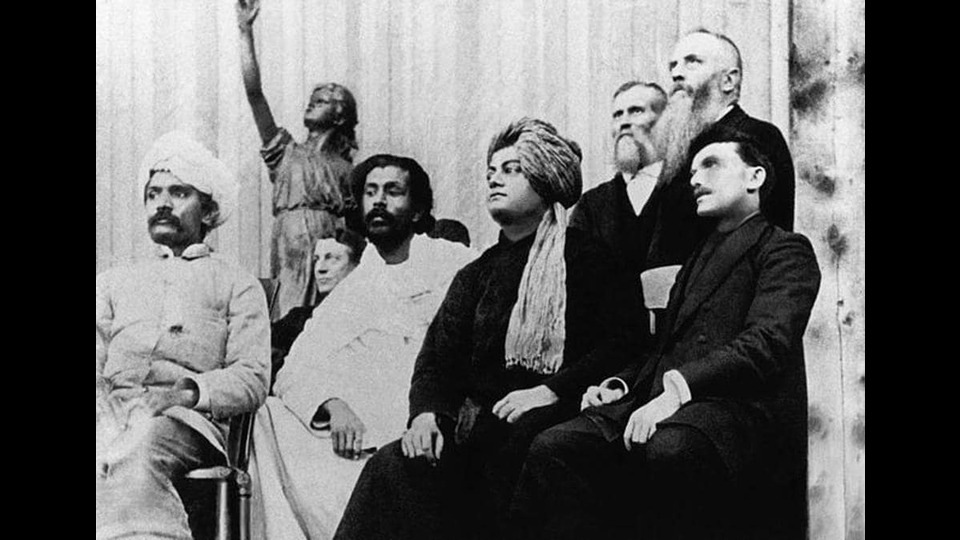
Alms, feasts, meat, days with nothing to eat.... a new book examines the monk and philosopher’s relationship with food, and how it reflected his world view.
Mani Sankar Mukherji, 88, who writes under the pen-name Sankar, is easily the greatest living writer in Bengali today. Satyajit Ray made two of his novels into films: Seemabaddha (1971; about corporate culture and greed in Kolkata) and Jana Aranya (1976; about a middleman’s struggles for success).
Sankar’s latest book is Swami Vivekananda: The Feasting, Fasting Monk (2021; translated into English by Malati Mukherjee). It is based on his 2017 opus that chronicled the monk and philosopher Vivekananda’s trysts with food and hunger.
Vivekananda is perhaps best known for his eloquent address at the World’s Parliament of Religions in 1893, a speech that embraced all listeners and recast India’s image before the world. Among his followers in India, Vivekananda is adored for his rational approach.
In his remarkable but short life of 39 years, he was sometimes served gastronomic delicacies in opulent settings, especially when in the US and Europe, and sometimes went months living off alms. There were intermittent days when he went hungry, unable to find a meal.
…The Feasting, Fasting Monk draws on archival material and records of conversations with disciples to recount Vivekananda’s unusual relationship with food. Vivekananda relished fish and mutton, enjoyed spicy food and chilies. There is ample evidence that he ate everything that was served to him, “Fish, mutton, pork or anything else,” the book states. He did not mind if alcoholic beverages shared the same table.
He did not concern himself with customary taboos. Once, in Memphis, answering a question on whether he would have some hickory ham, he responded, “I am a monk… Sanyasis should not have any objection to eating anything”, the book recounts. Another time, asked whether he had any hesitation in accepting bheeksha or alms from non-Hindus, he replied that Muslims had several times fed him when he was hungry.
Vivekananda held that as a man belonging “to the order of the Paramahansas, he had no option in the matter (of whether to be a vegetarian or a non-vegetarian).” The Paramahansa, by the rules of that order, was bound to eat whatever was offered.
The book tells of a conversation with disciple Sarat Chandra Chakravarty during the construction of the Belur Math in West Bengal, in 1898:
Disciple: Is it proper or necessary to have fish and meat?
Vivekananda: Eat your fill my boy!... Look at the faces of the people in your country. Sad faces… large stomachs but weak limbs.
Sarat Chandra wrote that Vivekananda, in his “authoritative view about meat”, held that food which “needlessly heats the body and excites the mind and senses, is always to be avoided” by “individuals inclined towards spiritual growth” (but) who “also had an appetite for meat”. But, the disciple noted, Vivekananda was always in favour of the poorer sections of Hindu society eating meat. He believed “it was absolutely necessary for the common man”.
The book quotes another disciple, Sundararama Iyer, as writing: “Ancient Brahmins of India were accustomed to take meat… and were called upon to kill cows and other animals in yajnas (religious rituals)… [Swami Vivekananda] held that the introduction and spread of Buddhism led to the gradual discontinuance of flesh as food, though the Hindu shastras had always expressed a theoretical preference for those who avoided the use of flesh-foods…”
…The Feasting, Fasting Monk refers to accounts by Vivekananda’s associate Hiranmoy Bandyopadhyay that describe multi-course dinners served to them in France. After fish or fish roe as appetiser, the main course, “barbecued steak, served with fresh salad”, would make an appearance. “Wild meats followed, venison or game. With each course, the drinks would also be replaced – sherry, champagne, sometimes with frozen liqueur. After the meal, black coffee would be served, and then tiny glasses of brandy served along with cigars.” Which of these courses Vivekananda ate is not specified, but he had no objection to any of them.
What emerges from the book is the picture of a man whose spirituality led him to rise above narrow confines. As an all-renouncing sanyasi, Vivekananda had, quite simply, mastered control over his palate, transcending all gastronomical indulgences.
A glimpse of this evolvement can be seen in Vivekananda’s letter to his fellow disciple, Swami Akhandananda in 1891. “Go to all the villages of Rajputana and visit every poor home. If people are annoyed with your eating fish and meat, give it up. To sacrifice food for the benefit of others is good. These saffron robes are not for enjoyment, but a symbol of great responsibility.”
His search was greater, his mission all-encompassing. As he would later say: “He stands before you in so many forms, where do you search, rejecting them all? Only he who loves all creatures, truly serves God.”


