
 E-Paper



Invisible Women by Ahilya Mehta: Hoping Indian women learn to use their voice

 Prefer HTon Google


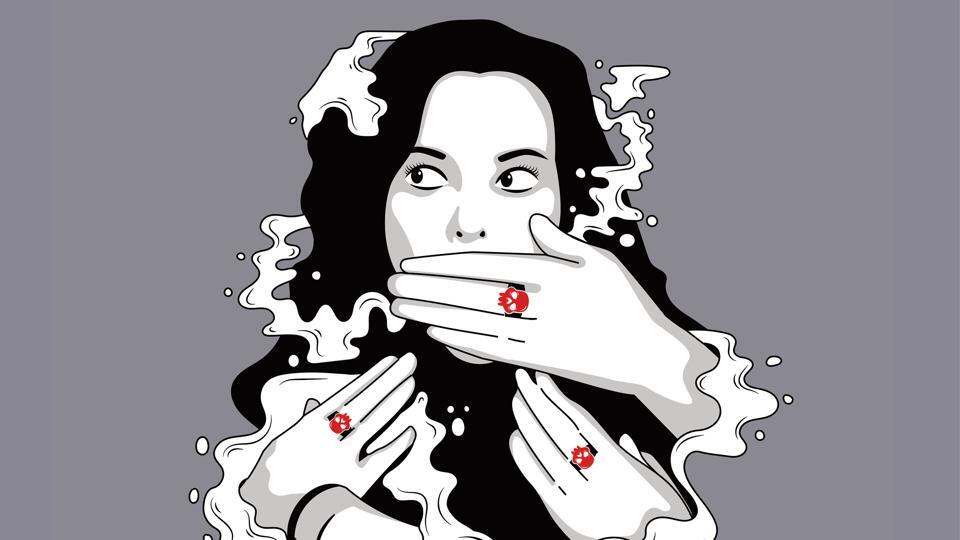
In 2023, irrespective of gender discrimination, we must ask for what we want, need, and deserve
December is a month filled with festivities. There is so much celebration, as if the whole world were united in bidding the year farewell. Then the infectious energy at the start of the year inspires us to make promises and look into the future wide-eyed and hopeful. I believe in miracles, magic, and manifestation. However, I also believe that without a clear plan for execution, very few of our doe-eyed dreams are within reach.
In 2012, after the Nirbhaya gang rape case, our country was united in its desire for improvement on the issue of violence against women. It has been a decade since that desire first manifested and what better time than the end of the year to humbly retrospect on what has happened since then?
Ten years ago, the initial reaction to the case was uproar. India’s daughters were being violated and needed protection. The case resulted in many promises about empowerment, legal amendments to improve conditions for women, and the Nirbhaya Fund, set up to reduce violence against women. The fund was originally given ₹1,000 crores. Overall, it has been allocated ₹6,000 crores in the past 10 years. Alas, more than 30 per cent of the ₹6,000 crore Nirbhaya Fund—more than ₹1,800 crores—has not been utilised. According to activists, the fund is being mismanaged. Thus far, the money has been meant to be used to build one-stop centres that are safe places for women to escape to. The idea is to make secure places that can fast-track court processes and procure forensic kits in cases of sexual assault. Alas, the fund’s success has been meagre. The latest data reveals that there is a 13.23 per cent increase in rape cases in India. Nearly 32,000 rape cases were reported in 2021. I wonder how many more cases went unreported.
A dystopian reality
I am deeply saddened by these numbers. India is my home and it is also home to nearly 700 million other women. Therefore, our safety should not be a dream but a necessity and basic expectation. Unfortunately, gender biases and societal prejudices prevent us from actualising real change. It is not just violence against women in India that needs addressing. A host of other misogynist practices must be dealt with too.
Discrimination against women in India starts young. Globally, girls have higher survival rates at birth than boys and are more likely to be developmentally on track. India is the only large country where more girls die at birth compared to boys. Moreover, pregnancy-related complications are the number one cause of death among women between 15-19 years. This is entirely preventable, but we live in a man’s world, and our lives are not their primary priority. Therefore, the average woman’s dystopian reality and the depressing statistics about progress in India elicit little surprise. In 2021, India slipped 28 places on the Global Gender Gap index, ranking 140th among 156 nations, behind Bangladesh but ahead of Afghanistan and Pakistan, as the third worst performer in South Asia. At this rate, it will take over 100 years to bridge the gender gap in India.
Though India was ranked 135th among 146 countries in the Global Gender Gap index for 2022, showing a slight improvement in its overall score, these statistics are heart-wrenching. We are women, promising to help other women. Where are our efforts falling short? Why are we witnessing worsening numbers when we are making policies that should create positive change? India is one of the fastest growing economies in the world. Have we actually done justice to our female population?
People often say that women “need to be given a voice”. I fundamentally disagree. That is not true. Women have a voice. We need to learn and remember how to use it. Most people are not given things unless they ask for them. Therefore, irrespective of the gender discrimination, our voices need to be loud and our intentions need to be clear so we can ask for what we want, need, and deserve. Ultimately, I believe when we are able to take ownership of our needs and desires, we will create the tools required to create a long-lasting impact.
A new year begins tomorrow. Let’s make it a good one for India’s women.
Ahilya Mehta, 27, is an entrepreneur-in-residence at Nua, former co-founder of Aara Health, and has been in women’s wellness for three years.
From HT Brunch, December 31, 2022
Follow us on twitter.com/HTBrunch
Connect with us on facebook.com/hindustantimesbrunch


