
 E-Paper



It’s GO time! Indian travellers share their most unforgettable moments

 Prefer HTon Google



Dancing with the dead in Madagascar. Partying until dawn in Tehran. Communing with spirits in Benin. Indian travellers are going farther to experience what guidebooks leave out. The pay-off is epic. So are the risks
The island where the dead don’t stay buried
One doesn’t simply stumble upon a Famadihana. The Turning Of The Bones ritual, practised by the Merina and Betsileo ethnic groups in Madagascar, involves a family exhuming the remains of their ancestors, rewrapping the corpses in fresh linens, invoking memories of the deceased through dance and music, and returning the bones and bodies to the tomb. Family members come from across the country, sometimes travelling for days, to attend.
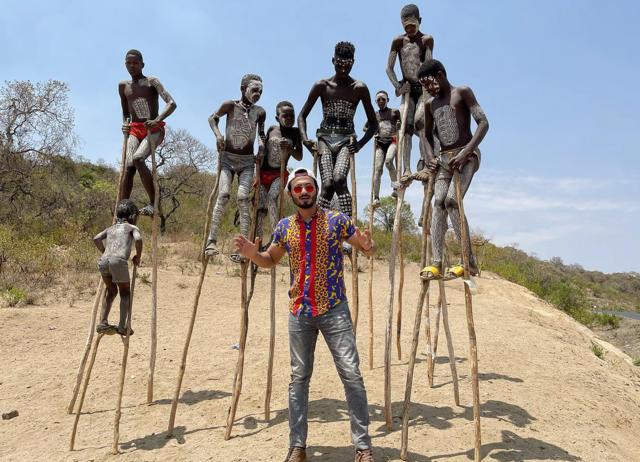
To those outside the community, it seems macabre. To Mohammad Anas (@TravelWithAK), 26, who first heard about it three years ago, it was a cultural celebration he knew he simply had to see. “Death does not mean the person is excluded from the family,” says the travel vlogger from Mumbai. “For them, passed on members live in their midst. The ceremony is a way of bringing them back and celebrating with them.”
Anas visited in October 2023. Getting there took more than a little legwork. There are no direct flights between India and the island on the south-east edge of Africa. In the capital, Antananarivo, he asked locals about the ritual, “Because when there is Famadihana, the whole village and the locality knows that something like this is going to happen.” Then, he convinced an English-speaking driver to take him to a village hosting the ritual, nearly 80 kilometres away.
Luckily, nearly eight hours and several pointed fingers later, they located the host family, the Raotozafys, and followed them to the celebration site. Anas watched as the family exhumed the bones of their relatives and re-bundled them with reverence. “Sometimes if the bodies have decomposed too much, two or three people are wrapped together to give the bundle more shape and strength,” he says. They placed photographs of the deceased on their respective bodies while a 20-piece band played Madagascar’s national anthem, followed by Christian prayers. They also brought their ancestors up-to-date on their lives. There was drinking (some of it was poured onto the wrapped bodies) music and dancing. “I saw a different side to the acceptance of death. Some mourn, the Malagasy celebrate. Culture belongs to the people, who am I to question it?”
The party nation they don’t want to tell you about
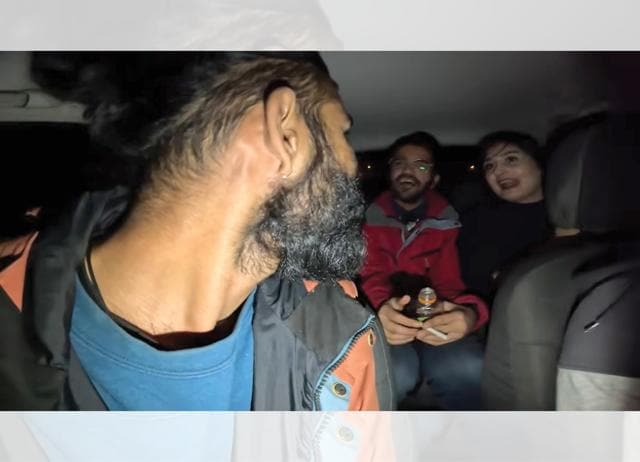
Even before war broke out in Iran, not too many Indians visited. Fewer than 10,000 Indian nationals would go there to study, work, or go on pilgrimage. All non-essential travel has been halted this year, which makes Pulkit Chaudhary’s memories of his December 2025 visit even more fond. The 26-year-old from Rajasthan (@TheTallTrotter) has posted YouTube videos, offering glimpses of everyday life in the capital Tehran, and the smaller cities of Rasht, Qazvin and Beheshti island.
The Iranians love to party. “Contrary to what we are told, the culture is very European,” he says. “The people are open-minded, uninhibited, and modern.” There are no clubs, no bars in the Islamic republic, so they host parties at home – live music, cigarettes, families and all. Chaudhary’s Couchsurfing host, Maryam Zamyar, took him to one epic gathering in the Kerman province, 975 kilometres from Tehran. It was a 24 hour drive, with a stop at Isfahan, but it was worth it, he says. The people were celebrating Shab-e Yalda, the winter solstice and longest night of the year at the home of Zamyar’s childhood friend. “The kids were eating sweets and dancing, the youngsters were enjoying drinks and live music, older uncles were chilling and smoking shisha.”
On the menu? Boz Ghormeh, their famous goat stew; Ash-e Kermani, a local soup of grains, legumes and herbs; and Zireh Polo, their version of jeera rice. For dessert, there was Kolucheh Kermani, a cookie filled with dates or nuts. There was lots of smoking, live music and lively chatter. “Music is a huge part of their culture and everyone knows how to play a regional instruments such as the sitar and daf, the frame drum,” he recounts. “Experiencing this unexpected side of Iran, to be invited as an outsider into their world was a heartwarming moment.”
Where the spirits roam the city streets
Benin is tiny. The West-African nation is about the size of Telangana, with only half the population of the south Indian state. Barely 90 Indian or Indian-owned companies operate there, dealing in automobiles, textiles, and food processing.
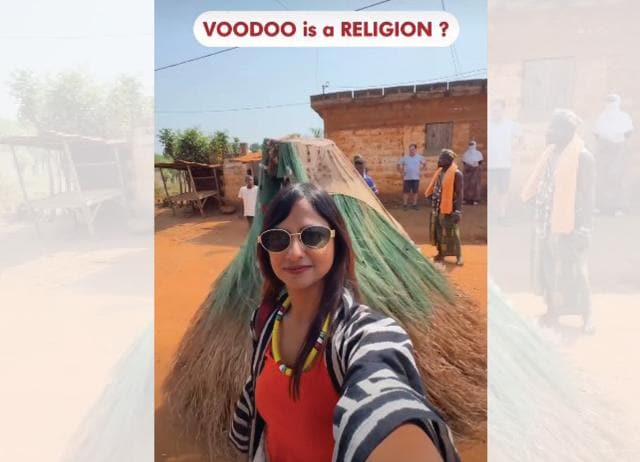
Few Indians visit. So, it was an eye-opener for Sharanya Iyer (@TrulyNomadly), 36, who went there in January, 2025. She was in the city of Ouidah during Vodun Days, a national celebration of the region’s ancient nature-focused religion.
The excitement plays out right on the streets: Straw-covered spinning Zangbeto (night watchmen), ancestor worship, trance rituals and voodoo-like practices. “It’s super chaotic. There’s music, dancing, kids, adults. The energy is electric but overwhelming,” says Iyer.
Snakes and reptiles, she says are her “biggest fear”. And yet, she couldn’t keep away from the Temple of Pythons, which honours the deity that embodies wisdom, protection and fertility. And she was determined to see the markets where priests prescribe specific rituals to infertility or marital problems. “Nobody’s allowed to film there because they’re sceptical of global perception of what they practise.” The cures can be as varied as a peacock feather or a dead monkey’s head or the carcass of an endangered species – in the belief that animals carry healing energy. “As travellers, we can only share what we experienced and felt. There is no room for judgment.”
The frosty nation with a warm spot for India
Vishnu Saha (@TheWanderingManiac), 27, knew he was going to be very far from his home, Hyderabad, when he visited Afghanistan in January this year. Temperatures there drop to below freezing, the wind makes it feel colder. But the locals, he says, were surprisingly warm.
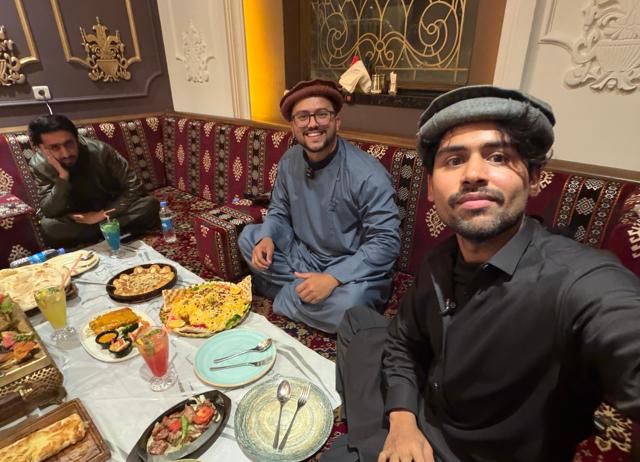
He stepped into a mobile shop in Kabul only to look for a tripod. But the moment the owners, brothers Jamshed and Jalal, found out he was Indian, everything changed. They declared, in Hindi, their undying love for Bollywood, with Jamshed even imitating SRK’s quintessential laugh. Before long, they’d invited Saha to dinner. “Refusal was not an option,” he says.
They took him to Kabul’s popular restaurant, Ziyafat, which had traditional open spaces for groups of men and families to dine together. The restaurant, delighted to have an Indian guest, gave him a tour of the kitchen. “We had Kabuli pulao, Afghan naan, mutton karahi, grilled chicken, kebabs and dishes I can’t even remember,” Saha recalls. “I don’t think I had seen so much food in front of me before.” That meal must have cost at least ₹10,000 but his hosts refused to let him pay. “Countries like Afghanistan don’t see too many tourists, so when people do come, their hospitality is unmatched.”
Locals told Saha that even though they didn’t like the government, they were glad to see the end of the war. It meant that Afghanistan was opening up to tourism and business, giving locals the opportunity to be seen for who they are.
The road trip with a side of risk
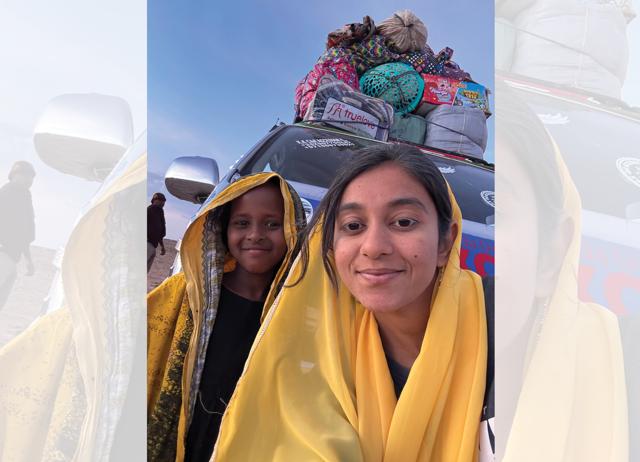
Garima Bakshi was on her second visit to Somaliland. She was there four years ago and was so taken in by the warmth of the Somalis, she knew she had to go back. This time around, in February 2026, she booked a four-day road trip from Hargeisa in Somaliland to Mogadishu, via Garowe, the capital of Puntland.
The route runs through the Horn of Africa – forests, mountains, frankincense valleys, limestone valleys, pristine beaches. But it cuts through three separate governance systems, has passport controls, even currencies change along the way. “You travel through the bush in local buses which do not stop, except for a 30-minute lunch and toilet break,” says the 27-year-old who documents her trips on @WanderingWithPaint. “Foreigners rarely get permission to travel through all the areas on that route.”
So, Bakshi disguised herself as a Somali woman. She put on an abaya, covering herself from head to toe and boarded the bus alone. Then three days in, when the bus stopped for lunch in a village controlled by Islamist militants, she ran into trouble. Someone had alerted them that there was a non-Somali woman on board. Bakshi was swiftly escorted off the bus by AK-47 wielding men. “They took me into a grocery shop -- the kind we see in movies – with a secret jail in the back.” They interrogated her for four hours about why she chose to smuggle herself via this route, searched her belongings and checked her passport. They only let her leave after taking the 350 USD (approx. ₹33,000) that she had on her, but spared her camera, phones and gadgets.
Remarkably, the bus waited all this time. The passengers spent the night on board, in the middle of the desert. Bakshi reached her destination, and had a friend wire her enough money to get back to India. She says she booked her ride specifically to see how locals do it. “I can return to the comfort of my home. But this is real life for them. That’s quite humbling.”
From HT Brunch, October 24, 2026Follow us on www.instagram.com/htbrunch


