
 E-Paper



Lok Sabha elections 2019: Villagers look to poll candidates to save VS Naipaul’s ancestral property
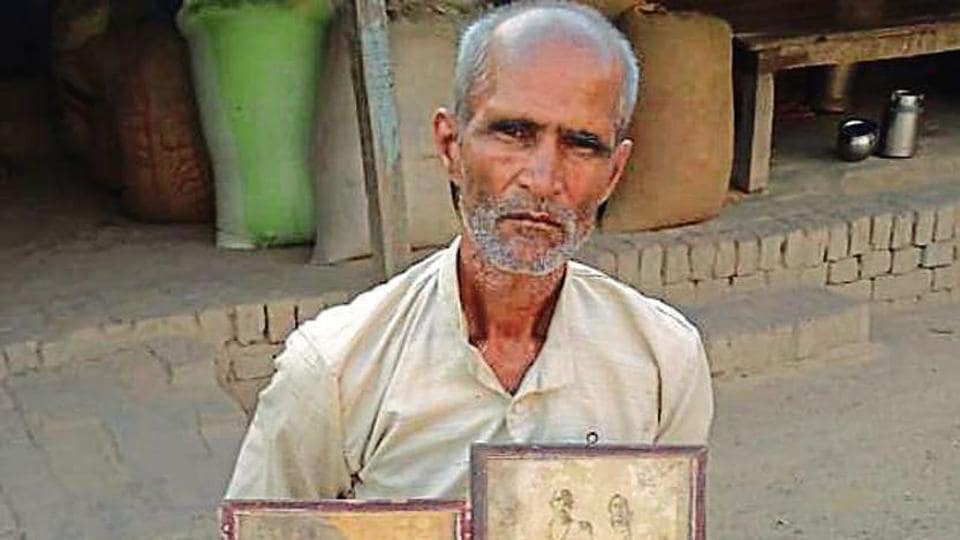
“We will support the party or the candidate who will take up the issue with the district administration and the state government,” said Mahesh Dutt, who is looking after the property.

 Prefer HTon Google


The residents of Mahadev Dubey village in Maharajganj Lok Sabha constituency have a rather unusual demand from the candidates in the fray.
The seat goes to polls along with 12 others in Uttar Pradesh on May 19, the last phase of the ongoing general elections.
The residents have taken up cudgels against the land sharks, who have grabbed an orchard and some agricultural land owned by Nobel prize-winning British author Sir Vidiadhar Surajprasad Naipaul, who died last August.
The villagers have decided to hand over memorandums to candidates, whenever they visit their village, to draw their attention toward the grabbing of orchard and agricultural land owned by Naipaul.
“We will support the party or the candidate who will take up the issue with the district administration and the state government,” said Mahesh Dutt, who is looking after the property.
Naipaul was born in the Caribbean island of Trinidad, where his father worked as a journalist. His grandparents had migrated from India as indentured labour in the late 19th century to work on the island’s sugar-cane fields.
According to the members of Naipaul’s extended family who reside in the village, the author had visit his ancestral village in 1962 and had appointed a landless farmer Ramchander as the caretaker of his property that included a house, an orchard, temples and agriculture land.
After Ramchander’s death, his son Mahesh took over the responsibility of taking care of the property but is helpless against the muscle power of land-grabbers.
“They (land-grabbers) are powerful and also have the support of local police. When I objected to their transgression, they threatened me. Despite our plea, the local police have not taken any action against the culprits,” Mahesh said.
“Kapildeo Dubey (the maternal grandfather of Naipaul) settled in Trinidad but remained connected with his roots in Maharajganj district. He and his wife visited the village after Independence. Later, Kapildeo handed over the property to his grandson VS Naipaul,” said Baikunth, a member of Naipaul’s extended family.
In his 1964 travelogue ‘An Area of Darkness’, Naipaul has also written about his visit to his ancestral village located near India-Nepal border in east UP. He gives a vivid description of the village dominated by the Brahmin community.
After winning the Nobel Prize in Literature in 2001, Naipaul visited Delhi in February 2002. The residents of Mahadev Dubey received a message from the district administration that Naipaul would visit his ancestral village.
“Elaborate arrangements were made to welcome him but the programme was cancelled. The visit remained pending and last year we received information about Naipaul’s demise,” said another villager Narayan Dubey.
Om Prakash Nishad, a school teacher, said since Naipaul had not named the inheritor of his property, land sharks grabbed the orchard, land around the temple as well as the tube well installed by Naipaul.
“We are helpless as the encroachers know that there is no legal heir to the property. They are grabbing land at will,” he said.
According to villagers, association with Naipaul is not only a matter of pride for the village but also for the district.
They said the state government should provide funds for the maintenance of his ancestral house as well as the temples.
Village head Sudarshan Yadav said the political parties were only interested in votes. “They should redress our grievances and an anti-encroachment drive should be launched in the village to check the activities of land sharks,” he added.
“We have decided to meet BJP candidate Pankaj Chaudhary, Congress’s Supriya Shrinate and Akhilesh Singh of the Samajwadi Party. The candidate who will take up the issue will get our vote,” another villager Shivnath Shukla said.
Maharajganj is set to witness a triangular contest between the Samajwadi Party, Congress and the Bharatiya Janata Party.
While the SP and the Congress candidates belong to Thakur community, the BJP candidate comes from a backward community.
In the 2014 Lok Sabha elections, BJP’s Pankaj Chaudhary emerged victorious defeating Kashi Nath Shukla of the BSP by margin of 2.40 lakh votes.


