
 E-Paper



Stray animal menace continues to haunt Lucknow
Growing nuisance- Charbagh, Alambagh and Chowk among the worst affected areas.

 Prefer HTon Google


Stray animals continue to be a menace for the state capital – they cause accidents and keep spreading dirt on the roads, but civic agencies like the Lucknow Municipal Corporation (LMC) seem to be doing ‘precious little’ to check this.
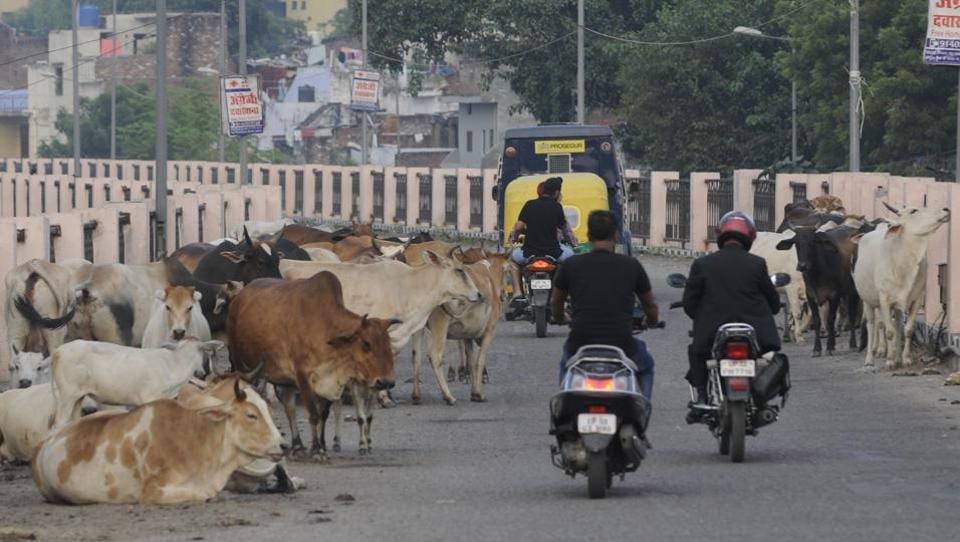
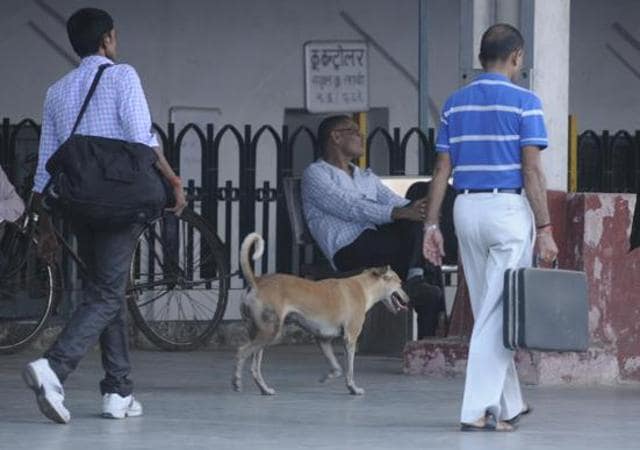
Charbagh, Alambagh and Chowk are among the worst affected areas where one can see the maximum cows, bulls and dogs roaming around the streets.
“The municipal corporation has tried to step up its drive against stray animals. As many as 4,090 stray animals were caught by the LMC in 2016-17 while 3,591 strays have already been caught from roads from April to September (in 2017-18). Last year, 3,222 dogs were caught and castrated while 1,362 canines have been caught and castrated this year from April to September,” claimed Dr AK Rao, chief veterinary officer, LMC.
Rao said, “Ninety per cent of the problem is because of the so-called NGOs who interfere in nagar nigam staff’s work. They have to justify the grant, which they received from various sources.”
“All these animal rights activists are very well connected. As a result, we find it hard to perform our duties. It’s good to work for animal rights but this should not mean interference in the work of the municipality,” he added.
According to Animal Birth Control Rules-2001, sterilisation is the only way to control population of stray animals.There are over 60,000 stray dogs in the city but only around 3,000 dogs are sterilized every year.
Read: Stray menace dogs Lucknow roads
“Instead of helping the LMC, animal rights activists keep on creating problems whenever cattle catchers go to catch dogs or other stray animals. Sometimes, they even clash with our workers,” he said.
‘JEEV ASHRAYA’ WON’T TAKE CARE OF KANHA UPVAN
NGO ‘Jeev Ashraya’, which was taking care of Kanha Upvan (shelter for stray animals), has decided to hand over the responsibility to the Lucknow Municipal Corporation. At present, there are 2,700 stray animals in Kanha Upvan.
The NGO was in the news this year, when the state government, in an RTI reply, revealed that ‘Jeev Ashraya’ was favoured with grants amounting to over Rs 8 crore during the last five years, while the animal husbandry department gave Rs 9.66 crore for cow shelter homes across the state. However this money was distributed among only two NGOs – Jeev Ashraya and ‘Shripad Baba Gaushala’ in Vrindavan.
It was stated that Prateek Yadav and Aparna Yadav -- son and daughter-in-law of Samajwadi Party patriarch Mulayam Singh Yadav controlled ‘Jeev Ashraya’ but this allegation was denied by Aparna Yadav in a press statement. She denied any connection with the NGO and termed the propaganda as malicious.
After the NGO was denied grant this time, it decided to surrender Kanha Upvan accusing the state government of ‘playing politics with animals’.


