E-Paper



Climate and Us | An inequitable status quo remains in climate action
The Bonn climate conference was a ring fight with no winners, with India's proposal on “loss and damage” not making it to the agenda for COP27. The inequity in action, from one climate conference to the next, persists.

 Prefer HTon Google


The Bonn climate conference did not inspire hope for strong climate action at the upcoming COP 27 in Egypt's Sharm El Sheikh. What happened at Bonn? From my conversations with independent researchers, civil society observers and negotiators, Bonn was once again a ring fight with no winners.
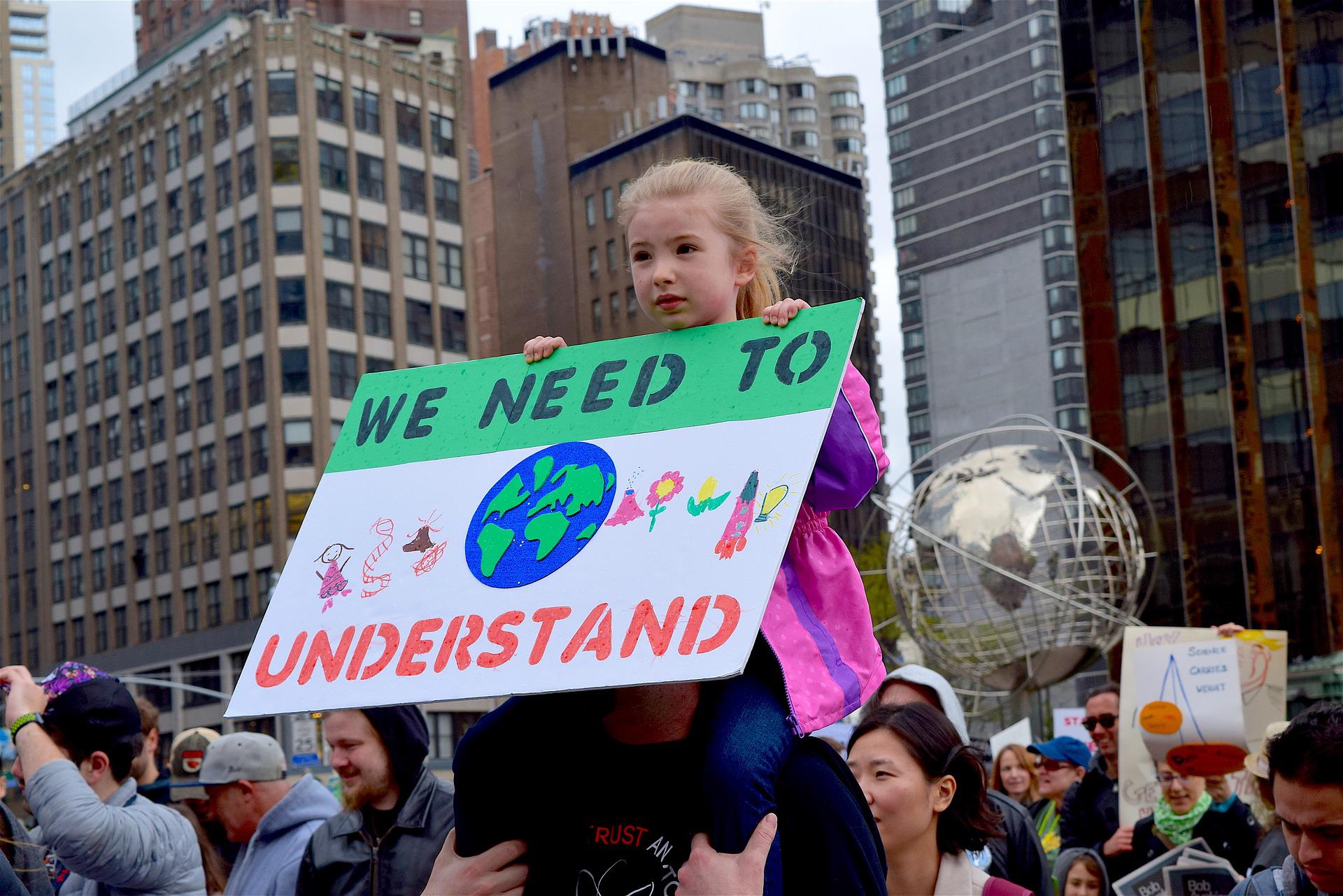
The proposal by India and other developing countries that a loss and damage finance facility be established to compensate vulnerable countries for the losses caused by climate disasters, did not make it to the agenda for negotiations at the upcoming COP27.
“Loss and damage” is a general term used in United Nations (UN) climate negotiations to refer to the consequences of the climate crisis that go beyond what people can adapt to, says the World Resources Institute. These consequences include slow-onset events such as sea-level rise, desertification, glacial retreat, land degradation, ocean acidification and salinization.
The Group of 77 and China wrote to UNFCCC executive secretary Patricia Espinosa on June 13 proposing that funding arrangements for loss and damage be included in the COP 27 agenda. But rich countries particularly Switzerland, the EU and the US opposed the call for any such facility and discussions were stalled thereafter. G77 countries wanted to introduce an agenda item for the subsidiary body for implementation titled Matters relating to the Glasgow Dialogue on Loss and Damage. This was to push for formal decisions on substantive discussions on loss and damage. Developed countries opposed this and to the discussion of any other matter related to establishing funding arrangements for loss and damage, explained Diego Pacheco, Bolivia’s chief negotiator.
There was a fight on the issue of global stock-take also which is scheduled for 2023. The Paris Agreement established a process of global stock-take to assess collective progress towards achieving the long-term goals of the Paris Agreement as of 2023 and every five years thereafter.
We have not progressed much and there will be intense strife on who has done or has not done anything. At the closing plenary of the technical dialogue on the global stock-take held in Bonn, several developing countries and their groupings stressed the importance of taking into account equity considerations in assessing the collective progress of parties in implementing the goals of the Paris Agreement.
“Many of them emphasized the need to address the equitable access to the carbon budget to limit temperature rise under the Paris Agreement while taking into account the historical emissions of developed countries. Equity and just transitions were stressed as overarching considerations for developing countries in scaling up ambition in mitigation,” the Third World Network, an international research and advocacy organisation that observes developments at climate and World Trade Organization negotiations said. The fight on global stock-take processes will be fierce at COP27.
Issues of climate finance, adaptation, and mitigation also continue to remain unaddressed. During Bonn, a side event discussion was organised by the Third World Network where India also participated.
Richa Sharma, the lead negotiator for India, said the Glasgow climate pact of COP26 adopted last November is mitigation-centric, unlike the provisions of the Paris Agreement which lays equal emphasis on adaptation and mitigation of climate crisis, and that COP 27 will have to regain the balance. For developing countries, historical emissions have been significantly low in per capita terms and hence, they are suffering the impacts of climate change disproportionately. Developed countries with higher per capita gross domestic product (GDP) have the better adaptive capacity, and hence, developing countries are also talking of achieving rapid, sustainable development which allows them to build resilience for their people, she said. There are now loud calls for a clear definition of climate finance and a new finance goal, much larger than the $100 billion goal that was to be delivered by 2020, which remains unmet.
South African negotiator, Zaheer Fakir, said there is a critical need for a common definition of climate finance to ensure common accounting which is still under discussion. “Without provision of finance, terminologies such as ambition, tipping point and urgent climate action do not matter,” he said at Bonn. He referred to the findings of the first ‘Needs Determination Report’ (of the UNFCCC’s Standing Committee on Finance) which shows only 30% of the needs of developing countries have cost between $5 trillion to $11 trillion, which dwarfs the $100 billion goal.
With all these unresolved issues COP27 will see a tense start. But after COP26 in Glasgow, geopolitical tensions have also derailed climate action in many parts of the world. The REN21’s renewables 2022 global status report released last week said bluntly that there is no energy transition happening globally. A spike in energy prices in the second half of 2021, followed by the Ukraine crisis early this year, contributed to an unprecedented global energy crisis and commodity shock, the report said, which led governments to implement short-term measures to diversify fossil fuel import sources, ramp up domestic production and subsidise energy use.
“This situation has exposed the world to ever more pressing climate disasters as well as to geopolitical and economic threats,” the report said.
Over the past year, China has announced plans to increase coal production by 300 million tonnes (equivalent to 7% of current levels), the US has seen a boom in new fracking and drilling projects, and the European Union has initiated a series of short-term measures to diversify gas imports, most of which have benefited the fossil fuel industry.
According to a report by the International Institute of Sustainable Development titled Mapping India’s Energy Policy 2022 in fiscal 2022, India gave 9 times more subsidies for coal, oil, and gas than for clean energy. However, overall, fossil fuel subsidies have also fallen 72% since 2014. For renewable energy, subsidies have fallen 59% since fiscal 2018, while for electric vehicles they have grown 205%. Support remains low compared to ambition.
Take, for example, Life Insurance Corporation’s initial public offering (IPO) crisis last month. There has been a $17 billion wipeout in market value for Life Insurance Corporation of India's public offerings this year. Their offerings plunged 29% since its May 17 debut, and India’s biggest-ever IPO now ranks second in terms of market capitalisation loss since listing, according to data compiled by Bloomberg released on June 13.
According to a researcher who is studying LIC’s investments and investments of several other global and Indian insurers, Indian insurance companies are still heavily exposed to carbon-intensive industries through their investment portfolios. LIC, the country’s largest asset manager, is highly exposed to financial risks arising from the transition to a low-carbon economy, with 21% of its equity portfolio invested in carbon-intensive industries. In comparison, just 0.11% of LIC’s portfolio is invested in the renewable energy sector
Ahead of LIC’s public offering, climate transition risks for its investments were disclosed in its Draft Red-herring Prospectus (DRHP), which revealed that as of January 2022, LIC had invested $25.8 billion in carbon-intensive industries, accounting for 21% of its total equity holdings portfolio. It currently has no publicly-available investment policies covering climate change, nor were climate transition risks recognised in its DRHP, despite some recognition that exposure to natural catastrophes is a material climate risk.
From the climate crisis to air pollution, from questions of the development-environment tradeoffs to India’s voice in international negotiations on the environment, HT’s Jayashree Nandi brings her deep domain knowledge in a weekly column
The views expressed are personal