
 E-Paper



Gig workers really don’t care for bleeding hearts
Gig work allows for dignity, agency over time, and is increasingly getting formalised

 Prefer HTon Google


One thing that does not change in India is the bleeding hearts whose soft souls continue to cry for those less fortunate. Thirty years ago, they were stressing over the cruelty towards “digital coolies” who wrote code, imagined in their fertile minds as physically chained to their desks and whipped every now and then. And now the same emotion is being spent for the poor gig workers who toil hard hours, drive dangerously at great personal risk, are at the beck and call of those well-off, and are deprived of what they think are good jobs. Good jobs are, of course, another term for government jobs that require little work but come with plenty of perks. But the reality of gig workers can be very different, as it was for the coders of India. Not only were careers and livelihoods built, but the country’s growth was too.
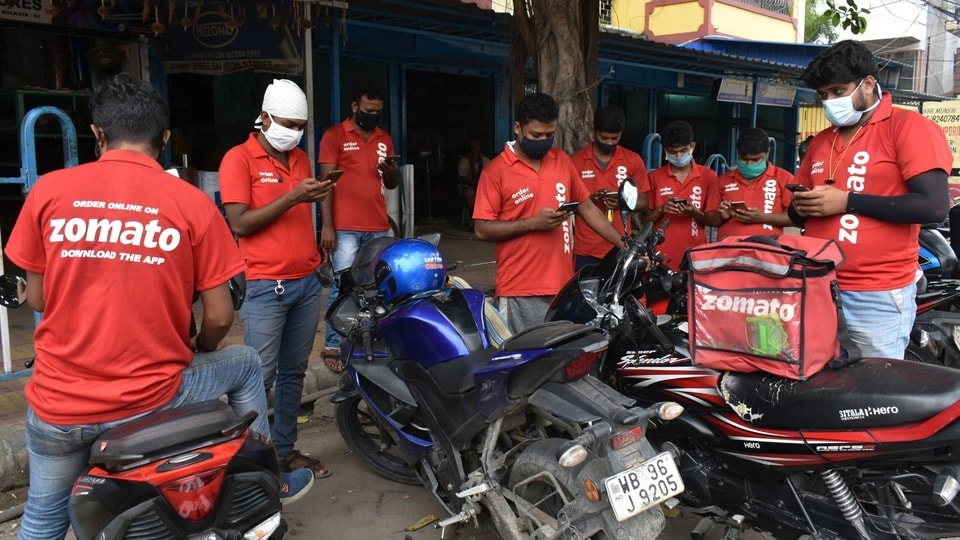
The Economic Survey 2025-26 estimates gig workers (delivery, ride-sharing, and freelancing) to be 1.2 crore in number, making up 2% of India’s non-agri workforce. This will be 6.7% of India’s workforce by 2029-30, contributing ₹2.35 lakh crore to the GDP. These are not small numbers and, instead of trying to kill this industry, what would be more useful are steps to transition them into the formal economy; many such steps are already being taken.
Also Read | India’s gig workers need more effective protection
One such example is the recent news report on how more than 50,000 Swiggy workers were helped by the platform to file tax returns. Gig workers’ income is counted under the head “income from business or profession” in tax parlance and a mandatory tax is deducted at source. But, since many of them earn less than ₹12 lakh — the tax-free income threshold — they are eligible for a tax refund. However, they don’t get it unless they file their returns. It is estimated that around ₹6.5 crore of refunds were facilitated by Swiggy. Tax portal Clear Tax reports that it has helped over 400,000 delivery workers file returns and unlocked ₹50 crore in tax refunds.
Filing tax returns is an important step for building a trail that will later help filers access loans, insurance, and establish a financial history. This is of real value for workers — worth much more to them than the rabble-rousers who add nothing but noise while taking away gig workers’ agency over the lives that the latter have built.
Because, despite the emphatic tears and the wrinkled foreheads worrying about unfortunate gig workers, the underlying story gets missed: that of choices and agency over time. These were the preserves of the rich so far, but are now available to those starting out. Talk to the gig workers who intersect with our lives multiple times a day, and a very different story begins to unfold. The story I hear is one of flexi-hours, the ability to control their schedule, safety of a uniform specially for women, dignity of work, and upgradation of skills.
Also Read | Rethinking women’s work in informal and gig economies
Puja (name changed) used to work in a parlour, 8 am to 9 pm. There was one weekly off, and leaves were a hard bargain that came with a trade-off on the meagre salary. Work conditions were not great, either. The few increments she received were hard fought. She has slowly branched out and works with an aggregator now. She talks of being able to log leaves when she has an emergency at home or a festival or is ill. She speaks of skill upgrades, and of dignity.
She’s not alone in this story. The several women I have spoken to who provide all kinds of services, including cooking, beauty and grooming, and cleaning, also talk about the opportunity to upgrade skills as the platforms regularly introduce them to new equipment, products, and skills. And then there is the uniform. It imparts a certain sense of dignity and keeps them safe. A woman freelancing alone is at risk of predators in homes; but in a uniform, with the company backing them, the likelihood of incidents can be lower and there is recourse in terms of calling the company and the police.
Puja is now encouraging her husband to quit his 9-to-anytime job that has seen zero increments for over the past five years. He is planning to join a call centre (fixed hours) and drive an Uber or Ola two hours in the morning and two hours at night. He can then work on his own terms, she says, and earn more by working more — an option not possible in the current job.
At the platform level, extending life and health insurance to workers and their families, along with basic education in personal finance, will benefit the entire ecosystem. The Code on Social Security now formally recognises gig and platform workers and creates a framework for their social security, including schemes covering health, life, and other benefits, with aggregators required to contribute to the social-security fund. The law is yet to get fully implemented, but the direction is clear. Gig workers are not going away.
Also Read | Invisible second shift in India’s gig economy
At a personal level, instead of empty empathy, we, the recipient of these services, can start by just being nice to the service providers. Our lives are infinitely easier because of their work; surely, we can dignify their work? The biggest thing we need to upgrade is our attitude towards non-office work. We need to stop equating dignity with a desk, designation, and air-conditioned office. Dignifying work — whatever the work — is the missing piece of this puzzle.


