
 E-Paper



Metro living, mediated by the gated societies
I have spent over a decade in Gurugram, but when people say, “It’s not a place worth living,” I nod in agreement as it is theoretically correct for all metros.

 Prefer HTon Google


My little one goes to a music class in Gurugram — on weekends at 11 am, for an hour. She isn’t vocally gifted; neither of her parents are. Yet, she’s learning. The instructor says she will do well, she is better at drums though. I understand the motive of the compliment. The drums class has a higher fee.
The class starts. There is a huge waiting area with couches. Most parents are busy with their office laptops. A few are attending phone calls — now they instruct someone at the other end who works on a laptop.
“Slide number 27 needs the data source. Don’t know why this gets missed,” a guy with a greying beard conveys patiently to a subordinate. He has the assertiveness of a boss. His kid suddenly wants to go back to his mom, making it known to everyone in the waiting area with a lead vocal performance. The father is embarrassed. “Give me a second,” he says to his colleague, and attends to his petulant child in the softest of voices: “Beta, we will go for ice-cream after this. Zidd nahi karte (we must not be obstinate). Okay?” The junior at the other end of the call gets a glimpse of the boss’s humanity. But only briefly.
This is a room where I overhear so much shop-talk I can verify our GDP growth rate. Here, I have met many childhood friends, old clients, college pals. All unplanned. Once, even a guy who was almost insistent on copying from me in an examination some decades ago. The same guy is a responsible father now, expounding on morality and values to his five-year-old.
On these occasions, a quick recap of the last decade starts. Mutual friends are invoked. Careers discussed to find out the current net worth.
Also Read | Man compares gated and non-gated societies: ‘One offers amenities, the other a greater sense of belonging’
One hour passes unnoticed. The kids come out. None of them sing particularly well. Parents are just providing something to their kids they never got: familiarity with Bob Dylan at a very early age and some stage confidence. This is all they need, to be front-end ready. Backend jobs are anyway going to be erased by AI in the near future.
These vigilant super-parents had once cleared the toughest entrance exams or forged their credentials to create wealth — so that, one day, they could send their kids to that expensive drumming class. That’s why I like Gurugram. Everybody comes with a story of hard-fought success. A manufactured city of migrants. It’s only here you will find an apartment named after a European village, situated in a locality named after a Mughal emperor, in a city taking after a character in the Mahabharata. The most popular crop that grows in its fertile agricultural land is reinforced concrete. It’s an oasis of absurdity, unfettered by a month of water-logging.
A lot has been written about how Gurgaon, and most of the NCR, is not worth living. Every passing season torments residents in its own way. You barely survive the potholes of monsoons, and rural Punjab starts burning stubble.
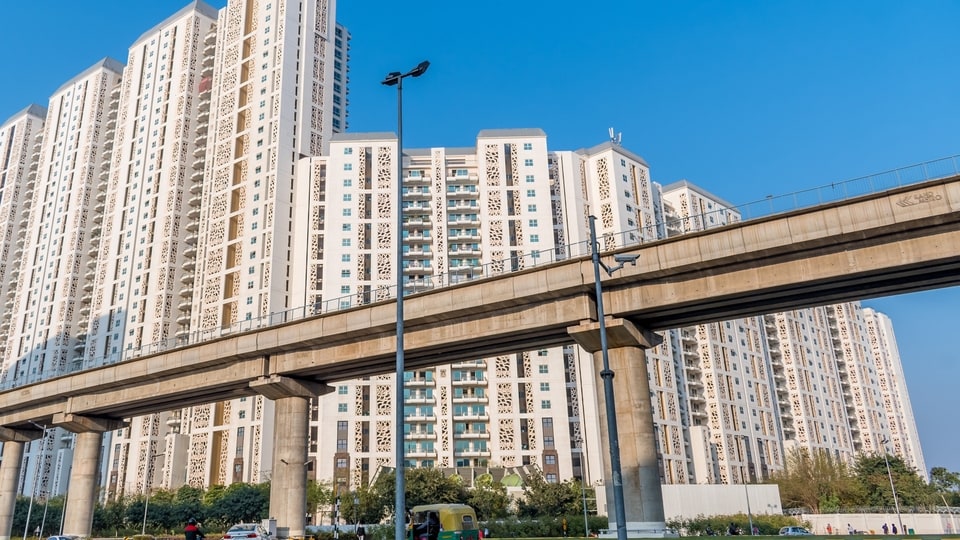
In Gurugram, many live in gated societies — they go to work, spend nine hours in a designated cubicle, and then return to their apartment complexes to park their vehicles at their designated spot, sometimes to find someone else’s car parked there. They post a picture on the society WhatsApp group.
Also Read | Outsider: ‘Gurugram is not just a city, it’s a lifestyle’
Then, action is taken. The offending party actually apologises and moves their vehicle. You spot a pothole on one of the lanes inside your society, you click a picture and post it on the society WhatsApp group, tagging the RWA members. They get to work, and it is fixed.
People are accustomed to governmental apathy. A pothole on the road to work becomes muscle memory: You know when it is about to come, so that you can avoid it. You are almost unaware of the concept that it can be fixed. If your car hits the pothole, you curse yourself first for not being careful instead of blaming the authorities. This is the essence of living in India.
For such people, living in a condominium feels like staying on a neat slice of Europe served on the platter of Gurugram dehaat: Contracts are enforceable, taxes you pay (maintenance) show results, and the lawns are manicured. Barring the forces of nature, there is a day-to-day equilibrium the people have achieved here. Once they enter the gates of their society, they breathe easy.
Most have acquired wealth through education. This brings in some civic sense, which is thankfully contagious. Life isn’t too bad; all other inefficiencies are fixed by 10-minute delivery. And this is true for all metros.
I have spent more than a decade in Gurugram, but when I hear people say, “It’s not a place worth living,” I nod in agreement, because this is theoretically correct for all Indian metros. And then I hear my daughter singing Blowing in the Wind by Dylan. The singing is still not great, but I plan to spend another decade in her birth-city. It’s this inertia, which cannot be expressed in words.
Abhishek Asthana is a tech and media entrepreneur, and tweets as @gabbbarsingh. The views expressed are personal


