
 E-Paper



The revolution that the West is imagining
With much to offer the world, India deserves our respect; manufacturing a revolution from our living rooms is a poor way to show it

 Prefer HTon Google


India has deeply disappointed some of my Indian intellectual friends in America, as well as the western media, by failing to produce the revolution they had been predicting. When I posted on X about the October 10 protests, saying that everything seemed normal apart from the traffic jams, they attacked me; when the Tiranga protest on October 16 failed to deliver the promised uprising, they merely redoubled their opinions. Apparently, their predictions require less scrutiny than my factual description of what I see.
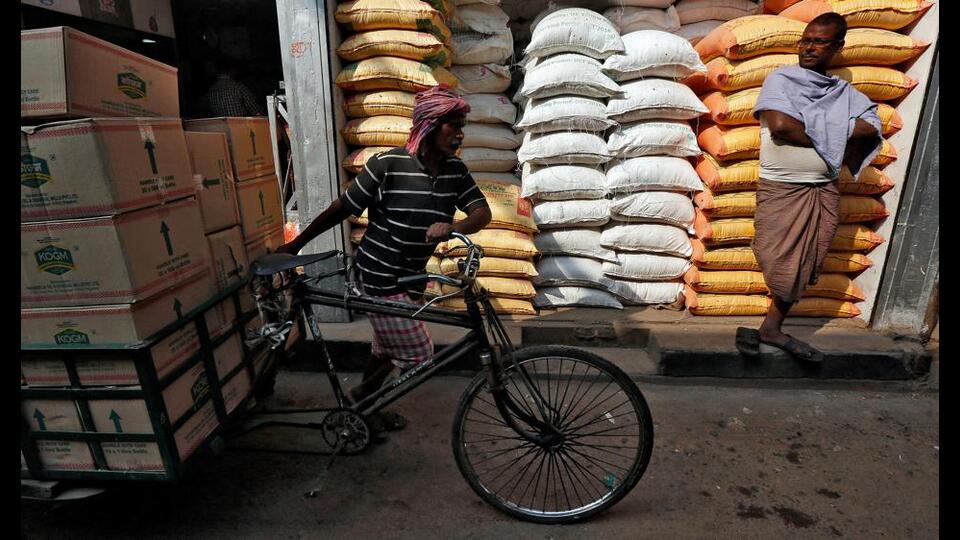
There’s a large gap between the India I am visiting and the India that I read about in America. I have been here for nearly three weeks, mostly staying at IIT Delhi and IIT Kharagpur, spending time with students and faculty, and talking to people on the streets, in markets, and in hostels.
The people I have spoken with have been more concerned about rising prices and blocked roads than about the protests. Some students knew there was a protest but could not tell me its demands; they gave no sign of planning to overthrow the government.
Apparently, even an account of traffic jams becomes politically suspect when it interrupts the western account of a country fomenting revolution.
The Washington Post had described an unprecedented challenge to the government. The wider western commentary expressed increasing certainty that India was approaching a revolutionary moment. The Tiranga march failed to deliver anything resembling that national uprising; yet the certainty survived intact, the premise unexamined, and the commentary became even more bizarre, as though greater conviction could make up for the missing revolution.
A journalist’s first responsibility is to test a compelling story against the evidence, even when the evidence makes that story rather less compelling to publish. That responsibility isn’t evident in these stories.
I encountered the same delusions in 2022, when my children feared for my safety and warned me not to visit Kashmir, forwarding article after article from The New York Times and The Washington Post depicting misery, fear, and economic collapse. A New York Times report even had the houseboats sinking: “Hard-pressed owners are unable to pay for fresh caulk”.
I trekked remote trails with a local guide, met nomadic families in their mud huts, visited the University of Kashmir, and stayed in Srinagar. The meticulously maintained houseboats remained stubbornly afloat and fully booked; tourist attractions had long queues; and restaurants were overflowing: an impressively robust economic collapse. I even had better internet access in Betaab Valley than in the hills of Silicon Valley, making the reports of misery easier to find than the misery itself.
I sent an account of my observations of India on the ground to editors who knew me well at The Washington Post, The New York Times, Foreign Policy, and Fortune, all publications I had written for many times. Every single publication refused to run it; two of the editors told me in confidence that their bosses were not allowed to publish the piece. Hindustan Times published it, and readers in India overwhelmingly agreed with my account.
Yet I have seen no retraction or apology from The New York Times or The Washington Post for the misinformation about Kashmir that they had published. That experience stayed with me, and I no longer take these publications’ claims to neutrality at face value. In this, I am hardly alone: Two-thirds of Americans have little or no confidence in the mass media, according to Gallup’s September 2026 poll.
The Indian journalist friends attacking me reflect a wider habit among Indian intellectuals in America — mistaking distance for perspective, and old familiarity for current knowledge. Some have updated their passports more often than their understanding of India. Yet their memories of shortages, the licence raj, and black-and-white television apparently qualify them to explain a country that has spent decades changing without consulting them.
We expatriates are in a strange position, having chosen to leave and having adopted American passports, American mortgages, and American problems, only to sit in our comfortable homes and lecture India about its democracy, its elections, and its Constitution. We do not live with the consequences of the prescriptions we offer, yet we comment from a distance and call it analysis.
India has real problems, including joblessness among the young, family worries about prices, and deserving questions about the Election Commission. Democracy may be at stake, but these are matters for Indians and India to resolve, and we foreigners do not get to appoint ourselves the country’s political guardians.
Indians can argue fiercely about their government without foreign commentators’ turning every protest into the story of a nation awaiting rescue; India is neither France nor Bangladesh. Colonial rule over India is over, and neither western editors nor expatriate intellectuals have inherited the right to dictate India’s future or demand a revolution that would vindicate their prejudices.
If we expatriates really care, we should build bridges, invest, visit, and help improve education and health care, as I am trying to do through my company, Vionix Biosciences. With much to offer the world, India deserves our respect; manufacturing a revolution from our living rooms is a poor way to show it.
Vivek Wadhwa is CEO, Vionix Biosciences. The views expressed are personal


