
 E-Paper



Photos: Indian transgender activist shakes up Kumbh with Kinnar Akhara
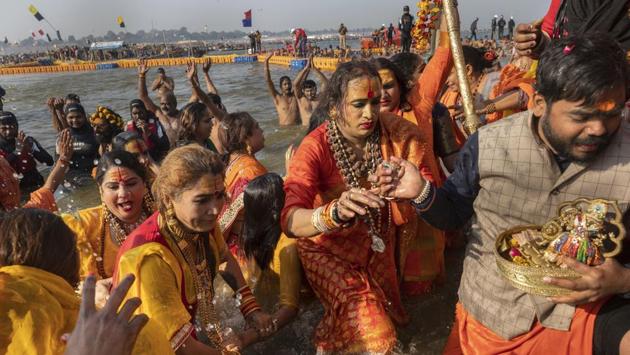
This year, the Juna akhara, one of the thirteen official congregations (akharas) of Hindu seers and sadhus invited the Kinnar (transgender) akhada to take part in the Kumbh Mela’s first royal bath. Traditionally the ritual is for Hindu priests and for all men but noted transgender activist Laxmi Narayan Tripathi and her group became the first to bathe at the confluence of the holy Ganges, Yamuna and mythical Saraswati rivers, with devotees following on foot, as observers showered them with flower petals.
Updated on: Jan 31, 2019 10:54 AM IST


Share via


Copy link

1/11
 View Photos in a new improved layout
Updated on Jan 31, 2019 10:54 AM
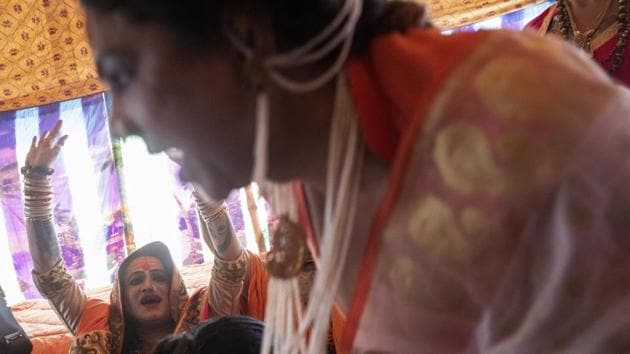
Laxmi Narayan Tripathi, a transgender activist and leader of the “Kinnar akhara” monastic order, celebrates the invitation by the “Juna Akhad” during the Kumbh Mela in Prayagraj. One of the most orthodox orders, the Juna akhara, invited Kinnar to take part in the Kumbh’s first royal bath on January 15. Since then, Tripathi has been pushing for recognition by the umbrella group that sets rules for the akharas. (Bernat Armangue / AP)
2/11
 View Photos in a new improved layout
Updated on Jan 31, 2019 10:54 AM
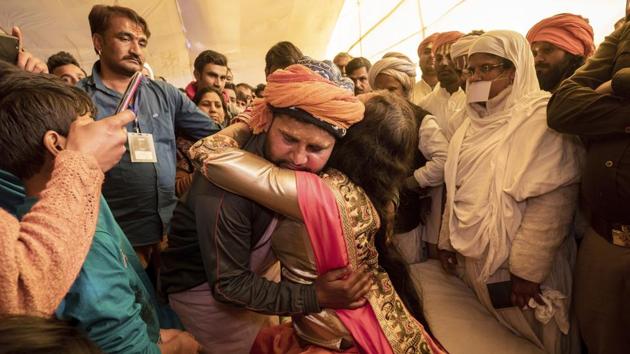
A former Asia Pacific representative to the UN, Tripathi is capitalizing on the ruling party’s emphasis on the nation’s Hindu heritage to claim a place for transgender people among its religious elite, stirring both admiration and controversy. Her newly formed Kinnar akhara, has set up camp at the Kumbh Mela, where Tripathi is attending an endless stream of visitors eager to touch her feet and receive her blessing. (Bernat Armangue / AP)
3/11
 View Photos in a new improved layout
Updated on Jan 31, 2019 10:54 AM
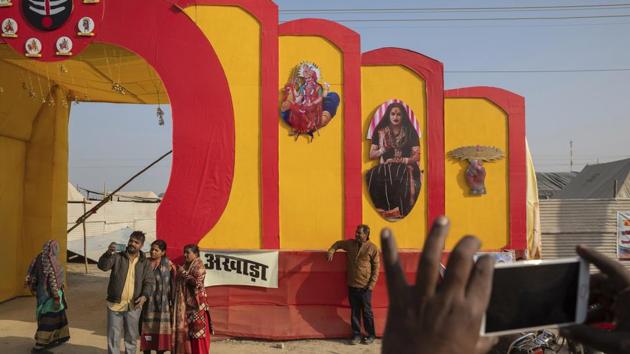
Devotees click pictures at the entrance to "Kinnar akhara," during the Kumbh Mela festival. The Kinnar camp on the edge of the festival grounds is adorned with images of Ardhanari, a half-male, half-female composite of the Hindu god Shiva and his consort Parvati, that religious scholars date to the 1st century. (Bernat Armangue / AP)
4/11
 View Photos in a new improved layout
Updated on Jan 31, 2019 10:54 AM
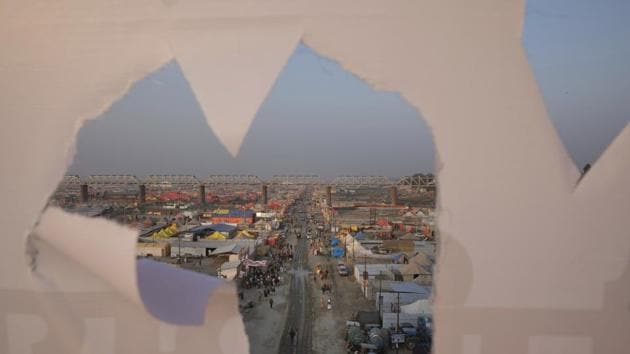
Kumbh is the largest human congregation in the world, with over 130 million pilgrims expected to participate in the festival with the belief that taking a dip in the holy water of river Ganga will pave the way for their salvation and would rid them of their sins. (Bernat Armangue / AP)
5/11
 View Photos in a new improved layout
Updated on Jan 31, 2019 10:54 AM
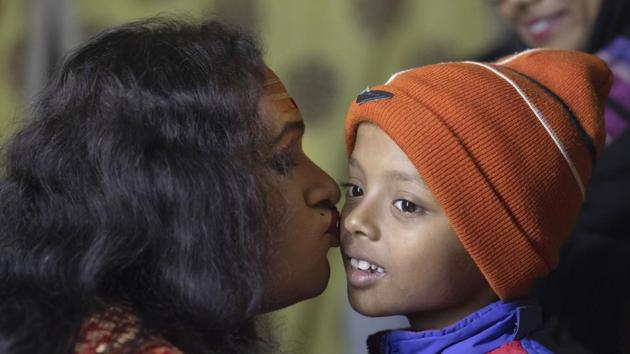
Tripathi, born a Brahmin, said she was inspired to form the akhara after a 2014 Supreme Court. “I was not at all religious. But after the court verdict, I had a space already in my religion, so why should I see another religion than the one which I was born? What was mine had to be mine. We decided to reclaim it,” she said. (Bernat Armangue / AP)
6/11
 View Photos in a new improved layout
Updated on Jan 31, 2019 10:54 AM
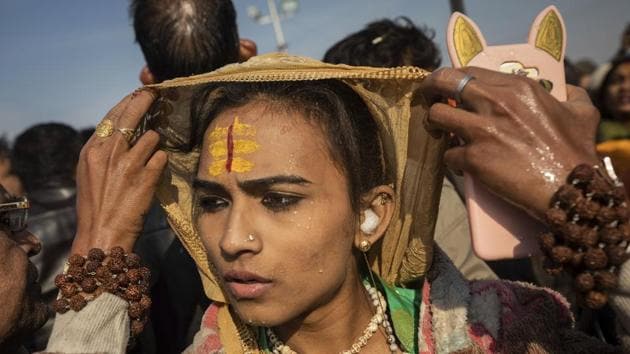
Although hijras were an integral part of the society described in the Vedas, they have been marginalized in modern India, forced out of homes as children and often sold into sex trafficking. Hindu families have continued ancient practices of paying hijras to dance at births and marriages, considering their presence auspicious, while simultaneously denying them access to these rites. (Bernat Armangue / AP)
7/11
 View Photos in a new improved layout
Updated on Jan 31, 2019 10:54 AM
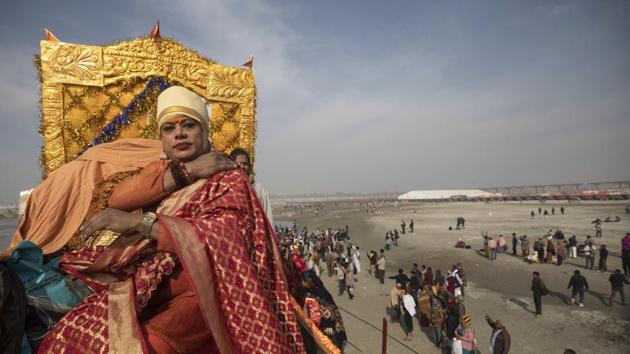
A member of the "Kinnar Akhara" sits on a carriage during a procession. Kinnar saint Pushpa Maa said being ordained gave new meaning to her life, “which was otherwise reduced to seeking alms by dancing in marriage or during birth of a child,” she said, adding, “I used to beg in trains or main crossings of the city. (Tripathi) helped us to erase that image. We are no longer a hijra but part of an organization which is fighting for our religious rights.” (Bernat Armangue / AP)
8/11
 View Photos in a new improved layout
Updated on Jan 31, 2019 10:54 AM
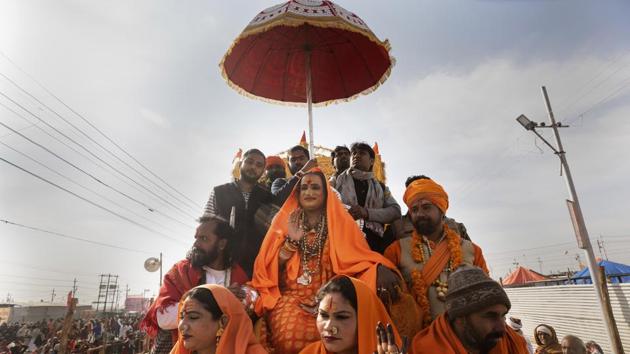
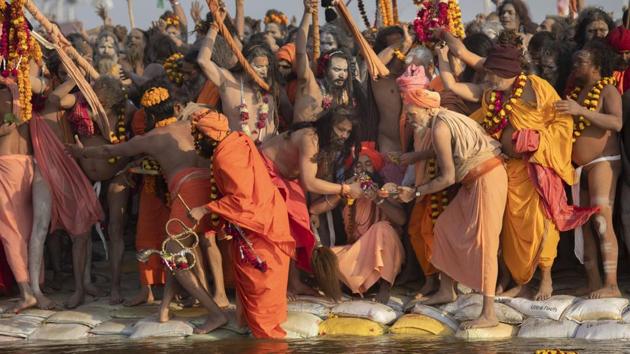
Unlike other akharas, which are only open to Hindu men, Kinnar, founded in 2015, is open to all genders and religions. On the Kumbh’s first bathing day, Tripathi led a train of 21 tractor chariots from their camp to the ghats, with devotees following on foot, as observers showered them with flower petals. One notable absence: naga sadhus who lead the akharas’ procession on royal bathing days. (Bernat Armangue / AP)
9/11
 View Photos in a new improved layout
Updated on Jan 31, 2019 10:54 AM
Laxmi Narayan Tripathi(C) takes a dip along with other members on Makar Sankranti day during the Kumbh Mela festival. They bathed in the presence of Juna members. “We have stripped enough in our lives, let us just have fun,” Tripathi said. (Bernat Armangue / AP)
10/11
 View Photos in a new improved layout
Updated on Jan 31, 2019 10:54 AM
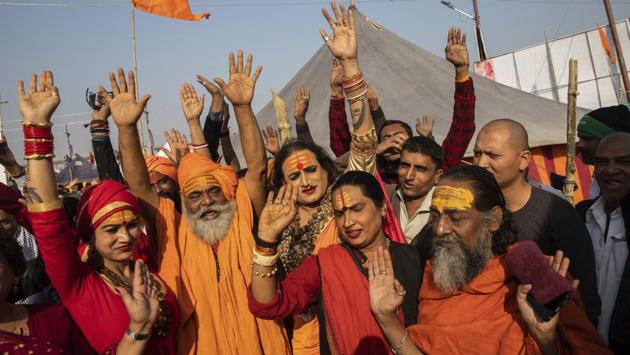
“For them to bathe with one of the oldest and most orthodox of the monastic orders, I consider that quite revolutionary,” said Ashok Row Kavi, chairman of the LGBTQ advocacy group Humsafar Trust. Kavi said, though, that Tripathi had “put herself between a rock (and) a hard place” by challenging the akharas’ all-male order on the one hand and, on the other, by siding with Hindu nationalists in their call for a temple. (Bernat Armangue / AP)
11/11
 View Photos in a new improved layout
Updated on Jan 31, 2019 10:54 AM


