
 E-Paper



Death and devastation: Hiroshima, Nagasaki after atomic bombings
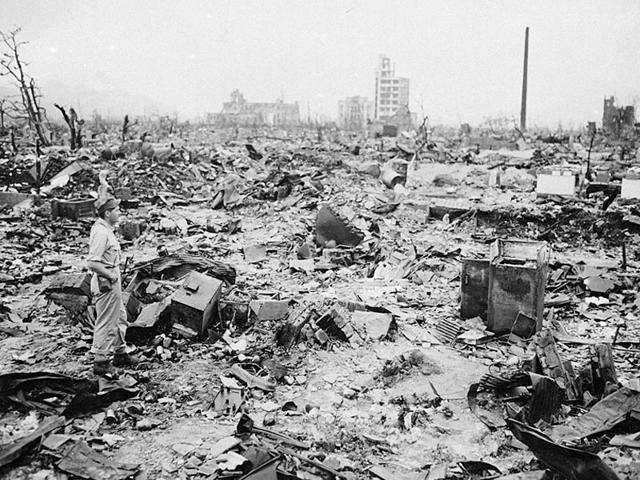
In this Sept 8, 1945 file photo, only a handful of buildings remain standing amid the wasteland of Hiroshima, the Japanese city reduced to rubble following the first atomic bomb to be dropped in warfare. (AP Photo/File)
Updated on: Aug 6, 2015 2:49 PM IST


Share via


Copy link

1/18
 View Photos in a new improved layout
Updated on Aug 6, 2015 2:49 PM
In this Sept 8, 1945 file photo, only a handful of buildings remain standing amid the wasteland of Hiroshima, the Japanese city reduced to rubble following the first atomic bomb to be dropped in warfare. (AP Photo/File)
2/18
 View Photos in a new improved layout
Updated on Aug 6, 2015 2:49 PM
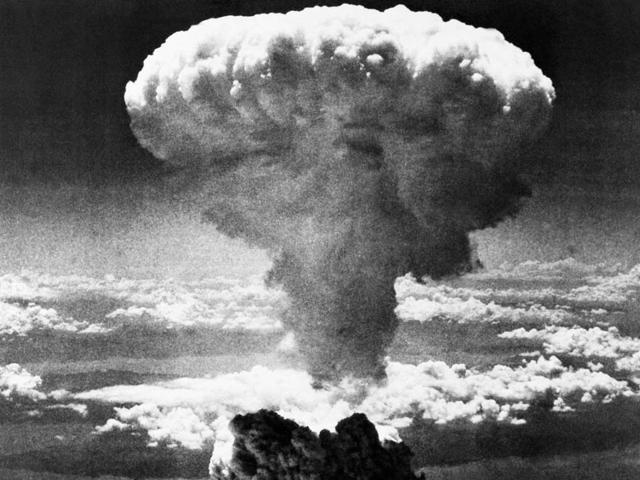
In this Aug 9, 1945 file photo, a mushroom cloud rises moments after the atomic bomb was dropped on Nagasaki, southern Japan.(AP Photo/File)
3/18
 View Photos in a new improved layout
Updated on Aug 6, 2015 2:49 PM
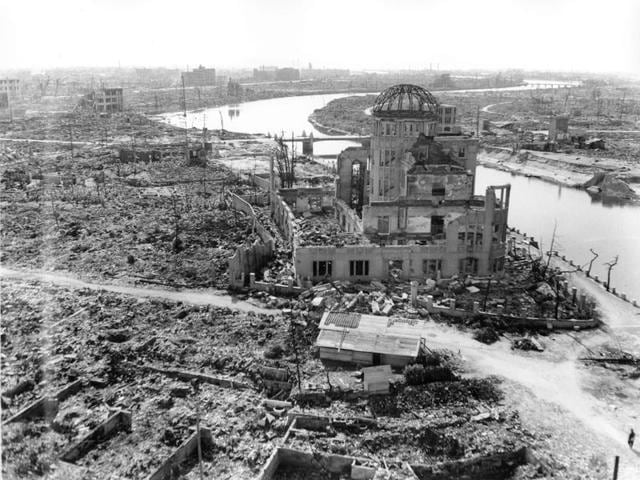
In this Sept 8, 1945 file photo, an allied correspondent stands in the rubble in front of the shell of a building that once was a exhibition center and government office in Hiroshima, Japan, a month after the first atomic bomb ever used in warfare was dropped by the US on Aug. 6, 1945. (AP Photo/Stanley Troutman, File)
4/18
 View Photos in a new improved layout
Updated on Aug 6, 2015 2:49 PM
In this Sept 5, 1945, file photo, the skeleton of a Catholic Church, foreground, and an unidentified building, center, are all that remaining the blast center area after the atomic bomb of Hiroshima, Japan.(AP Photo, File)
5/18
 View Photos in a new improved layout
Updated on Aug 6, 2015 2:49 PM
The Shiroyama National School (above C), which was damaged in the atomic bombing of Nagasaki on August 9, 1945, is seen in Nagasaki, southwestern Japan, in this undated handout photo taken by Shigeo Hayashi and distributed by the Nagasaki Atomic Bomb Museum. REUTERS/Shigeo Hayashi/Nagasaki Atomic Bomb Museum/Handout
6/18
 View Photos in a new improved layout
Updated on Aug 6, 2015 2:49 PM
In this Aug. 8, 1945 file photo, the shell of a building stands amid acres of rubble in this view of the Japanese city of Hiroshima. AP Photo/Mitsugi Kishida, File)
7/18
 View Photos in a new improved layout
Updated on Aug 6, 2015 2:49 PM
In this Aug. 8, 1945 file photo, soldiers and civilians walk through the grim remains of Hiroshima, two days after the atomic bomb explosion of Aug. 6,1945. The building on left with columned facade was the Hiroshima Bank. To its right, with arched front entrance, was the Sumitomo Bank. (AP Photo)
8/18
 View Photos in a new improved layout
Updated on Aug 6, 2015 2:49 PM
In this Aug 6, 1945 file photo, shortly after the first atomic bomb ever used in warfare was dropped by the United States over the Japanese city of Hiroshima, survivors are seen as they receive emergency treatment by military medics in Hiroshima, Japan. (AP Photo)
9/18
 View Photos in a new improved layout
Updated on Aug 6, 2015 2:49 PM
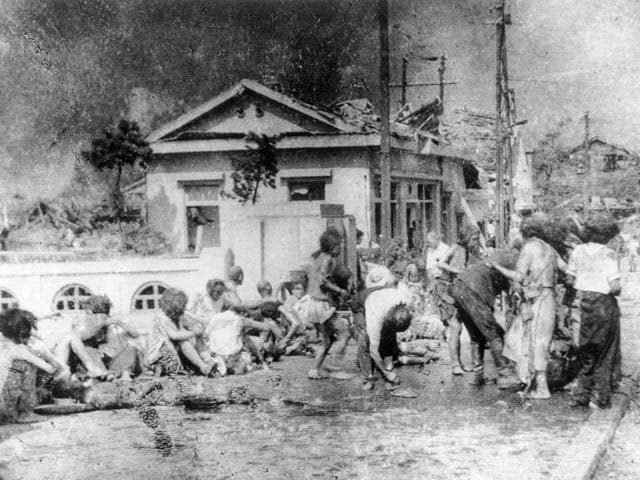
In this Aug 6, 1945, file photo, survivors of the first atomic bomb ever used in warfare are seen as they await emergency medical treatment in Hiroshima, Japan. (AP Photo, File)
10/18
 View Photos in a new improved layout
Updated on Aug 6, 2015 2:49 PM
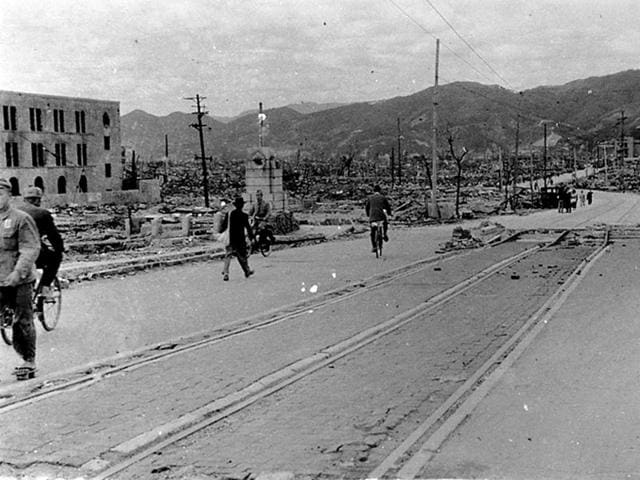
Local residents walk past destroyed buildings west-southwest of Aioi Bridge in Hiroshima, after the atomic bombing of the city on August 6, 1945, in this handout photo taken by Shigeo Hayashi in October 1945 and released by the Hiroshima Peace Memorial Museum. (REUTERS/Shigeo Hayashi/Hiroshima Peace Memorial Museum/Handout)
11/18
 View Photos in a new improved layout
Updated on Aug 6, 2015 2:49 PM
The Urakami Cathedral (C), which was destroyed by the atomic bombing of Nagasaki on August 9, 1945, is seen in Nagasaki, southwestern Japan, in this undated handout photo taken by Shigeo Hayashi and distributed by the Nagasaki Atomic Bomb Museum. (REUTERS/Shigeo Hayashi/Nagasaki Atomic Bomb Museum/Handout)
12/18
 View Photos in a new improved layout
Updated on Aug 6, 2015 2:49 PM
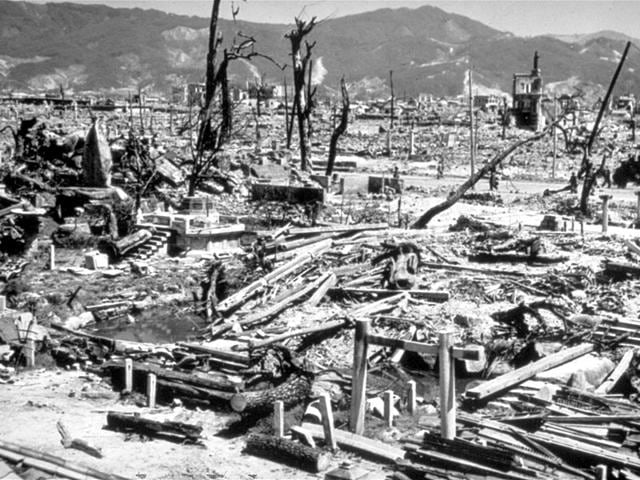
This Aug 6, 1945 file photo, shows the destruction from the explosion of an atomic bomb in Hiroshima, Japan. (AP Photo, File)
13/18
 View Photos in a new improved layout
Updated on Aug 6, 2015 2:49 PM
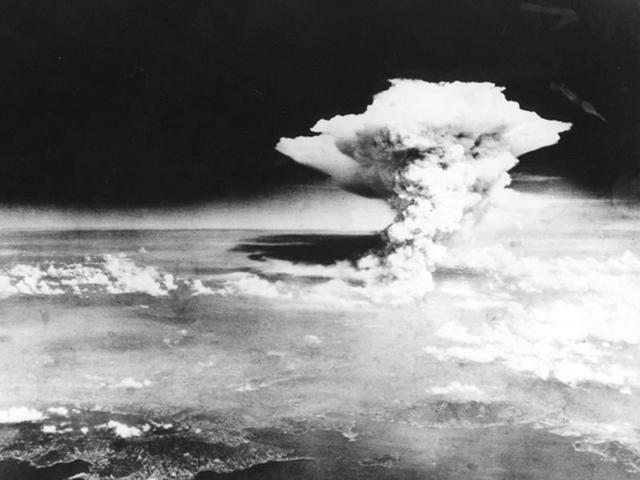
This handout picture taken on August 6, 1945 by US Army and released from Hiroshima Peace Memorial Museum shows a mushroom cloud of the atomic bomb dropped by B-29 bomber Enola Gay over the city of Hiroshima. (AFP Photo / HIROSHIMA PEACE MEMORIAL MUSEUM)
14/18
 View Photos in a new improved layout
Updated on Aug 6, 2015 2:49 PM
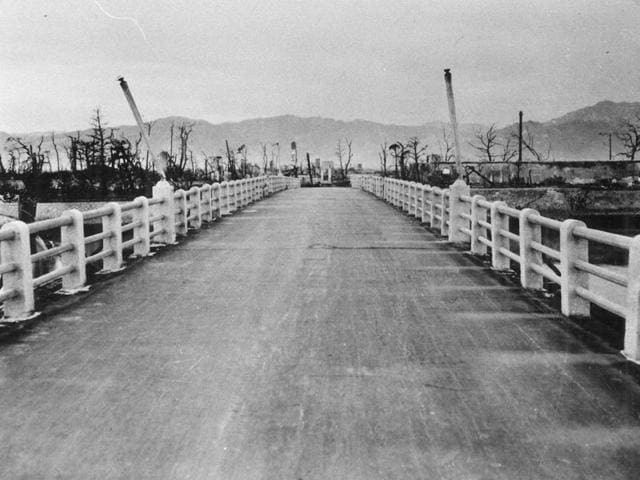
The etched shadow of railings are seen imprinted on the road surface of Yorozuyo Bridge, due to the heat of the atomic bombing of Hiroshima on August 6, 1945, in Hiroshima, in this undated handout photo taken by the US Army and distributed by the Hiroshima Peace Memorial Museum. This location is 860 meters (2,822 ft) from the centre of the blast; the unshielded asphalt surface was scorched, while the areas that were shielded by the railing are a lighter colour. (REUTERS/US Army/Hiroshima Peace Memorial Museum/Handout)
15/18
 View Photos in a new improved layout
Updated on Aug 6, 2015 2:49 PM
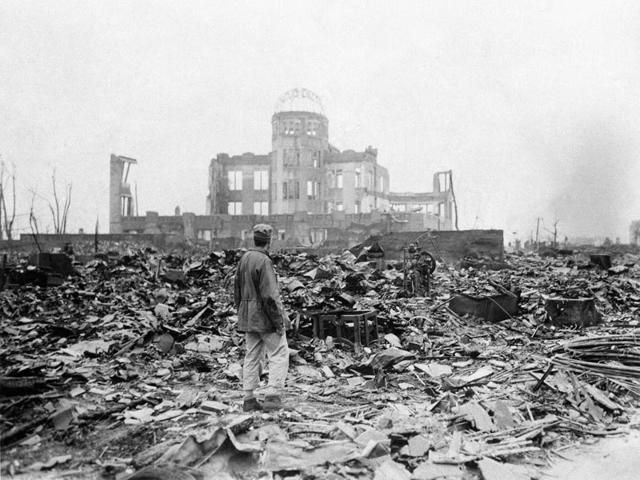
In this Sept 8, 1945 file photo, an allied correspondent stands in the rubble in front of the shell of a building that once was a exhibition center and government office in Hiroshima, Japan, a month after the first atomic bomb ever used in warfare was dropped by the US on Aug. 6, 1945. (AP Photo/Stanley Troutman, File)
16/18
 View Photos in a new improved layout
Updated on Aug 6, 2015 2:49 PM
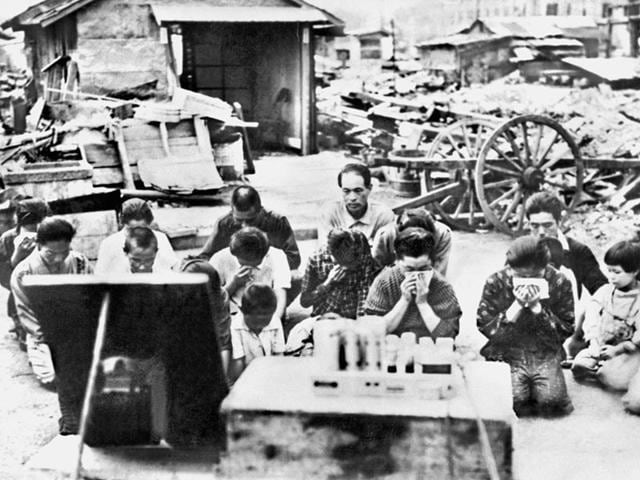
In this Aug 15, 1945 photo, people kneel and listen to the radio in Tokyo, as Emperor Hirohito announced on radio that Japan was defeated in the World War II. (Kyodo News via AP)
17/18
 View Photos in a new improved layout
Updated on Aug 6, 2015 2:49 PM
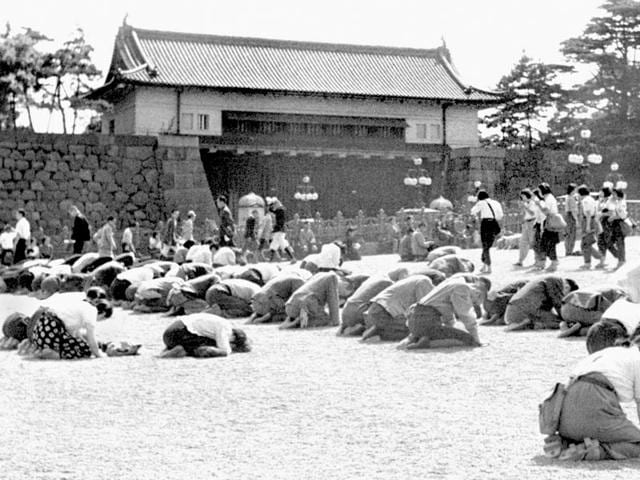
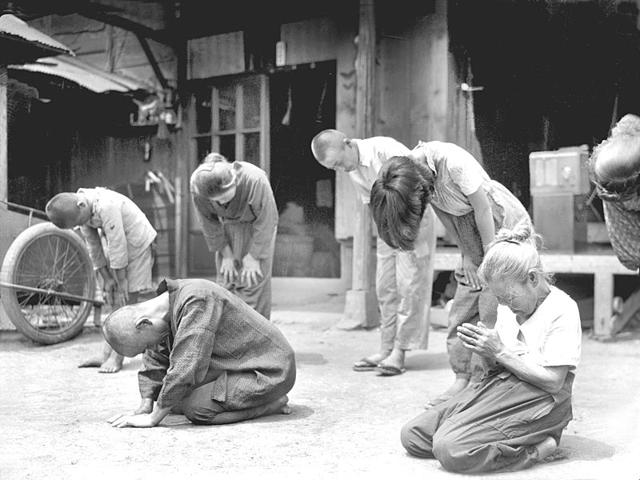
In this Aug 15, 1945 photo, Japanese people kneel in front of the Imperial Palace in Tokyo as Emperor Hirohito announced on radio that Japan was defeated in the World War II.(Kyodo New via AP)
18/18
 View Photos in a new improved layout
Updated on Aug 6, 2015 2:49 PM


