E-Paper



An air purifier can help improve indoor air quality, but does your bedroom need one? Here's what to know
Thinking of buying an air purifier for your bedroom? Understand HEPA filters, CADR, room coverage, noise levels and maintenance before choosing one.

 Prefer HTon Google


Our Picks
FAQs
Our Picks
| Product | Rating | Price |
|---|---|---|
Xiaomi Air Purifier 4 Lite for home|360 m3/hr CADR covers 462 sq.ft.|3Stage HighEfficiencyFilter| 160 Sq.ft in 6 mins | App+Voice control|Realtime filter usage + AQI Monitor|1yr replacement warrantyView Details  | ₹10,990 | |
 | ||
Honeywell Air Purifier for Home & Office, 3-in-1, Pre, H13 HEPA, Activated Carbon, Removes 99.99% Pollutants, Allergens, Pet Dander, Smoke, Dust & Pollens - Air touch V1View Details | ₹5,149 | |
| ||
Qubo Q400 Smart Air Purifier for bedroom by Hero Group| Up to 400 SqFt| True HEPA H13|Removes 99.99% Dust, Allergens, Smoke, Virus & PM2.5|330 m³/h CADR|5-Stage Filter|App Control|9000 Hrs Filter LifeView Details | ₹9,990 | |
| ||
Philips AC0950 Smart Wifi Air Purifier for Home, White | Real-Time AQI | Covers 300 sq.ft | CADR 250 m³/h | HEPA & Active Carbon Filter | Air+ App Control with SchedulerView Details | ₹11,995 | |
| ||
Pigeon Air Purifier for Home, HEPA H13, 99.99% PM2.5, White, 235 Sq FtView Details | ₹4,299 | |
| ||

Research-Backed Choices
Every product we recommend is chosen through a combination of Primary Research and Secondary Research.
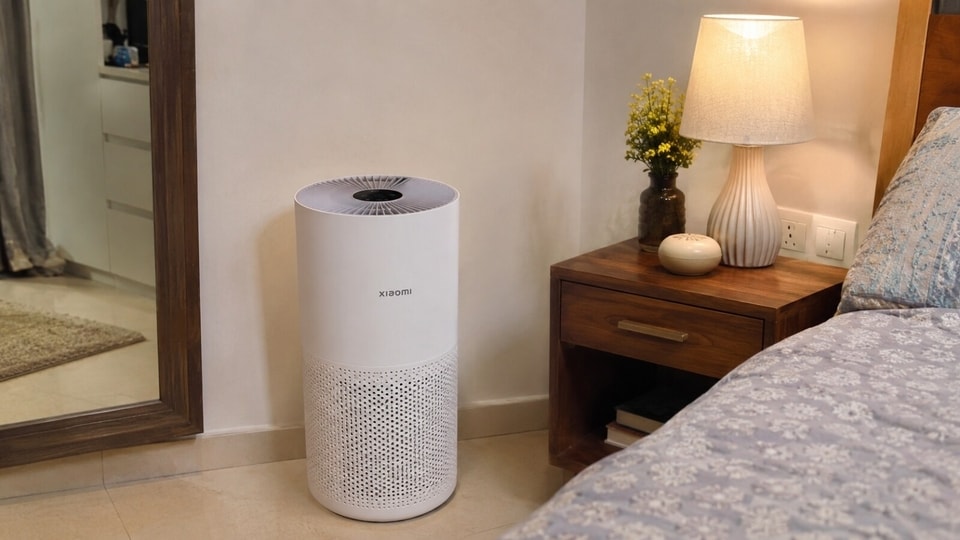

Would you spend money on an air purifier for a room where you spend nearly eight hours every night? It is a pretty reasonable question, particularly when outdoor pollution, dust and other airborne particles can affect indoor air quality too. Keeping the windows shut is not always a complete solution and ordinary fans cannot remove fine particles from the air. A bedroom air purifier can help reduce certain airborne pollutants, but not every model is suitable for a sleeping space. A machine that is too noisy, has limited coverage or needs expensive replacement filters could quickly become an inconvenience. Before buying one, here are the features worth checking, along with a few things that should not influence your decision too much.
1. Start by checking whether your bedroom needs an air purifier
An air purifier can be useful if your bedroom regularly collects dust, has poor ventilation or is exposed to pollution entering from outside. People living near busy roads, construction sites or industrial areas may also consider one to reduce exposure to airborne particles indoors. However, it is important to understand what these machines actually do. Most consumer air purifiers circulate room air through filters designed to capture specific pollutants. They do not automatically remove every indoor contaminant and their effectiveness depends on the filtration system, room size and operating conditions.
An air purifier is also not a substitute for cleaning, ventilation or controlling pollution at its source. If you have visible dampness or mould, for example, addressing the moisture problem is more important than simply running a purifier.
2. HEPA filtration should be high on your checklist
What does a HEPA filter actually do?
A high-efficiency particulate air (HEPA) filter is designed to capture very small airborne particles. A properly rated HEPA filter can remove at least 99.97% of particles measuring 0.3 microns under specified test conditions. This is particularly relevant for dust, pollen and other fine particles. For Indian buyers, checking the actual filter specification is more useful than relying on labels such as advanced purification or multi-layer cleaning. Look for clearly stated filtration standards and information about the replacement filter.
Do you need an activated carbon filter?
If your bedroom is exposed to cooking smells, smoke or certain gaseous pollutants, an activated carbon filter can be useful. It works differently from a HEPA filter by adsorbing certain gases and odours.
Ideally, look for a purifier that combines particulate filtration with an appropriately sized activated carbon filter. Remember that carbon filters have limitations too. They do not remove every gas, and their effectiveness depends on the amount and quality of carbon used.
3. Check CADR before looking at fancy features
Clean Air Delivery Rate (CADR) is one of the most important specifications when comparing air purifiers. It indicates how quickly a purifier can deliver filtered air, with ratings commonly provided for smoke, dust and pollen. A higher CADR generally means the machine can clean a larger volume of air more quickly. But buying the highest-rated model is not necessarily the right decision for a small bedroom.
Match the CADR to the room's floor area and ceiling height. For example, a compact bedroom does not necessarily need the same machine as a large master bedroom. Also check the manufacturer's recommended room coverage and the conditions under which that figure was calculated. A useful point to remember is that CADR and room coverage are not interchangeable specifications. Compare both rather than making a decision based on a single advertised number.
Top air purifiers for bedroom on Amazon
4. Noise levels: A feature you will notice every night
An air purifier may have excellent filtration, but that does not help much if its fan keeps you awake. Unlike a living room, where occasional background noise is less noticeable, a bedroom needs a quieter operating environment. Check the noise rating in decibels (dB) before purchasing. Many manufacturers publish separate figures for different fan speeds. A model might sound reasonably quiet in sleep mode but become considerably louder when running at maximum power. Look for a dedicated sleep mode that reduces fan speed and dims or switches off the display lights. This is particularly useful if you plan to leave the purifier running overnight.
One thing worth checking is whether sleep mode compromises cleaning performance. A lower fan speed generally means less air passes through the filter. Ideally, choose a purifier that can maintain adequate air circulation without requiring its loudest setting throughout the night.
5. Air quality sensors and automatic mode: Useful, but not essential
Some air purifiers come with built-in sensors that monitor particulate pollution and display readings such as PM2.5. This refers to fine airborne particles measuring 2.5 micrometres or less, which can penetrate deep into the respiratory system.
An automatic mode uses sensor readings to adjust the fan speed. For example, if dust levels increase while you are changing bedsheets, the purifier may increase its airflow and slow down once particle levels fall.
This can be convenient if you do not want to keep adjusting settings manually. However, sensor readings should be treated as an indication rather than a laboratory-grade measurement of your bedroom's air quality.
Wi-Fi connectivity, smartphone controls and voice assistant support are additional conveniences. They can help you schedule operation or check filter status remotely, but they should not take priority over filtration performance and room coverage.
6. Filter replacement and maintenance: Calculate the running cost
The purchase price is only one part of owning an air purifier. Its filters need periodic replacement, and the expense can vary significantly between brands and models.
Before buying, check three things:
- Replacement filter price: Find out how much an original replacement costs in India and whether it is readily available.
- Replacement frequency: Manufacturers provide recommended replacement intervals, but actual life depends on pollution levels, usage and maintenance.
- Filter availability: Check whether the brand sells genuine replacement filters through its official website or authorised retailers.
Some models include washable pre-filters that capture larger particles such as hair and visible dust. These can reduce the amount of debris reaching the main filter, but they do not eliminate the need to replace HEPA or carbon filters.
Also check whether the machine has a filter replacement indicator. It is a useful reminder, particularly when the purifier operates for several hours every day.
7. Safety, placement and power consumption matter too
A bedroom purifier should be practical to operate for long periods. Check its power consumption, especially if you intend to keep it running overnight and during periods of high pollution.
Placement is equally important. Avoid pushing the purifier into a tight corner or positioning it behind curtains, furniture or other objects that restrict airflow. Follow the manufacturer's recommended clearance around the air intake and outlet
Finally, remember that an air purifier works best as part of a broader indoor air-quality routine. Regular dusting, controlling moisture, avoiding indoor smoking and addressing sources of pollution remain important.
Bedroom air purifier: Features to compare before buying
| Feature | What to look for | Why it matters |
|---|---|---|
| Filtration | Properly specified HEPA filter | Captures fine airborne particles |
| Odour removal | Activated carbon filter | Helps reduce certain gases and smells |
| CADR | Suitable rating for bedroom size | Determines particle-cleaning capacity |
| Noise | Published dB ratings and sleep mode | Makes overnight operation more comfortable |
| Air quality sensor | PM2.5 monitoring | Helps monitor changes in particle levels |
| Auto mode | Automatic fan adjustment | Reduces manual intervention |
| Maintenance | Affordable, available replacement filters | Controls long-term ownership costs |
| Power consumption | Published wattage and efficiency | Helps manage electricity usage |
| Safety | No intentional ozone generation | Avoids an unnecessary indoor pollutant |
Should you buy an air purifier for your bedroom?
If your bedroom is regularly exposed to outdoor pollution, dust or smoke, an air purifier can be a worthwhile addition. However, spending more does not automatically mean getting cleaner air. The filtration system, CADR rating and suitability for your room should determine your purchase.
For most buyers, a model with a properly specified HEPA filter, sufficient room coverage, manageable noise levels and reasonably priced replacement filters is a sensible starting point. An activated carbon layer is worth considering if odours and certain gaseous pollutants are also a concern.
You can skip premium extras such as Wi-Fi controls and voice commands if you do not need them. Put that money towards better filtration and a machine you can afford to operate regularly. Ultimately, a well-sized purifier that runs consistently is a more practical purchase than an expensive model that spends most of its time switched off.
Similar stories for you:
Delhi-NCR pollution to indoor dust: Why an air purifier could be a worth an investment in 2026
Disclaimer: At Hindustan Times, we help you stay up-to-date with the latest trends and products. Hindustan Times has an affiliate partnership, so we may get a part of the revenue when you make a purchase. We shall not be liable for any claim under applicable laws, including but not limited to the Consumer Protection Act, 2019, with respect to the products. The products listed in this article are in no particular order of priority.