
 E-Paper



Security tightened at Dhaka hospital as Chinese medics join efforts to treat critically ill Zia
Security around former Prime Minister Khaleda Zia was heightened as a Chinese medical team arrived to treat her critical condition at a Dhaka hospital.

 Prefer HTon Google


Security was tightened around Bangladesh's former prime minister Khaleda Zia on Tuesday as a specialist medical team from China joined efforts to treat the ailing politician, who remains in a highly critical condition at a private hospital in Dhaka.
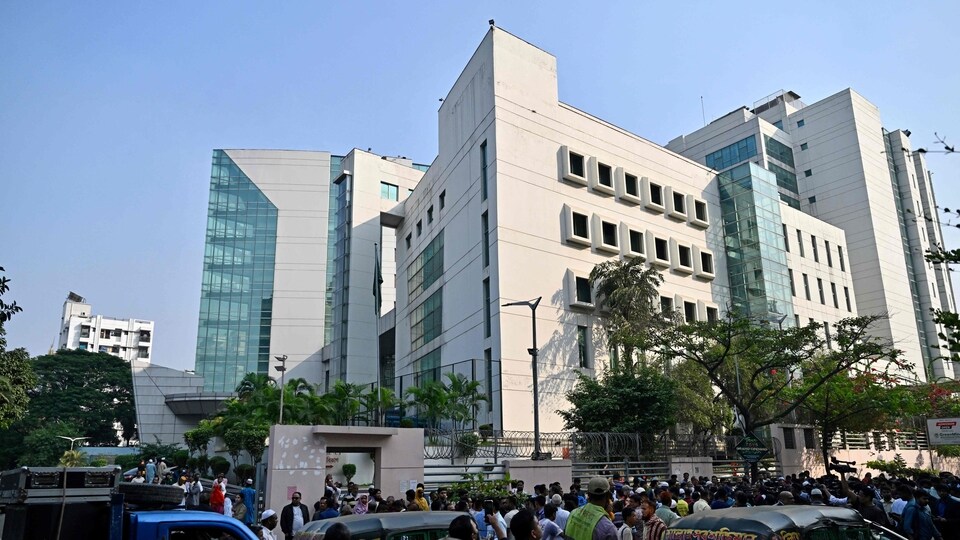
Police erected a barricade at the main gate of Evercare Hospital around 2 am, with hospital sources saying more than two dozen personnel have been deployed to regulate patients' movement and reinforce Zia’s security, The Daily Star newspaper reported.
ALSO READ | PM Modi ‘deeply concerned’ over ex Bangladesh leader Khaleda Zia's health, affirms ‘all possible support’
The 80-year-old Bangladesh Nationalist Party (BNP) chairperson was admitted to the hospital on November 23 after being diagnosed with infections affecting her heart and lungs. Four days later, the three-time prime minister was shifted to the coronary care unit after several of her health complications worsened.
Her condition deteriorated further, and she was placed on ventilation on Sunday night, BNP Vice-Chairman Advocate Ahmed Aazam Khan said on Monday.
A five-member specialist team from China arrived in Dhaka on Monday and was seen entering the hospital late in the night, according to the Dhaka Tribune newspaper.
The delegation earlier held a meeting with the medical board overseeing Zia's treatment, confirmed the board's head and cardiologist, Dr Shahabuddin Talukder.
Talukder said Zia’s condition remained unchanged and that she was not fit to travel abroad for advanced treatment.
He added that further expert opinion was urgently needed, with another team of Chinese specialists expected to arrive later on Tuesday.
The tightened security followed the interim government’s decision on Monday to declare Zia a “very, very important person”, enabling the deployment of the Special Security Force (SSF) for her protection.
ALSO READ | Sheikh Hasina in exile in India, Khaleda Zia ‘critical’ at Dhaka hospital, what happens next in Bangladesh?
Four SSF personnel visited the hospital around midnight and inspected various sections of the building for nearly three hours.
Zia is currently staying in a cabin on the fourth floor, where surrounding cabins have been vacated as part of heightened security protocols.
The three-time prime minister was admitted to the private hospital on November 23 after being diagnosed with infections affecting her heart and lungs. She was moved to the coronary care unit four days later as her complications worsened.
Her condition deteriorated further, and she was placed on ventilation on Sunday night, BNP Vice-Chairman Advocate Ahmed Aazam Khan said on Monday.
“She is in a very critical condition. There is nothing more to do except seek prayers from the whole nation,” he told reporters.
ALSO READ | Bangladesh ex-PM Khaleda Zia’s condition ‘extremely critical’, says party
BNP Standing Committee member Salahuddin Ahmed told reporters late Monday that Zia's son and the party’s acting chairman, Tarique Rahman, who has been living in self-exile in London for over a decade, “will return to Bangladesh soon”.
Prime Minister Narendra Modi on Monday expressed deep concern over Zia’s health and offered all possible support.
Across Bangladesh, prayers are being held for Zia’s recovery.
Local BNP units and affiliated organisations arranged special prayers in mosques, temples and community centres in Dhaka, Rajshahi, Chattogram, Barishal, Sylhet, Mymensingh and other districts. Many supporters also took to social media to post prayers and messages wishing her a swift recovery.


