E-Paper



Thailand introduced giant mimosa for farming; it spread across over 30% of Mekong floodplains, while waterbird numbers fell 27% at one wetland
Introduced to Thailand in 1947 as a farm cover crop, giant mimosa has spread across over 30% of Mekong floodplains and is costly and hard to remove.

 Prefer HTon Google


Giant mimosa arrived in Thailand with a simple job. According to a 2023 review in the journal Plants, the plant was brought in as a cover and green manure crop in 1947. Now, the same review lists it as one of the 100 worst invasive species in the world. The story is about how a farming fix can become a long-term headache for rivers, fields, and wildlife.

How a farm helper became a floodplain invader
The review says giant mimosa is native to tropical America. It forms dense, thorny patches, which can grow up to 6 meters high. Introduced in 1947, it spread all over Thailand along riverbanks and floodplains. The review also notes the plant has been in the Mekong River Basin since the 1970s, and has spread over 30% of the floodplain areas of the Mekong. The genetic work it cites suggests there were several introductions into Thailand, so the 1947 planting is only part of the story. But the Thai case is an example of how a plant introduced for agriculture can end up far beyond the fields where it started.
Why it spreads fast and what it costs farmers
The review identifies several features that make giant mimosa a strong spreader. It can reach reproductive maturity within six to eight months and is estimated to produce up to 220,000 seeds per plant annually. Some seeds have been found to remain dormant in the soil for as long as 26 years. Cut plants tend to regrow from the stump. All this has serious implications for farmers. Thick clusters have led to a reduction in farmland and have also obstructed irrigation systems in the rice paddies and other croplands. Moreover, farmers in the Mekong floodplains spend about 11 days per hectare each year clearing the plant. That’s a lot of time and effort just to hold it back.
Deep Dive

What happened to the birds
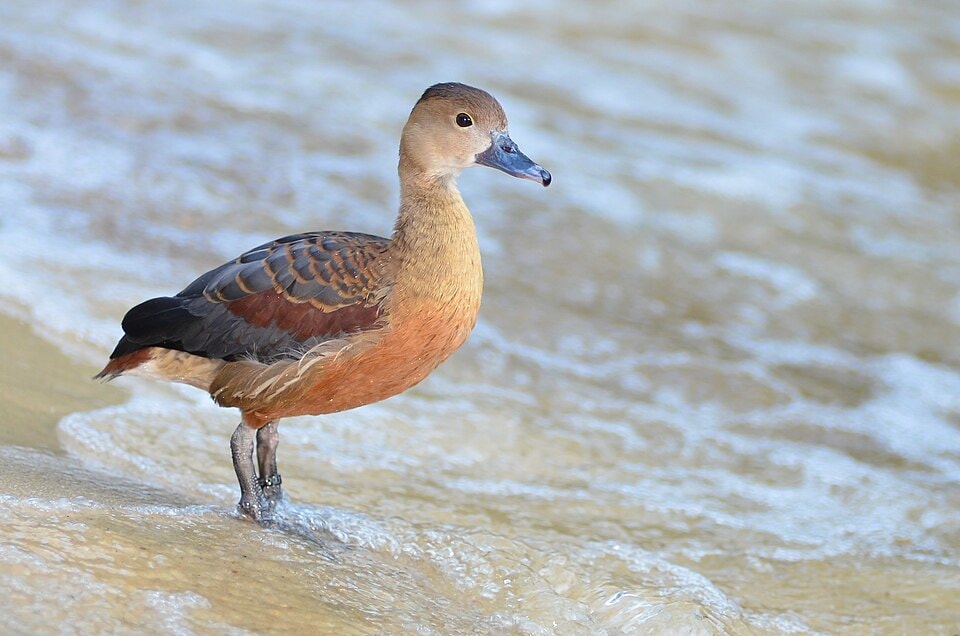
The bird story is a bit more involved. A12-year study in Tropical Conservation Science tracked resident waterbirds from 2003 to 2014 at Bung Boraphet, the largest freshwater wetland in Thailand. Resident waterbird numbers overall went down by 27%, the researchers found. Ducks fell the most, down 56%. The team also investigated what changes in the wetland correlated with these trends. Large waders were less abundant in giant mimosa-infested areas. There were other things as well. In deeper water, there were fewer small wading birds, and in a group called vegetation gleaners, there were fewer birds with increasing human settlement. The study did not attribute the entire 27% drop to mimosa. Because the study was limited to a single wetland, its numbers should not be taken as Mekong-wide figures.
Why it is so hard to remove
Control isn’t easy. The review says herbicides are the main method, but cutting, bulldozing, and fire can also work. But the plant often grows back from parts left behind, and dormant seeds still sprout. In one example from Australia, it says that 109 seedlings per square meter were still coming up ten years after a stand was cleared. In Australia, the release of natural enemies from the plant’s native range has been beneficial, but the review notes that biological control alone did not provide adequate control. This implies that a combination of several methods may be more effective than a single method. The takeaway is a cautious one. The evidence shows that this shrub is expensive, difficult to remove, and causes losses to farmers and some wildlife.