
 E-Paper



 Trending News
The Savvy Showmanship That Helps Jensen Huang Always Come Out on Top
As a longtime friend of the Nvidia CEO puts it, “Jensen will always pull a rabbit out of a hat”


The table tennis community of Portland, Ore., had never seen anything like him.
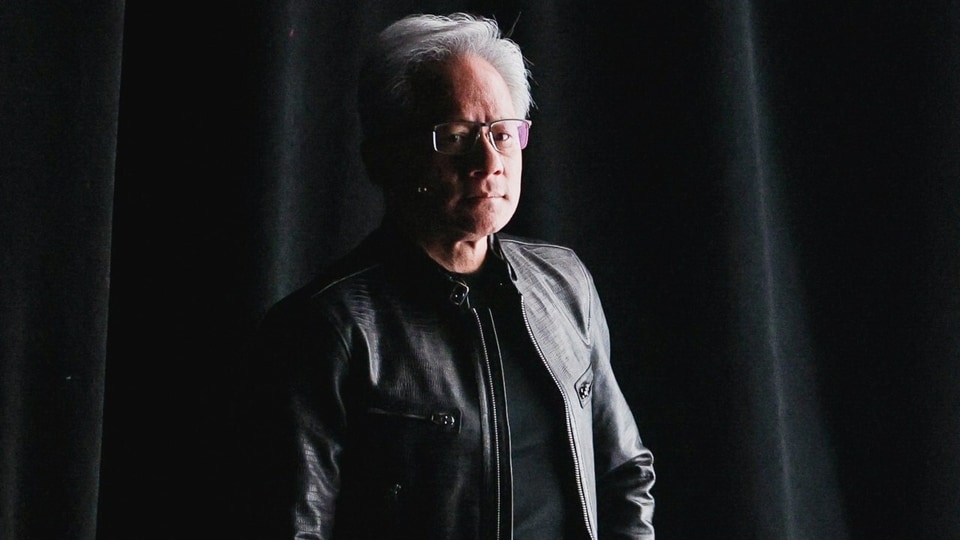
Standing 5’3” and weighing 105 pounds, 14-year-old Jen-Hsun Huang was a ping pong phenom. After he showed up at the city’s Paddle Palace, its owner, Lou Bochenski, was telling Sports Illustrated that he was the most promising junior player to ever compete in the Northwest.
“I suggest you watch out for him,” Bochenski wrote in a letter to the editor.
Huang had only started playing the sport three months earlier—and the star student told reporters that he hoped to grow up to become a nuclear engineer.
Huang was a quick study—with a fueling ambition for the next bigger stage, no matter what stage he had already ascended. During the early days of Nvidia, he announced every deal with fanfare to raise the upstart company’s profile as fast as possible. By his 30s, he was stopped for autographs by videogame enthusiasts.
And when Nvidia took Huang to the highest echelons of corporate influence and geopolitical sway, the CEO used a nerdy job to cast himself as an industry celebrity, business titan and Washington power player. Through doggedness and showmanship, Jen-Hsun became Jensen—famous enough in some circles to be known by one name.
Then last month, it appeared to all come crashing down. Huang admitted to having an affair with a woman that U.S. government officials believed was working with China’s premier spy agency. The affair, along with a second relationship with a subordinate at Nvidia, would cost Huang his job, send the stock tumbling and realign interests in D.C. over the China-U. S. competition shaping the 21st century.
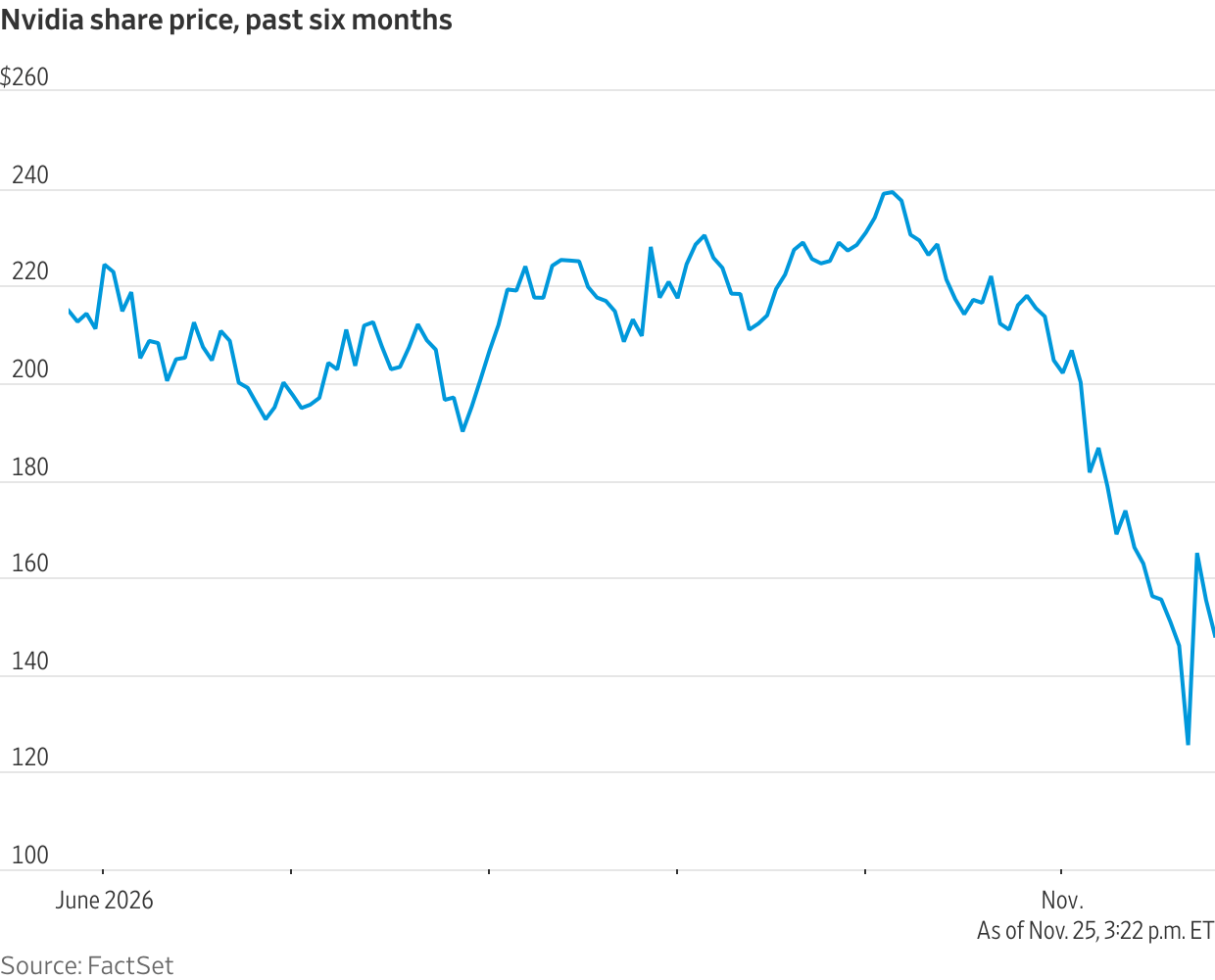
When it looked like Huang’s career at Nvidia was finished, Jon Peddie, a longtime friend of Huang’s, observed: “Maybe Jensen is Icarus, and the wax is melting.”
It wasn’t. On Monday, Nvidia’s board hired Huang back as CEO, following an intervention by President Trump. The stock surged. Hundreds of employees greeted their former boss with cheers and chants of his name. One woman hugged him, wiping away tears.
Huang apologized to employees. “I made some terrible mistakes,” he said, adding that he is attending daily 90-minute therapy sessions.
Nvidia’s board said it was confident that having Huang as CEO “poses no national security risk,” but to some lawmakers, his reinstatement has become a glaring example of corruption in the Trump era—one they still plan to investigate.
Huang’s story has been an American one: the son of immigrants, sent to the U.S. with only an older brother and poor English, who goes on to co-found what was for a time the most valuable company on Earth.
Interviews with friends and associates who have known him since his pre-Nvidia days describe an executive of singular intensity and savvy—with an unrelenting ability to make the most of any situation. Employees in recent interviews—and in some lawsuits—have also described a shadow side to Huang’s ambition, describing a workplace where he excoriated subordinates and ruled with a fearsome temper. His centrality to Nvidia—from its operations to its public image—is extreme even by the standards of an industry accustomed to the likes of Elon Musk or Steve Jobs defining their own enterprises.
The seeds of his success at Nvidia can be found in unlikely places—a Denny’s in Oregon where he bused tables in high school, a videogame convention where he was treated like a god. But so can the signs of a potential downfall, most notably in an embrace of showmanship and a tendency to stretch the boundaries of the power he wields.
Peddie, an expert in computer graphics, first met Huang when Huang called him in the early 1990s for advice about a company he was thinking of starting—the company that would become Nvidia.
There were times, Peddie said, when he listened to Huang’s ambition and thought to himself: “He’s toast, this isn’t going to work.”
But Wednesday, with his friend reinstated as CEO, Peddie remembered the slogan he had long ago ascribed to Huang:
“Jensen will always pull a rabbit out of a hat.”
Huang was only 10 years old when he first found himself in the wrong place at the wrong time.
Born in Taiwan, he had been living in Thailand when his parents sent him and his older brother to live with relatives in the U.S. Those relatives, believing they were enrolling the siblings in a prestigious boarding school, sent them to the Oneida Baptist Institute in rural Kentucky.
It was not a prestigious boarding school. It was a school for juvenile delinquents, where classmates carried knives to class.
Huang eventually reunited with his parents and settled in the Portland area, where, in addition to table tennis, he gorged on American culture: “The Partridge Family,” Snickers bars, “Speed Racer.” Before coming to the U.S., he had never walked into a house with carpet.
A straight-A student, he enrolled at Oregon State University because a friend from high school was going there, he told Condoleezza Rice in a conversation the two recorded earlier this year.
In a yearbook photo, he posed with the other members of Eta Kappa Nu, the honorary fraternity for electrical engineering students. His outfit—an argyle sweater, worn over a shirt and tie—is a far cry from the Tom Ford leather jackets that would become his signature look.
At Oregon State, he would meet his future wife, Lori Huang, one of three women in the school’s engineering class of 250. In interviews, Huang would note that Lori never complained about the long hours that building Nvidia kept him from home.
By choosing a career in chips, Huang was pursuing what at one time was considered the geekiest of engineering fields. But when he and two co-founders started Nvidia in 1993, they quickly established a name for themselves with a product that compressed power and allowed even established players to elevate their software offerings.
Brad Silverberg was working at one of those established players—Microsoft, where he was a senior vice president overseeing several signature products, including Windows 95.
When he met Huang, Microsoft’s gaming division was lagging behind its competitors. Huang’s pitch: Our chips can help you catch up.
“His enthusiasm was always so infectious,” said Silverberg in an interview. “It just made us want to work 28 hours a day.”
Inking agreements with Microsoft, Sega and other notable partners put Nvidia on the map—something Huang was eager to do, usually through an ongoing stream of press releases trumpeting each deal.
Sega tapped Nvidia to build what it hoped would be a hit product to rival PlayStation, after executive Shoichiro Irimajiri met with Huang and was impressed by his passion and vision. That work with Sega gave a critical boost to Nvidia, before a flawed strategy for rendering images nearly sank the company. Sega ultimately offered a $5 million lifeline, taking a stake in the company. Huang traveled to Japan to meet with senior Sega leaders and keep the partnership alive.
With that cash infusion, Nvidia scrambled to create the breakthrough chip released in 1997.
That new Nvidia chip allowed videogames to graduate from pixelated graphics to photo-realistic displays. Characters on screen looked more humanlike than ever—in the 1998 hit “Half-Life,” players aimed their rifles at characters whose eyes followed the shooter as he moved through the room. Nvidia went public the next year.
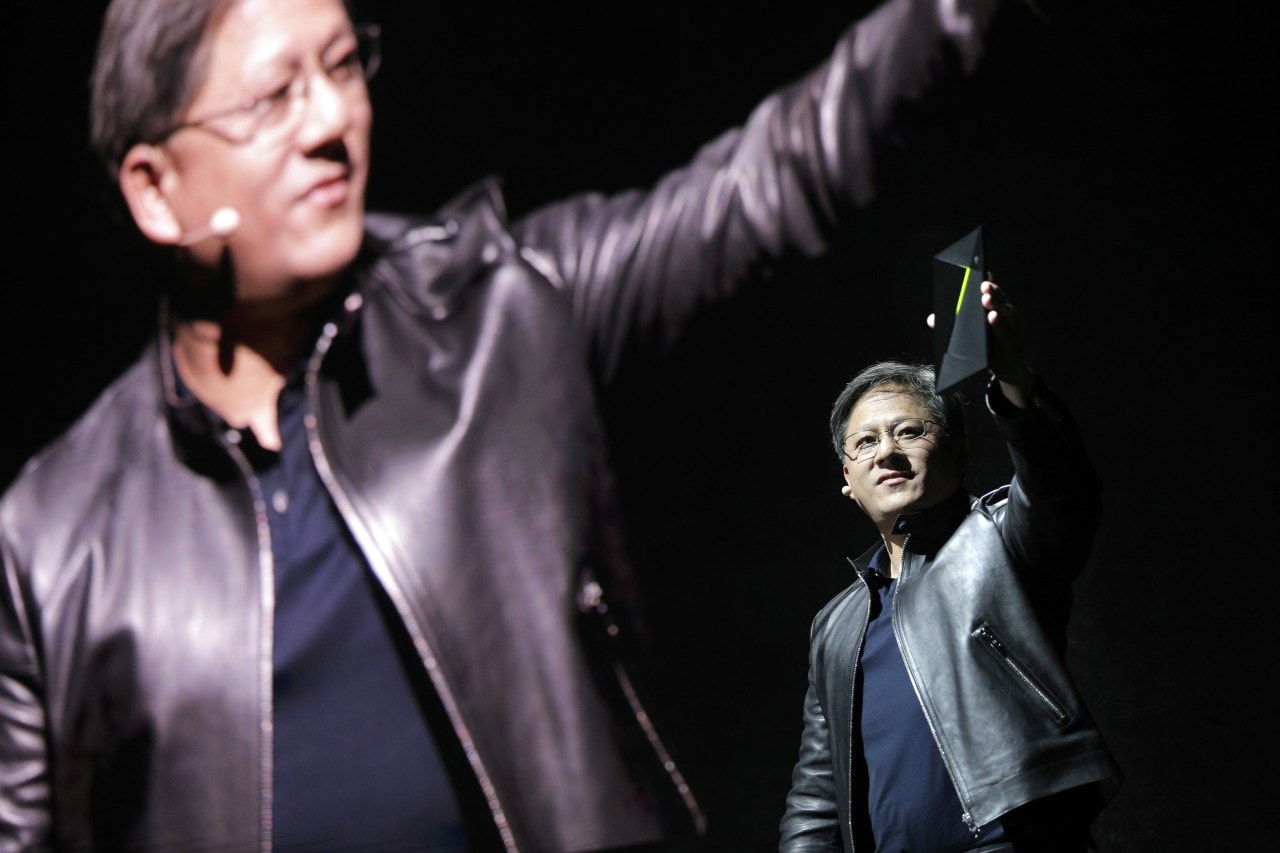
The gaming world wasn’t as buttoned-up as other parts of Silicon Valley; the crew leading Microsoft’s games effort was known as “the Beastie Boys.” Huang embraced that side of the work too, showing up to conventions in some cases dressed in his products, like when he arrived at the 2009 Consumer Electronics Show in Las Vegas wearing 3-D glasses and bearing a Rockband guitar, which he held over his head and pretended to shred.
“He was a rock star in that world,” Silverberg said.
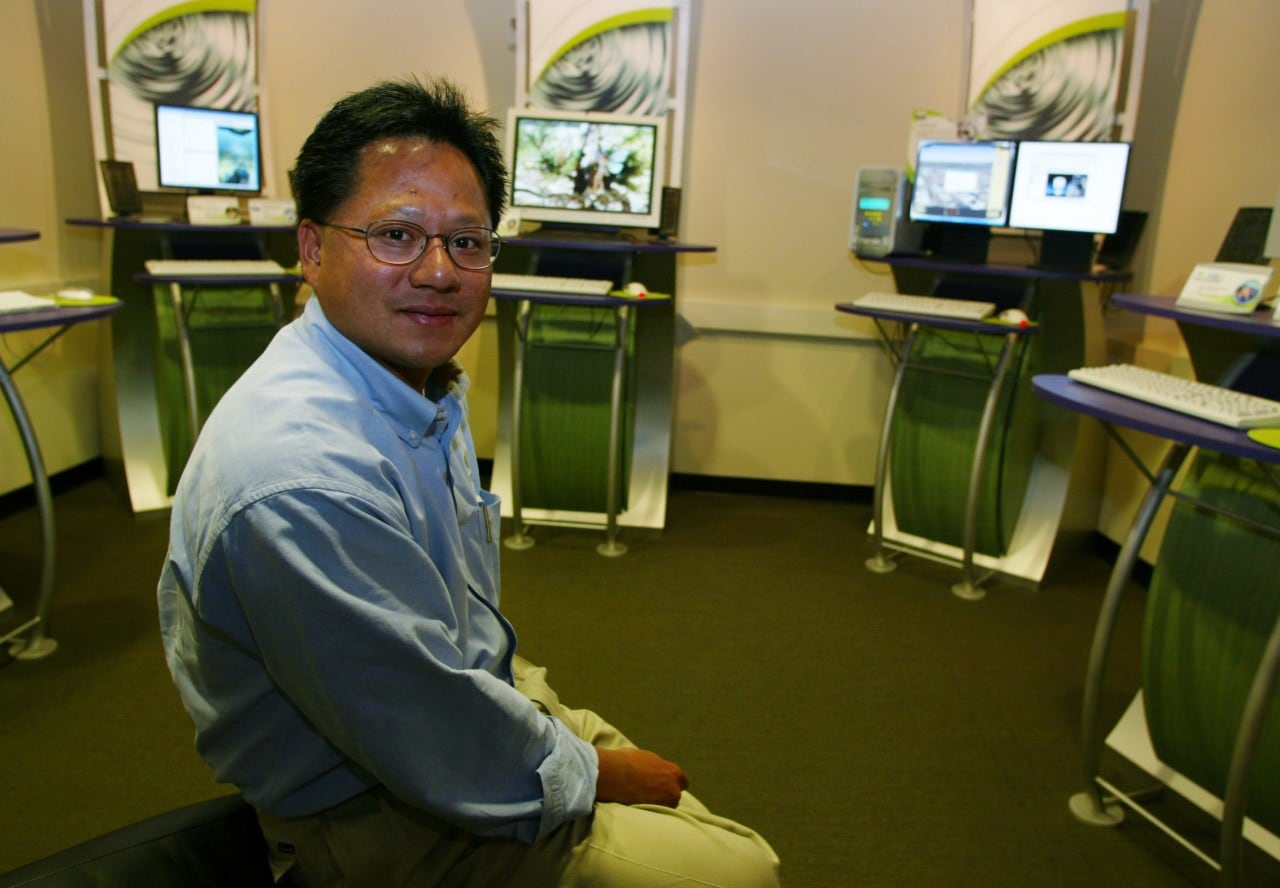
Speaking with Charlie Rose in 2009, Huang described his work in simple but poetic terms: “We take a bunch of numbers and a ton of data…and we make you imagine you’re seeing the world.”
Then came what Huang would describe as the “big bang.”
Research into neural networks and artificial intelligence revealed another use for Nvidia chips—the ability to scale the computing power needed to build and train large language models. Huang wasn’t just selling pickaxes during the gold rush, but providing buyers with a path toward the realization of the chips’ power.
As Nvidia’s reach and valuation grew, first to $1 trillion and eventually north of $5 trillion, Huang’s reputation as a micromanaging obsessive boss did too. He managed 60 direct reports, a structure that made it nearly impossible to replace him, and said as recently as this past week that he doesn’t think succession planning makes sense for Nvidia.
He was known to dress down subordinates in meetings and berate staff for ideas he saw as lacking. In group meetings, they said he sometimes used the term ”dead-face” to describe staffers’ blank expressions after he scolded them, The Wall Street Journal reported.
Nvidia also became something of a family company, with Huang’s son, daughter and son-in-law all working there—his daughter served as his chief of staff. Since news of her father’s affairs have roiled the company, colleagues have accused her of inheriting her father’s management style, berating employees and wielding power through intimidation.
Huang’s singular drive also earned him the loyalty of staff eager to do cutting-edge work and global leaders taken by his smarts and influence. He won the affection of President Trump, who didn’t know Huang’s name at the start of his second term, but would eventually turn to him for advice—and allow the exports he sought of powerful chips to China.
The recent scrutiny of Nvidia’s compliance with export controls follows other cases in which Huang has been accused of deflecting concerns. Just this week, Nvidia agreed to a preliminary $290 million settlement filed in district court in a 2018 case between the company and some shareholders that accused Nvidia and Huang of misleading investors about key sales data regarding its business with cryptocurrency miners in China and elsewhere.
Investors worried that crypto miners were inflating demand for Nvidia’s graphics cards and said Huang played it down, only for the company to shed more than 40% of its value in six weeks when crypto values fell.
After rising to the top of his field, Huang and his wife had embraced a philanthropic role in the Pacific Northwest. The man who’d pioneered first-person shooter games also sponsors a program at the San Francisco Opera at $5 million a year. The multiyear pledge was announced last year to coincide with a staging of the Chinese fable “The Monkey King,” a show about a monkey with transformational powers, capable of shape-shifting into whatever persona might advance his interests. Huang called the show “a breathtaking fusion of Chinese legend and American craftsmanship and artistry.”
Huang managed to wield influence in Beijing but still be received as a homecoming king in Taiwan, the country he left as a child. In Taipei for a computing convention in 2024, Huang threw out the opening pitch at a baseball game as his wife, Lori, cheered him on. Crushed by fans on the convention floor, he signed autographs—including one for a young woman who asked him to sign her strapless bustier over her right breast.
“Are you sure?” Huang asked her, a sharpie pen in hand. When she said yes, he joked, “Is that a good idea?”
Then he signed. And then he took the stage to a packed house, wearing a signature leather jacket to talk computation lithography and Annual Spectrum-X Rhythm Scaling. The crowd went wild.
When he was approached on the street earlier this year by online journalist Adam Glyn seeking an impromptu interview, Huang happily walked toward the camera to answer questions and didn’t appear in any hurry to wrap up. As he stood on the sidewalk and pedestrians passed him by, he gave career advice (read every business book you can) and said his favorite Denny’s dish was always the chicken fried steak. He said that nothing beats hard work, and to expect challenges along the way.
“No matter what your dreams are,” Huang said, “you’re going to get punched in the face at some point.”
It looked like Huang was getting hit with knockouts last month. But, after 11 days of unemployment, Huang returned to thunderous applause—and looming questions about what rabbit he can pull out of a hat now.
At work, the onetime face of AI has to face a Wall Street that has sent tech stocks plummeting in recent days. In Washington, Huang must address Congressional investigations into his affair, and shareholder lawsuits over his temporary ouster.
One thing is sure: Not much of his life looks like it did just a month ago, before the Nvidia company would rattle with scandal, when Huang hosted friends at the San Francisco Opera staging of Mozart’s “The Marriage of Figaro.”
That’s the show set on a couple’s wedding day, before all hell breaks loose when a powerful count starts to have his eye on the bride.
Write to Erich Schwartzel at erich.schwartzel@wsj.com


