
 E-Paper


The Hindustan Times US Desk brings you the latest news and developments from across the United States. The team covers everything from breaking news and politics to sports, business, entertainment and stories that are trending across the country. Our coverage includes the White House, Congress, US elections, immigration and visa updates, H-1B, green cards, Social Security, education, jobs, layoffs, the economy, technology and major policy changes. We also closely follow stories that matter to Indian and South Asian communities in the US. The desk covers major US sports, including the NFL, NBA, MLB and NHL, along with player news, injuries, schedules, results and major events. Entertainment coverage includes Hollywood, celebrities, television, streaming, music and pop culture. We also report on breaking developments, major incidents, weather, public safety, court cases and other stories making headlines across the country. When a major policy or news development affects people's everyday lives, the team works to explain what happened, what it means and what readers need to know. Alongside breaking news, the US Desk produces explainers and practical stories on topics such as immigration, Social Security, taxes, education, employment and government programmes. The team also works on science, tech, business and AI stories analyzing the impact they may have on people. The team follows developments throughout the day, keeping an eye on official announcements, public records, reliable news sources and what people are talking about across the US.
 Trending News
Crews digging 12 feet below in Oceanside, California construction site, uncovered fossils estimated to be 40-45 million years old
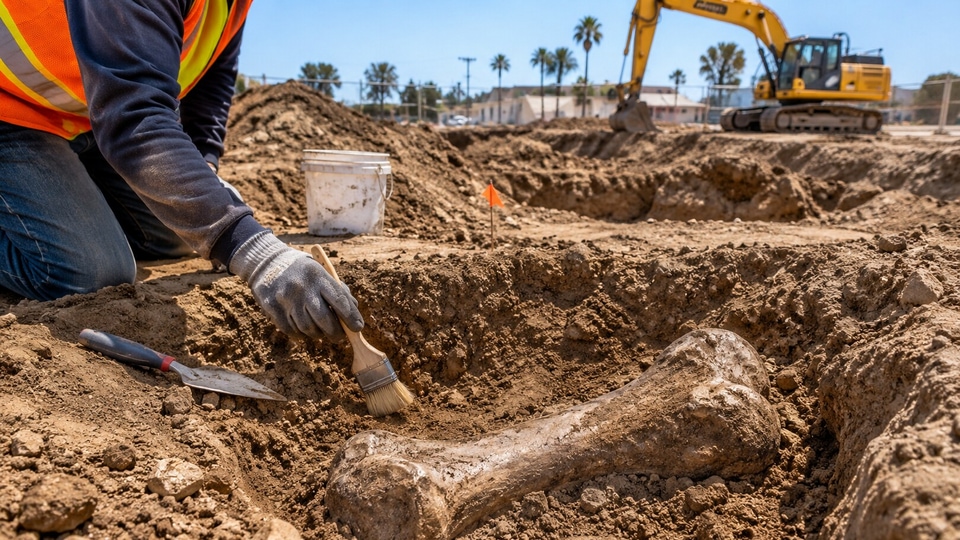
A construction crew in Oceanside uncovered bones from a large Eocene mammal, estimated to be 40 to 45 million years old.


Remnants of the prehistoric past have been uncovered during a routine construction project in Oceanside, California. A crew digging about 12 feet deep found several bones from a large hoofed mammal, most likely between 40 and 45 million years old. The skull, numerous limbs, and larger ribs, as well as other smaller pieces, are thought to come from either a Brontothere or an Amynodon, both of which are extinct. The animal’s size, 9 to 12 feet at the shoulder, and the depth at which the fossils were found suggest they may be the remains of a thunderbeast or swamp rhino, respectively.
A routine excavation leads to an unexpected discovery
According to a September 22, 2026, announcement by the City of Oceanside, the fossils were uncovered during infrastructure construction in the city. The fossils were found by Joseph El Adli, who was the project’s chief paleontologist. He was monitoring the construction project when the fossils were uncovered. The skeleton was covered by a few tons of compacted mudstone and sandstone in a unit called Member C of the Santiago Formation, present in portions of northwestern San Diego County.
Researchers worked for a week to uncover the fossils by removing the hardened stone, and then encased the fossils in plaster jackets for transport to a lab outside the field. The ancient bone is from the Eocene Epoch, which was 56 to 34 million years ago, based on the age of formation and the prehistoric creatures related to the site. The team estimates the ancient animal bones are between 40 and 45 million years old.
Scientists consider two possible prehistoric animals
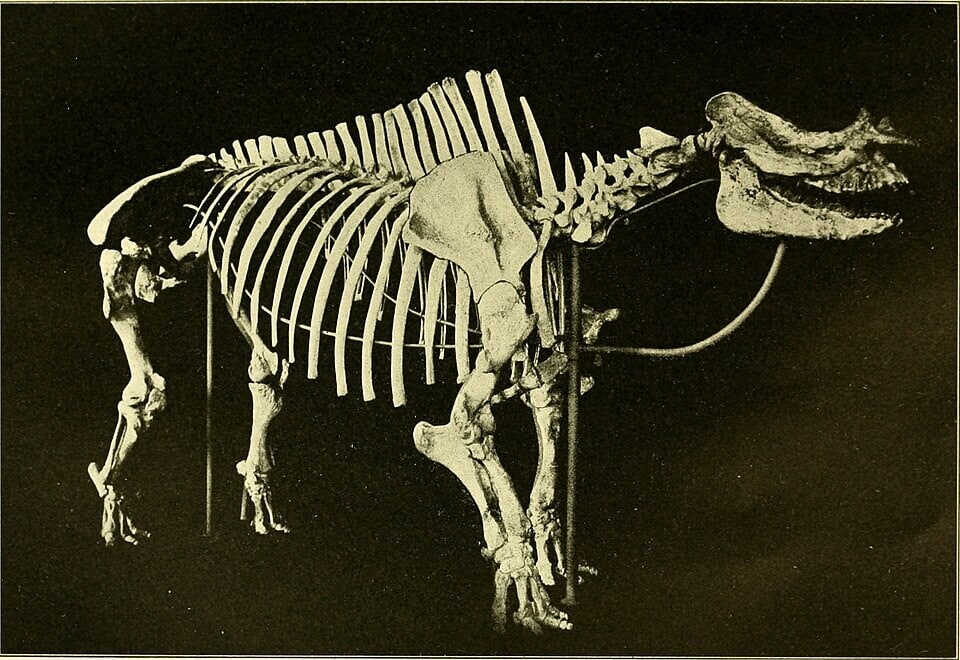
Based on the shape and size of the bones they recovered, El Adli and colleagues narrowed down the possibilities to two kinds of animals, both of which are odd-toed ungulates of the order called Perissodactyla. One was a type of brontothere, or thunder beast, from the family Brontotheriidae. These huge plant-eating creatures had broad chests and high shoulder humps, and in several species, a Y-shaped bony structure on the noses was spotted.
One species previously identified from the San Tiago formation was the size of a black rhinoceros and browsed on broad leaves and other softer plant materials. The second candidate is an Amynodon, a herbivore related to modern rhinoceroses but not living as a species today. Unlike brontotheres, they lacked long horns and large, heavy skulls, with stubby legs and a short, barrel-like body shape. A few semi-aquatic forms had a lifestyle related to rivers and lakes rather than open plains.
Research published in PLOS ONE has also documented the diversity of middle Eocene mammals found in the San Diego region, helping scientists understand the prehistoric animal communities that once inhabited Southern California. The paper also places the San Diego material in the middle Eocene member C of the Santiago Formation and links it to a broader mammal fauna that includes rhinocerotoids such as Amynodontopsis and other Duchesnean-age taxa. It also notes that the locality preserves a mixed assemblage of fish, turtles, snakes, crocodiles, birds and mammals, with some sites interpreted as fluvial to lagoonal or sandy-channel deposits.
Fossil preparation could reveal the animal's identity
Following the excavation, researchers will prepare the fossil in the lab, removing the encasing rock and filling any delicate areas with museum-quality resins and adhesives. When the bones are fully exposed, paleontologists will closely study them for clues that will help identify the ancient animal. The site of the find has not been made public due to concerns for the safety and integrity of the fossils.
Once established in a museum collection, researchers and museum visitors can use the specimen for study. The find highlights the importance of reporting unexpected archaeological and paleontological discoveries during construction projects. What was an unexceptional, run-of-the-mill infrastructure excavation has now yielded a window into the ancient ecosystem, giving scientists yet another chance to explore California’s prehistoric animal life.


