
 E-Paper



Why Pakistan imposed emergency in Imran Khan’s party stronghold Khyber Pakhtunkhwa
The move comes amid escalating tensions between Imran Khan’s Pakistan Tehreek-e-Insaf (PTI) and the government ahead of a planned protest demanding his release.

 Prefer HTon Google


Pakistan has imposed a state of emergency in Khyber Pakhtunkhwa, suspending the provincial government led by jailed former prime minister Imran Khan’s party, with the federal government citing rising “Islamist militancy and a deteriorating law and order situation”.
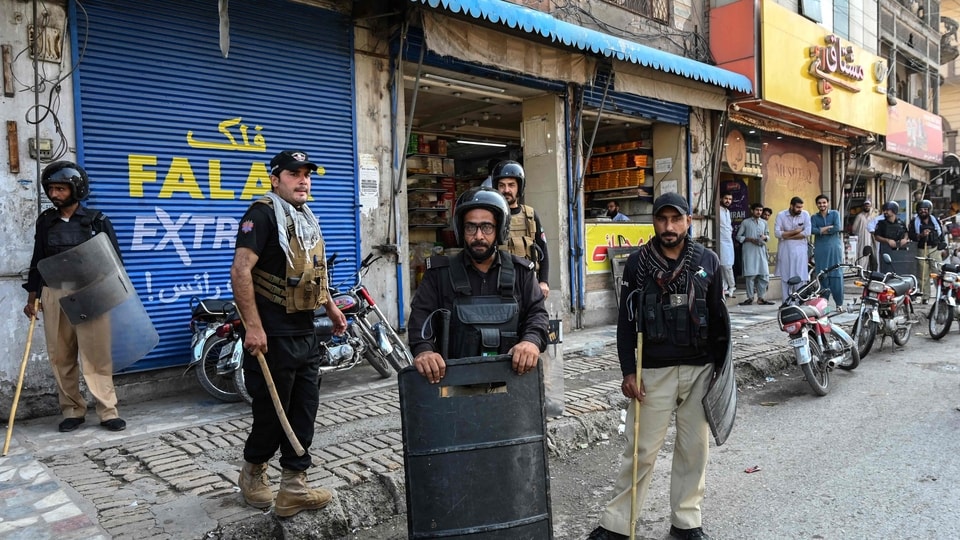
The move comes amid escalating tensions between Khan’s Pakistan Tehreek-e-Insaf (PTI) and the government ahead of a planned protest demanding his release.
President Asif Ali Zardari declared the emergency on Sunday on the advice of Prime Minister Shehbaz Sharif, following a cabinet decision. The federal government said the provincial administration had failed to tackle militancy in the province bordering Afghanistan, which has witnessed an increase in militant attacks in recent months, Reuters reported.
The declaration was preceded by a summary of the province’s security situation sent to Zardari by Sharif earlier in the day, Bloomberg reported. The federal cabinet had held an urgent meeting to review what Sharif’s office described as the deteriorating law and order situation and the provincial government’s “deliberate indifference in the war against terrorism”.
Also Read: At UN, India slams Pakistan over ‘lies and falsehoods’ on J-K: ‘Continues to abuse UN platform’
Why the government cited militancy
Pakistan’s constitution allows the federal government to take over from provincial authorities during an emergency. The declaration was made under Article 232, which allows the president to impose emergency measures in the event of a threat of war, external aggression or an internal disturbance beyond a provincial government’s ability to control.
Law Minister Azam Nazeer Tarar said a provincial governor would take charge of Khyber Pakhtunkhwa for an initial period of six months, though the arrangement could continue for as long as necessary. The interior ministry also said troops would be deployed in the province.
Sharif told the cabinet that security forces and citizens had been under attack for two years, adding, “We can’t just act as a silent spectator.”
The federal government and the military have accused PTI of failing to curb militant activity. The party rejects the charge, saying Islamabad has not provided the funding and equipment needed to address the threat.
Islamabad has also accused Afghanistan of harbouring militants who launch attacks inside Pakistan, and alleged that PTI has sympathised with the Taliban in Kabul and its domestic affiliates. Both deny the accusations.
Protest plans add to tensions
The emergency comes as Khan’s party prepares for a protest march towards Islamabad to demand his release. PTI supporters gathered in Khyber Pakhtunkhwa last week after talks with the government broke down over demands that included access to the jailed former prime minister.
The march was initially scheduled for September 27 but was postponed while discussions with government officials continued. The planned demonstration threatens to intensify political tensions, with the government warning that a large protest in Islamabad could disrupt business and transport.
Authorities have placed shipping containers and other roadblocks around the capital to prevent demonstrators from reaching parliament. The government has also deployed tens of thousands of security personnel in Islamabad.
Hundreds of PTI activists and three of Khan’s sisters have been detained ahead of the planned march, in what the party described as one of the strongest crackdowns in years, Reuters reported. Restrictions have also been placed on the movements of Khyber Pakhtunkhwa’s former chief minister, Sohail Afridi, one of his close aides told Reuters.
PTI calls move a ‘coup disguised as emergency’
PTI spokesperson Zulfikar Bukhari condemned the decision, calling it “more of a coup disguised as emergency”. He said it risked further bloodshed and instability and was intended to prevent the protest, Reuters reported.
Maulana Fazlur Rehman, leader of the JUI-F political party who has been engaged by the government to mediate with PTI, also criticised the move. “Imposition of emergency is an ambush on democracy,” he said at a news conference in Islamabad, Reuters reported.
The government’s decision further sharpens the standoff between Khan’s party and the authorities. PTI accuses the military of dominating politics, a charge the military denies. Candidates backed by Khan’s party won the most seats in Pakistan’s 2024 election, but the party formed a government only in Khyber Pakhtunkhwa. Khan’s supporters allege that the military rigged the election against him, which the military denies, Reuters reported.
Khan, 74, remains in prison, where concerns have also been raised over his health and detention conditions. His family and lawyers have alleged that he is held in inhumane conditions, including spending 23 hours a day in a small cell without natural light or contact with other prisoners. Pakistani officials deny the allegations, Bloomberg reported.
(With inputs from agencies)


