
 E-Paper



'You would be speaking German': Donald Trump dial back to WW2, says US ‘saved’ Greenland
Speaking at the World Economic Forum in Davos, Trump renewed his push to acquire Greenland and said it should never have been returned to Denmark after the war.

 Prefer HTon Google


US President Donald Trump on Wednesday dialled back to World War 2, saying that it was Washington that saved Denmark and Greenland from the Germans and called “giving back” the autonomous territory a “stupid” decision.
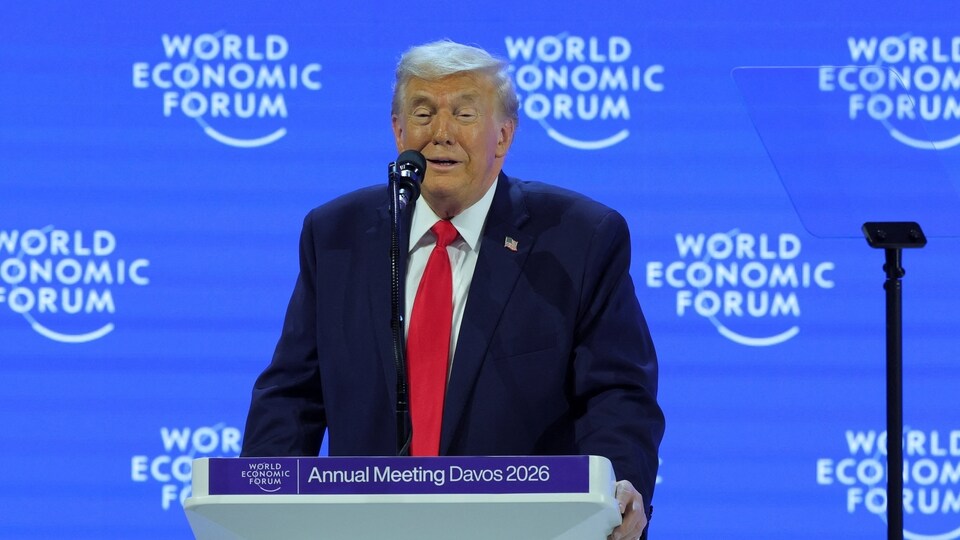
Speaking at the World Economic Forum Summit in Davos, Switzerland, Trump renewed his push to acquire Greenland and said it should never have been returned to Denmark after the war.
"Right now, you all would be speaking German and a little Japanese, perhaps. After the war, we gave Greenland back to Denmark. How stupid were we to do that?" he said, slamming the NATO ally as "ungrateful" for US help with securing the territory after World War 2.
"The fact is, no nation or group of nations is in any position to be able to secure Greenland other than the United States. We're a great power, much greater than people even understand. I think they found that out two weeks ago in Venezuela," he said, referring to a US military operation to depose that country's leader. But he added that he “won't use force” to acquire Greenland.
He even mixed up Greenland with Iceland a couple of times during his speech.
‘Won’t use force to get Greenland'
Donald Trump said he would not use force to take control of Greenland but insisted the United States must still have "ownership" of it.
"We probably won't get anything unless I decide to use excessive strength and force where we would be, frankly, unstoppable, but I won't do that. Okay. Now everyone's saying, Oh, good. That's probably the biggest statement I made, because people thought I would use force," he told world leaders in Davos.
"I don't have to use force. I don't want to use force. I won't use force."
Trump's tariff threats
Donald Trump attended the international forum in Davos on the heels of threatening steep US import taxes on Denmark and seven other allies unless they negotiate a transfer of the semi-autonomous territory — a concession the European leaders indicated they are not willing to make.
Trump said the tariffs would start at 10% next month and climb to 25% in June, rates that would be high enough to increase costs and slow growth, potentially hurting Trump’s efforts to tamp down the high cost of living.
The Republican president, in a text message that circulated among European officials this week, also linked his aggressive stance on Greenland to last year’s decision not to award him the Nobel Peace Prize. In the message, he told Norway’s prime minister, Jonas Gahr Støre, that he no longer felt “an obligation to think purely of Peace.”
Amid an unusual stretch of testing the United States' relations with longtime allies, it's unclear what might transpire during Trump's two days in Switzerland. Before Trump spoke, British Prime Minister Keir Starmer vowed, “I will not yield.”
“Britain will not yield on our principles and values about the future of Greenland under threats of tariffs, and that is my clear position,” Starmer said during his weekly questioning in the House of Commons.


