
 E-Paper



Review: Land by Maggie O’Farrell
Careening through generations and continents, the novel uses one Irish family to explore famine, memory and migration

 Prefer HTon Google


Maps are supposed to make places easier to locate and understand. They give us a sense of borders, roads, rivers and distances. They turn a confusing stretch of land into something that appears orderly. But a map also leaves things out. It cannot easily show hunger, grief, an abandoned home or the memory of people who once lived there.
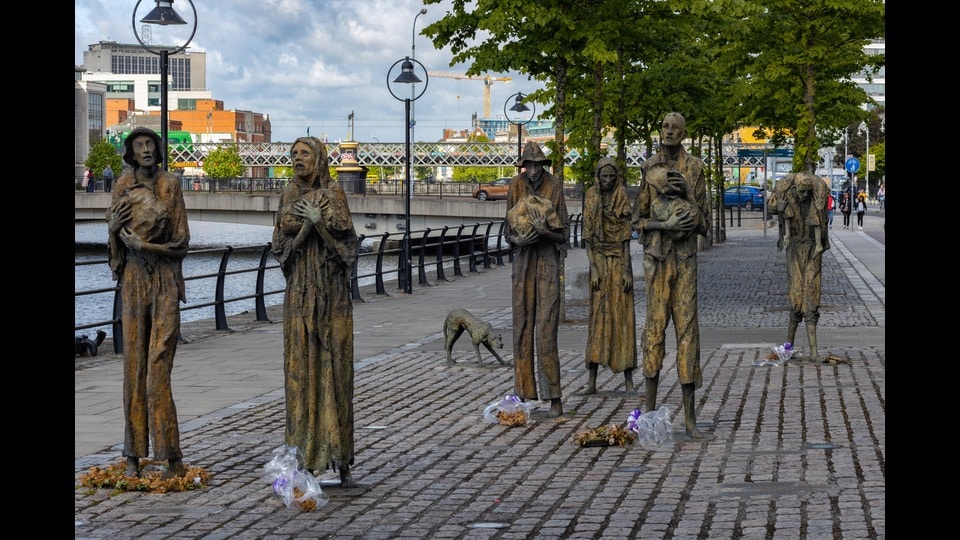
This is the idea at the heart of Maggie O’Farrell’s Land, an ambitious historical novel set mainly in Ireland, less than 20 years after the Great Famine, which saw mass starvation, disease, and emigration from Ireland between 1845 to 1852. The novel opens in 1865 with Tomás, an Irish surveyor, working on a remote peninsula in the west of Ireland with his ten-year-old son, Liam, revising maps for the British Ordnance Survey; their task is to measure the landscape and help create an official record of it.
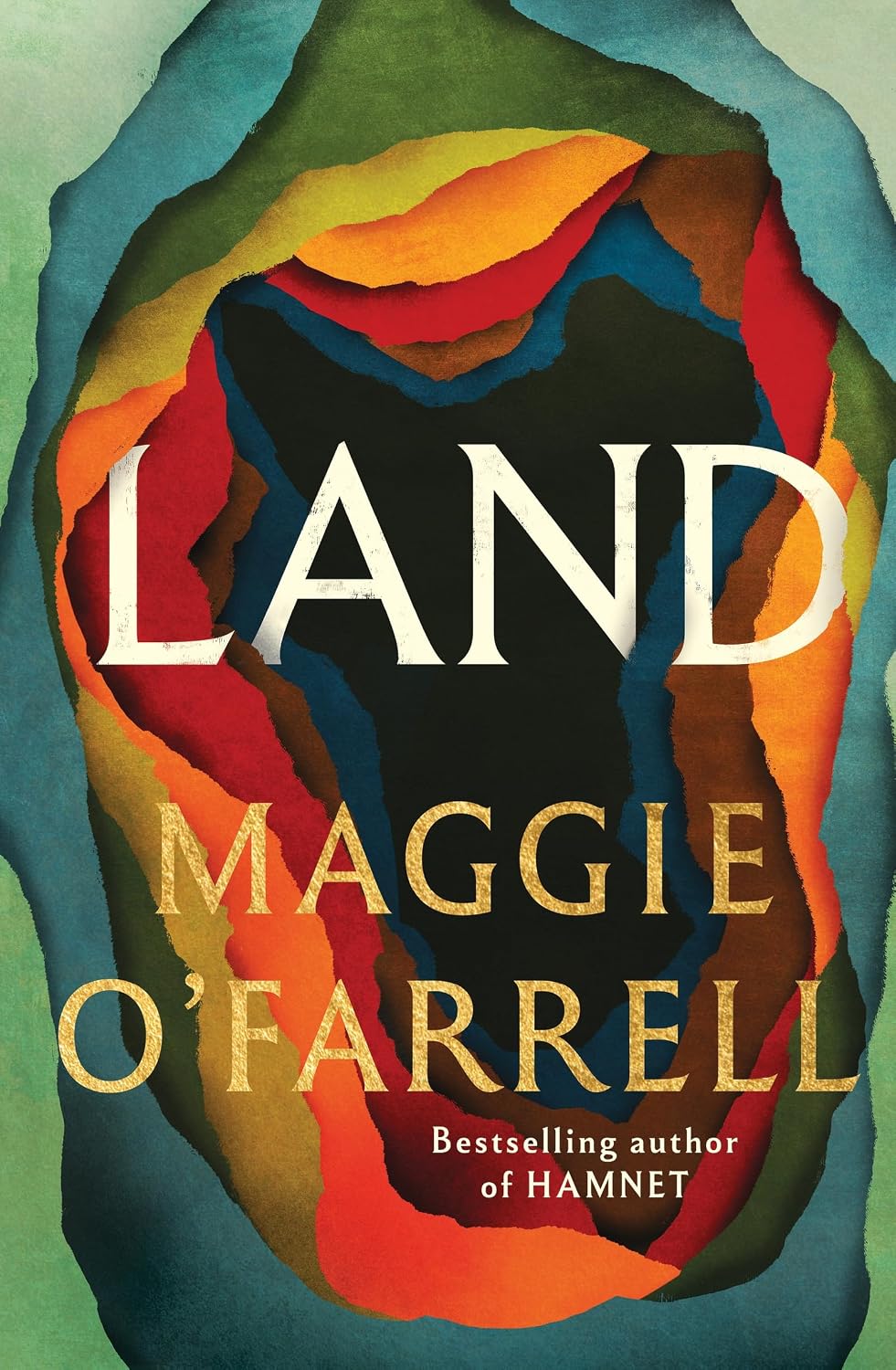
When Tomás enters a neglected grove surrounding an ancient well, he ends up drinking from it, and seems to become another man. He grows talkative, restless and unpredictable. His anger towards the survey work, which had previously been controlled, begins to spill out. The practical mapmaker suddenly declares that everything he thought he knew about “the land, about our history, and the intersection of both” is wrong. The instruments he uses become, in his transformed mind, mere “playthings”. “Maps cannot be made with theodolites and poles and compasses alone,” he tells Liam. What he now wants is a map of what the country was before other people imposed their lines upon it.
This gives the novel a strong and moving central conflict. Tomás works for a system he does not trust. The survey gave him employment and helped him survive, but it is also part of a colonial effort to rename and control Ireland. His skill and knowledge are necessary, but the completed maps will carry the authority of English officers. Tomás is helping to make the map and, at the same time, resisting what it represents.
The ‘redcoats’, as he calls the English soldiers, need Tomás because he can survey and draw but also speak Irish, talk to local people and untangle place names that carry histories within them. However, when the work is finished, others sign their names to his drawings. Worse, his revisions require him to erase cottages that stood on earlier maps. Families have died, emigrated, entered workhouses; estates have been cleared for grazing. Tomás decides that his map will somehow record “what happened, what was lost”.
He is a man, however, who resents imposed authority but imposes his own wishes on his family, a father obsessed with preserving a country’s history who repeatedly fails to understand the children living under his roof. And those children refuse to remain where he puts them. Liam, whom Tomás assumes will inherit his work, turns towards Catholicism and the Jesuits and eventually travels to India. Enda, the daughter Tomás dismisses because mapping is supposedly no work for a girl, is actually the child with the greater curiosity and aptitude for it.
That irony takes Tomás years to recognise. By then Enda has sailed for Canada. Enda’s sections are the most alive. Her arrival at Grosse Île near the Canada border is not treated as a triumphant escape into a new life. She is exhausted, frightened and land-sick after the Atlantic crossing, surrounded by immigrants speaking languages she cannot understand. In a wonderfully O’Farrell-ish complication, “she enters as both herself and her brother,” temporarily occupying two identities at once. It is funny, tense and also completely in keeping with the book’s interest in official records. In one extraordinary encounter, she sits listening to an elderly Irish piper in Canada, unaware that he is her own grandfather, lost to the family because workhouse records failed to preserve the thread between them. They pass within arm’s length of one another and never know. It is perhaps the novel’s most painful example of what a record cannot recover.
Meanwhile, the people who do not escape have to live with the consequences. Rose becomes far more interesting as we read on. At first she can seem like the quieter sister beside fiery Enda, but after their mother Phina’s death, Liam’s departure and Enda’s flight, it is Rose who is left trying to keep the household functioning. Her anger is entirely justified. Someone has to feed Eugene. Someone has to manage Tomás. O’Farrell is good on this unequal arithmetic of families: the person who stays is rarely granted the glamour of the person who leaves.
Formally, Land is much more expansive than its opening suggests; it is consciously working in the tradition of the seanchaí, the keeper and teller of old stories, rather than proceeding as a neat realist family saga. O’Farrell moves back and forth across time, shifting from Tomás and his family in nineteenth-century Ireland to much older lives rooted in the same landscape, and then forward again as the family disperses across countries and generations. Layers are uncovered, one beneath another. It is a structure well suited to a novelist who has always been interested in the way the past keeps coming in the way of the present.
O’Farrell is not only asking what happened to individual lives, but what happens when the record itself (a map, a name, a ledger, a family story) is incomplete or wrong. Her gift has long been to take what history reduces to a date, a fact or a footnote and restore the disorder of lived experience around it. The alternating timelines allow her to do that on a much larger scale. Not all of it works, though. There is simply a lot going on; famine, colonial rule, folklore, Catholicism, migration, women’s restricted choices, language loss, ancient Ireland, political rebellion, family rupture, illness and repeated tragedy.

At certain points it almost feels like O’Farrell is refusing to sacrifice anything she has researched or imagined. The supernatural passages sometimes deepen the novel; elsewhere they make explicit something the landscape had already suggested more subtly. The succession of disasters also wears down the reader. Even a tragic history needs narrative modulation. Rose and Eugene, too, don’t always receive the psychological space Liam, Tomás and Enda are given. That unevenness matters in a novel so committed to recovering lives missed by official history.
Still, the book’s reach feels more interesting than its imperfections. The family disperses, arguments that began on one wet Irish hillside travel across oceans, and the later chapters slowly alter what Tomás’s apparently crazed obsession meant in the first place. A map is never just a map in Land. It might be an instrument of taxation and possession, a route out of Ireland, a record of vanished houses, and the means by which Enda escapes. O’Farrell’s own great-great-grandfather worked on the Ordnance Survey after the Famine, and she says the novel began for her with the image of a father and reluctant son surveying a hillside. She has taken that strand of family history and made something much stranger from it.
Land isn’t as taut as Hamnet. It isn’t as emotionally exact all the way through either. It wanders, occasionally gets carried away with itself and sometimes tells you what its better scenes have already made plain. But it also contains something larger and less manageable than Hamnet: the idea that history does not happen and finish. It settles into houses, surnames, songs, resentments, the direction somebody takes when they leave home. Maps want clean lines. Families, and countries, rarely give you any.
Nawaid Anjum is an independent journalist, translator and poet. He lives in New Delhi.


