
 E-Paper



China’s central bank signals easing restraint as growth holds up
China’s central bank reiterated its pro-growth, accommodative policy stance while again warning about the risks posed by excessively low interest rates.


 Prefer HTon Google


China’s central bank gave little away in its latest quarterly report, but analysts’ key takeaway is that no rate cuts are on the near-term horizon.
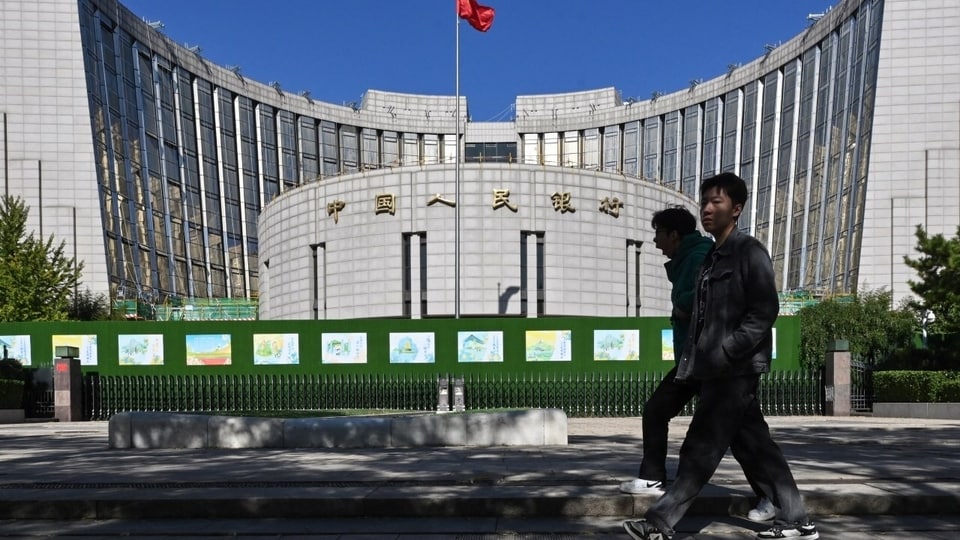
The People’s Bank of China reiterated its commitment to maintain a pro-growth, accommodative policy stance, while again stating its concern about the risk of too-low rates.
“The current round of policy easing has likely run its course,” analysts at Citic Securities said in a note.
They pointed to a change of language in the third-quarter report, from “timely planning and rollout of practical and effective incremental policies” to “leveraging the synergistic effect of existing and incremental policies.”
There isn’t much pressure for the PBOC ease on the economic front: The world’s second-largest economy is on track to hit its official growth target thanks to robust exports, even as consumption remains weak and momentum is concentrated in select sectors.
The PBOC isn’t facing any pressure from the inflation front either. Price growth has strengthened due to the oil shock caused by the Middle East conflict, but is nowhere near levels that would warrant monetary action.
Whereas a top concern for other central banks is that interest-rate hikes to fight inflation will hurt growth, the PBOC’s concern is that ultralow rates will threaten financial stability and undermine confidence in the economy.
Chinese bond yields are bear historic lows, bucking the global upward trend in yields on the sovereign debt of other major economies.
The PBOC’s caution regarding low rates is hardly new, but reinforces the view that any further easing won’t come until next year, and will be done very gradually, Citi economists said.
The bar for bolder easing is still high: Domestic interest rates are already low, while loan rates and mortgage rates are both around 3%, Citi said.
“Further policy rate cuts should be conditional on deposit rate cuts to preserve banks’ net interest margins,” it added.
The PBOC’s report suggests that policymakers’ priority is stabilizing China’s capital markets and mitigating financial risks. It hinted at stepping up the use of targeted monetary tools, and pledged to bolster the capital base of struggling regional lenders.
That aligns with the slew of measures over the past months to stabilize a turbulent stock market and rein in a fast-rising yuan.
Rather than relying solely on broad-based rate cuts, CICC analysts expect the central bank to lower financing costs for the economy by leaning on further reforms, such as market-based interest rate overhauls and structural tools.
Write to Singapore editors at singaporeeditors@dowjones.com


