E-Paper



Madhya Pradesh Board results declared; best in 16 years: CM
Failed students will be given a second opportunity to clear the exams on May 7, 2026, in accordance with the New Education Policy

 Prefer HTon Google


Madhya Pradesh Board of Secondary Education recorded its best results in 16 years on Wednesday, with Class 10 achieving a pass percentage of 73.42% and Class 12 at 76.01%.
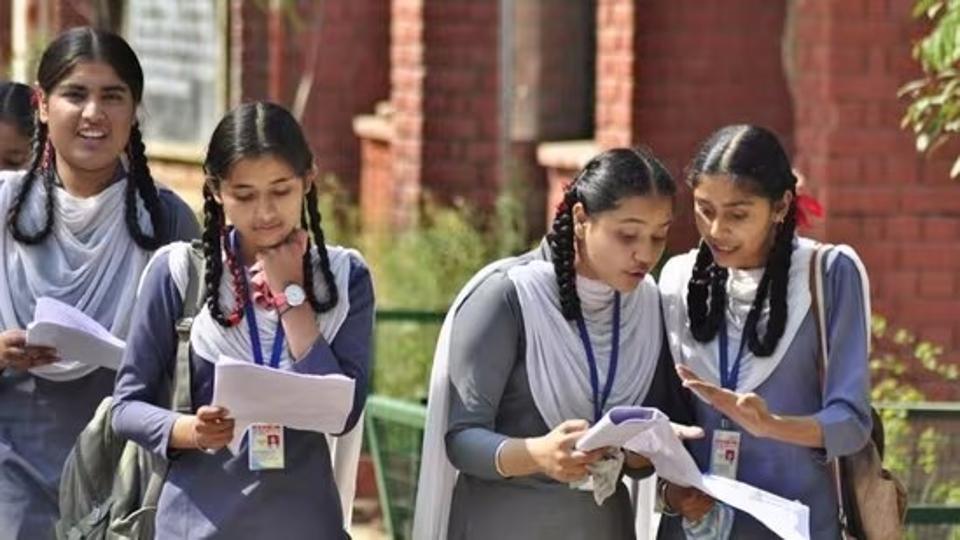
The 2026 board results were announced by chief minister Mohan Yadav at an event at CM House.
For the first time, students were not given supplementary status, instead are given a second opportunity to clear the exams on May 7, 2026, in accordance with the New Education Policy.
Chief minister Mohan Yadav said, “The failed students have another chance to clear the exam so they shouldn’t feel disheartened.”
In Class 10, Pratibha Singh Solanki from Panna district topped with 499 out of 500 marks. Akshara Ghodeshwar (Balaghat) and Abhay Gupta (Sidhi) secured second position by scoring 498 marks, while Yogendra Singh Parmar from Shahdol stood third.
In class 12, Khushi Rai and Chandni Vishwakarma from Bhopal topped the merit list with 494 out of 500 marks. Among the toppers are Shruti Tomar (Arts, Morena), Akash Ahirwar (Arts, Chhatarpur), Shlok Prajapati (Science–Mathematics, Sehore), Tanvi Kumawat (Science–Biology, Indore), Chandni Vishwakarma and Khushi Rai (Commerce, Bhopal), Tulsi Rajawat and Chanchal Kushwaha (Agriculture, Shivpuri), and Shaistah Qureshi (Fine Arts & Home Science, Chhatarpur).
Jhabua district ranked first, followed by Anuppur.
Government schools outperformed private institutions. In Class 10, they recorded a pass percentage of 76.80% , whereas private schools achieved 68.64% . Similarly, in Class 12, government schools attained a pass rate of 80.43%, compared to 69.67% recorded by private institutions.