
 E-Paper



Delhi Metro floats EOI to produce platform screen doors in India
Under Phase-4 and Phase-5 of the Delhi Metro expansion, platform screen doors (PSDs) will be installed at all stations

 Prefer HTon Google


New Delhi: The Delhi Metro Rail Corporation (DMRC) has issued an Expression of Interest (EoI) for Indian companies to jointly manufacture platform screen doors (PSDs) within the country, officials said.
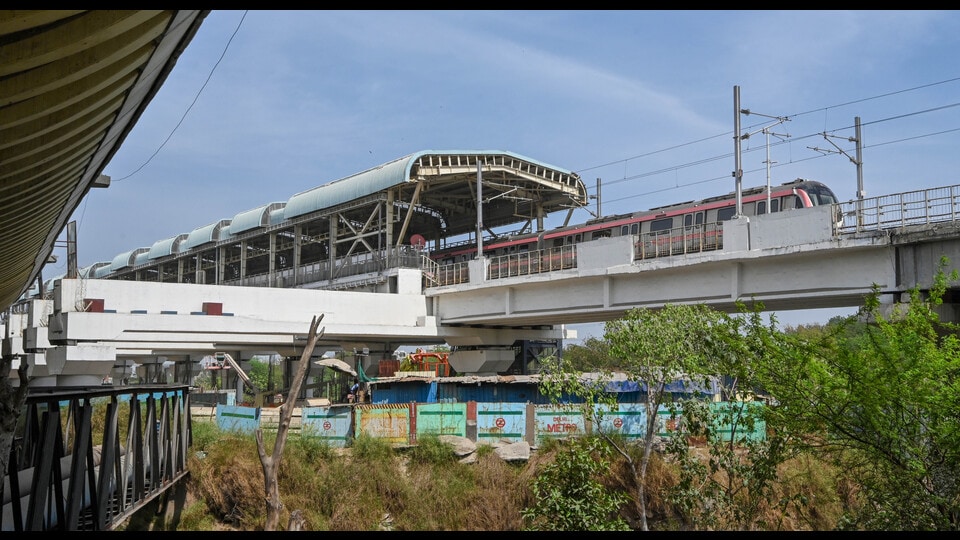
PSDs are safety barriers installed at the edge of platforms to separate commuters from the tracks. Currently, the DMRC imports these barriers, making procurement both costly and time-consuming, officials aware of the matter said.
The move follows the Union ministry of housing and urban affairs’ March 13, 2025, directive to the DMRC and other Metro corporations in the country. The letter called for PSDs to be manufactured in India. “...guidelines are being issued on procurement of PSDs for immediate compliance…which includes a minimum 75% of the manufacturing that has to be done in India,” the letter stated.
Under Phase-4 and Phase-5 of the Delhi Metro expansion, PSDs will be installed at all stations.
Officials said that while full-height screen doors will be installed at underground stations, half-height screen doors will be installed at elevated stations.
Currently, 83 of the 303 operational Delhi Metro stations have half-screen PSDs, while eight stations have full-screen doors. All seven stations of the Airport Express Line are equipped with full-screen PSDs, along with the Krishna Park Extension station on the Magenta Line, which was opened for the public during the ongoing Phase-4 expansion.
The DMRC started installing PSDs in Pink and Magenta lines, which are driverless trains in the network. However, it had also retrofitted PSDs on six stations of Yellow Line — Kashmere Gate, Chandni Chowk, Chawri Bazar, New Delhi, Rajiv Chowk and Central Secretariat — stations prone to heavy crowds.


Stay updated with all top Cities including, Bengaluru, Delhi, Mumbai and more across India. Stay informed on the latest happenings in World News along with Delhi Election 2025 and Delhi Election Result 2025 Live, New Delhi Election Result Live, Kalkaji Election Result Live at Hindustan Times.


