
 E-Paper



Former NITI Aayog CEO Amitabh Kant calls for Delhi’s EV policy to be expanded across NCR
He also urged CAQM to prepare a roadmap for electrifying construction equipment, agricultural tractors; saying these sources of emissions were often overlooked.

 Prefer HTon Google


Delhi’s electric vehicle (EV) policy needs to be extended across the National Capital Region (NCR) to prevent polluting vehicles from being registered in neighbouring states and continuing to enter the Capital, former NITI Aayog CEO Amitabh Kant said on Monday.
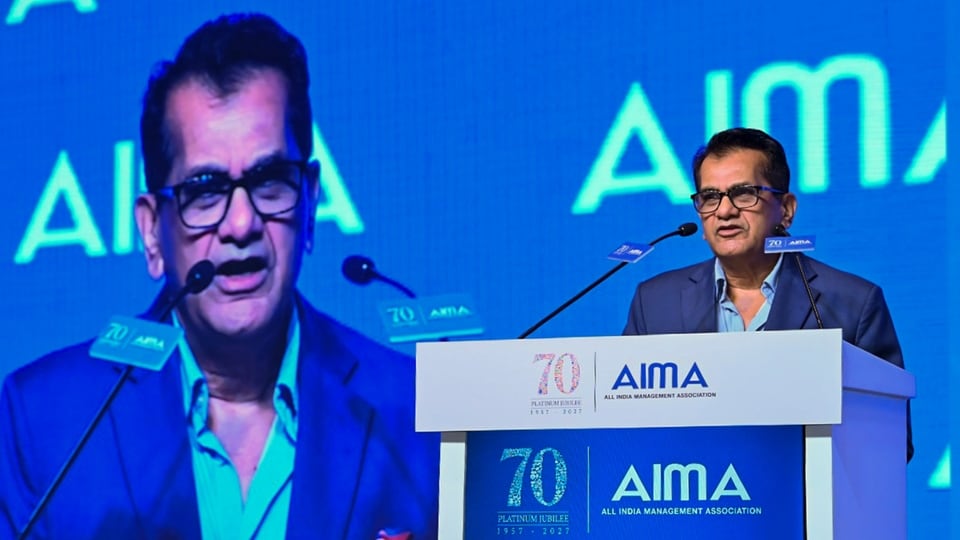
Speaking at the closing plenary session on the first day of Urban Adda 2026, Kant described Delhi’s decision to stop registering new CNG three-wheelers and light goods vehicles from next year and new petrol two-wheelers from 2028 as “historic”, saying it set a firm timeline for phasing out internal combustion engine (ICE) vehicles in major urban mobility segments.
“The future of transport is electric,” Kant said, adding that falling battery prices and lower total ownership costs had made electrification economically viable. India, he said, had a particular advantage because its mobility was dominated by two-wheelers, three-wheelers and buses – segments where electrification could be undertaken relatively quickly.
Kant urged the Commission for Air Quality Management (CAQM) to ensure that Delhi’s EV policy was adopted by Haryana, Uttar Pradesh and Rajasthan. “If Delhi stops registering ICE [internal combustion engine] three-wheelers, the same vehicles will start getting sold and registered just across the border in Noida or in Gurugram,” he said.
He also called for Punjab to be included in the wider air-quality strategy, saying the state formed part of the airshed influencing Delhi’s air quality. “Air quality management must follow the airshed and not administrative maps,” Kant said.
Kant called for a rapid expansion of electric mobility, including thousands of electric buses, lakhs of electric two- and three-wheelers, electric fleets for aggregators and delivery companies, along with adequate charging infrastructure.
Also Read | Delhi sees most polluted start to October since 2020, AQI continues to deteriorate
He also urged CAQM to prepare a roadmap for electrifying construction equipment and agricultural tractors, saying these sources of emissions were often overlooked.
Rajesh Verma, chairperson of CAQM, highlighted measures taken by the panel in partnership with state governments to curb pollution and stressed the need for regional action.
“Addressing vehicle emissions demands regional enforcement across entire airsheds rather than isolated administrative borders. By ring-fencing high-density corridors, mandating clean fleet transitions, and expanding continuous real-time monitoring, we are building an integrated, accountable system to secure clean air for every citizen,” he said.


Stay updated with all top Cities including, Bengaluru, Delhi, Mumbai and more across India. Stay informed on the latest happenings in World News along with Delhi Election 2025 and Delhi Election Result 2025 Live, New Delhi Election Result Live, Kalkaji Election Result Live at Hindustan Times.


