
 E-Paper



Five-state panel to oversee Yamuna rejuvenation plan
The panel will monitor waste management, sewage treatment, river water quality and wetlands across the Yamuna basin.

 Prefer HTon Google


The central government has constituted an interstate committee comprising the chief secretaries of five Yamuna basin states to oversee the action plan for rejuvenation of the Yamuna and preventing pollution sources from meeting the river stream, right from its origin to its confluence point with the Ganga, senior government officials said.
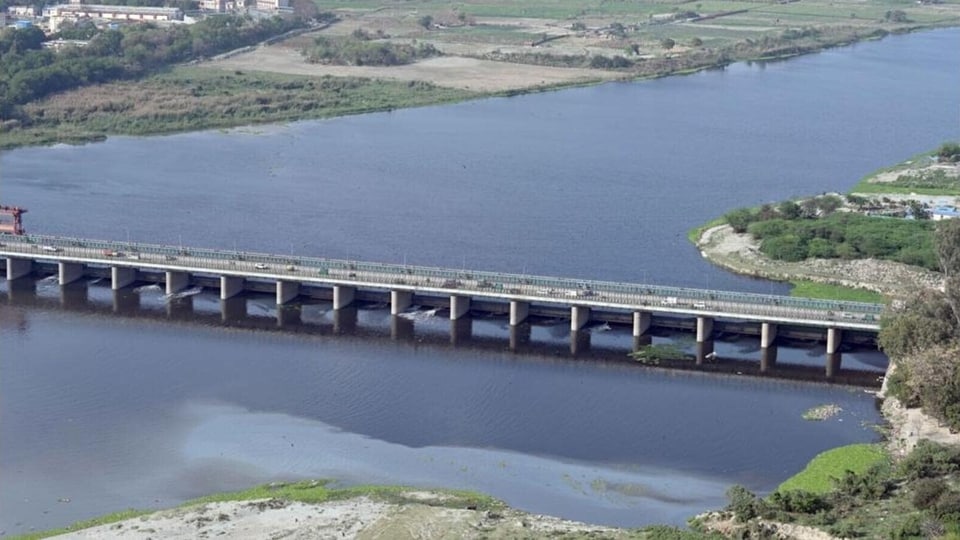
The panel is headed by the Union home secretary and has started meetings to review the rejuvenation plan. The 10-point agenda also involves waste management, river water quality monitoring, management of wetlands and water bodies along the river channel, and construction of sewage treatment plants (STPs), among other issues.
Also read: The Sabarmati vision for a rejuvenated Yamuna, Delhi
States submit plans to curb industrial, sewage pollution
A senior Delhi Jal Board (DJB) official said that states have submitted their industrial waste management plans, steps to improve e-flow, gaps in sewage treatment capacity and timelines for setting up new STPs. “Yamuna needs an interstate strategy to reduce the pollution levels. For instance, the Shahdara drain has five major sub-drains in Uttar Pradesh, which contribute to 40-45% of the wastewater flow. Without cleaning these drains, pollution from Shahdara cannot be stopped. The Najafgarh drain gets a large chunk (of wastewater) from Gurugram drains,” the official said.
Also read: Delhi government plans two initiatives to enhance Yamuna river's environmental flow
Delhi stretch contributes heavily to river’s pollution load
The Yamuna originates from the Yamunotri glacier in the Himalayas in Uttarakhand, and ends in Prayagraj, merging with the Ganga at Triveni Sangam. The 22-kilometre stretch of the Yamuna from Wazirabad to Okhla in Delhi is only 2% of the river’s length, but contributes the most to its overall pollution load.
A government official cited above said that the monitoring panel has been formed as per the directions of the Supreme Court and, besides the chief secretaries, it comprises heads of the pollution control boards of Delhi, Haryana, Uttar Pradesh, Himachal Pradesh and Uttarakhand, the Central Pollution Control Board, the chief executive officer of the DJB and heads of the National Mission for Clean Ganga.
Also read: Okhla barrage redesign among fixes proposed for Yamuna rejuvenation, tackling froth
Three dam projects under review to improve e-flow
A second official said that there are three upstream dam projects on the tributaries of Yamuna in Himachal Pradesh and Uttarakhand that are also being regularly reviewed as part of this framework, as they will contribute to improving the e-flow in the river. “Lakhwar dam in Tehri Gadhwal of Uttarakhand is 13.9% complete, Renukaji in Sirmaur of Himachal Pradesh has seen 12.46% physical progress while Kishau is still in agreement-level stage. These dams will be completed between 2032 and 2035 and they will add 754 cusecs of water just for improving e-flow of the river, as per the plan,” the official said.
In the last review meeting, DJB officials apprised the panel that decentralised STPs were being constructed on drains at a cost exceeding ₹3,500 crore. However, cleaning the river remains a challenge because approximately 200 million litres per day (MLD) of wastewater flows into the Yamuna daily from drains in Uttar Pradesh. Approximately 100MLD of water flows into the Yamuna from the Sahibabad drain, 65MLD from the Indirapuram Drain, 20MLD from the Banthla drain, and about 15MLD from the Lalbagh drain.

Stay updated with all top Cities including, Bengaluru, Delhi, Mumbai and more across India. Stay informed on the latest happenings in World News along with Delhi Election 2025 and Delhi Election Result 2025 Live, New Delhi Election Result Live, Kalkaji Election Result Live at Hindustan Times.


