
 E-Paper



Conversion to another religion does not end ST status, says Allahabad high court
The ruling arose from Ninhki's claim of Bhuiya ST status while the court upheld the voiding of land transfers based on her failure to prove tribal identity.

 Prefer HTon Google


Conversion to another religion does not, by itself, automatically end a person’s Scheduled Tribe (ST) status, the Allahabad High Court has observed, while holding that continued tribal status must be determined from facts including customary practices, social organisation and acceptance by the tribal community.
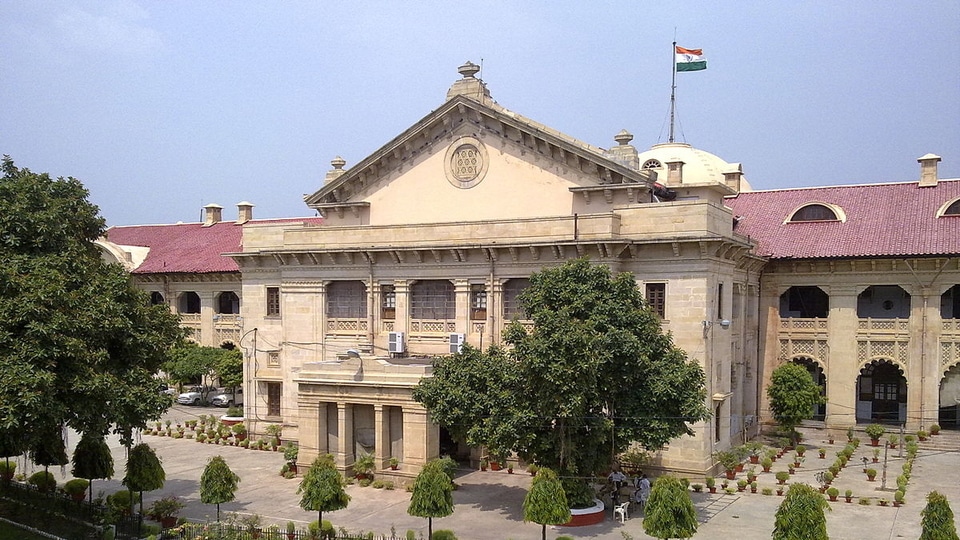
Justice Arun Kumar made the observations while relying on the Supreme Court’s 2026 judgment in Chintad Anand vs State of Andhra Pradesh and Others, which held that ST status depends on whether a claimant continues to possess tribal identity.
The court was hearing petitions filed by Ninhki alias Naimunisha, who claimed to belong to the Bhuiya ST community, against three orders of the deputy collector, Sonbhadra, declaring three land transfers in her favour void. The transfers were held to violate Section 157-B of the UP Zamindari Abolition and Land Reforms Act, 1950, and Section 99 of the Uttar Pradesh Revenue Code, 2006, following which the land was ordered to vest in the state government.
Also Read | 53 student deaths at IITs in 5 yrs, over 50% from SC, ST, OBC groups: Data
The provisions restrict the transfer of land belonging to a Scheduled Tribe to a person who is not a member of an ST.
Ninhki claimed she was born into the Bhuiya ST community and possessed a valid ST certificate issued by the tehsildar. She also argued that the vendors of the disputed land belonged to the Gond ST community, making the transactions valid as they were between members of Scheduled Tribes.
The state government, represented by additional advocate general Anoop Trivedi, disputed her continued tribal status. It relied on material showing that she had married a Muslim man according to Islamic rites, subsequently came to be known as Naimunisha, lived with him for several decades and had two children with Muslim names. Her religion was also recorded as Muslim in the family register.
The petitioner maintained that she continued to belong to the Bhuiya ST community and had not abandoned her original religion or tribal identity after marriage.
Also Read | Supreme Court dismisses PIL challenging key provisions of SC/ST Atrocities Act
The high court said there could be no broad proposition of law that a person ceases to be a member of a Scheduled Tribe merely because of a change of religion. It said a person could continue to belong to a tribe after conversion, but the issue was a question of fact to be decided by examining tribal traits, customs, traditions and continuing connection with the community.
The court, however, held that Ninhki had failed to establish that she continued to hold Bhuiya ST status when the disputed sale deeds were executed. It said the material showed that she had lived for several decades under a different name and in a different religious and social setting.
The court consequently held that the transactions were covered by the statutory prohibition on transfers in favour of persons who were not members of an ST.
Also Read | CM Dhami orders time-bound review of SC/ST atrocity cases in Uttarakhand
The writ petitions were dismissed in the September 14 judgment, and the revenue authority’s orders were upheld.


