E-Paper



Lucknow ditches PoP: Baked clay, cow dung idols rule markets this Diwali
The Diwali trends in the city markets show a shift of shoppers from cheap Plaster of Paris-made idols towards baked clay and eco-friendly ones made of cow dung

 Prefer HTon Google


The Diwali trends in the city markets show a shift of shoppers from cheap Plaster of Paris-made idols towards baked clay and eco-friendly ones made of cow dung.
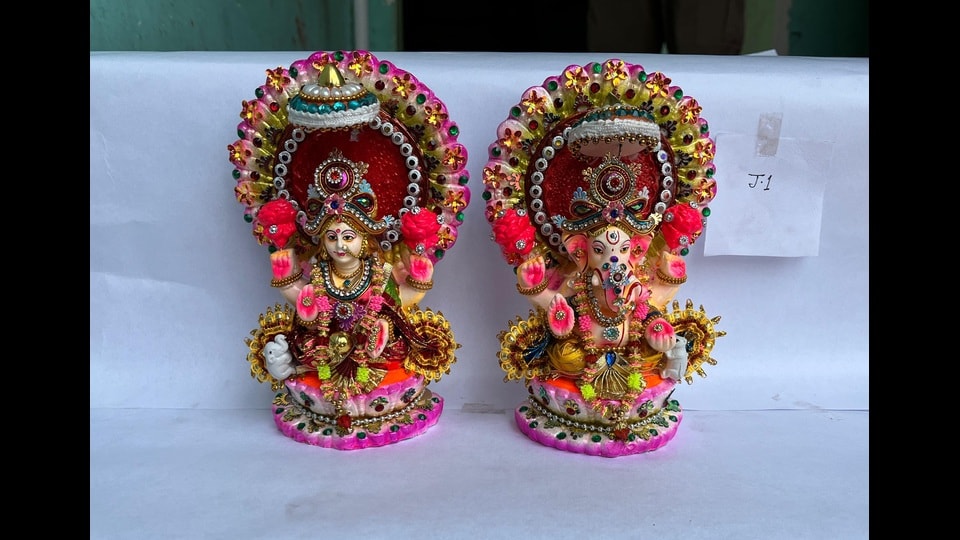
In Saadatganj, traditional vendors are championing baked clay. Vendor Prem Sagar said his workshop uses only baked clay, finished with vibrant paints, silk garments, crowns and kundan work.
“The pairs available range from ₹80 to ₹2,000 for a few inches to 2.5-foot statues. People are choosing baked clay ones as they are at least a bit more eco-friendly than Plaster of Paris-made idols,” said Sagar.
Another vendor Kallu Prajapati is selling high-end pre-decorated baked-clay idols from Kolkata, ranging from ₹400 sets to ₹2,500 for master-crafted idols, sized from a few inches to bigger ones of about 2-3 feet.
“Buyers from adjoining rural districts still prefer cheaper PoP idols from Kanpur and Agra, but city buyers are choosing durable baked clay as a preference,” said Prajapati.
In Aminabad, PoP has fallen to under 10% of total market share, replaced by Kolkata-style clay idols featuring unique postures such as Lakshmi and Ganesha seated on moons or swans, with raised motifs of mice, owls and elephants.
“While these permanent-colour Kolkata statues dominate demand, they do not dissolve easily in water and are not strictly eco-friendly. Shoppers are also facing a hike of ₹100 to ₹150 on smaller statues and ₹250 to ₹300 on larger pieces,” said another vendor, Nitin.
In Khajua, a vendor, said that this year Kolkata’s idol monopoly has been with superior eco-friendly clay idols now supplied across Uttar Pradesh, Delhi and Madhya Pradesh. “Unlike solid black-clay Kolkata idols that take a long time to degrade, Khajua’s blended yellow-and-black clay idols are baked for strength yet dissolve completely in a few months.
“With raw material costs rising from ₹400 to nearly ₹700, Khajua sculptors have raised prices by 10 to 15%, yet demand remains strong,” said Abhishek.
Adding to the sustainability movement, cow dung, cocopeat and clay idols have become a major trend. Initiated by ‘Go For Gomti’ in 2023, these ₹350 idols can be immersed at home in a pot or garden and contain seeds of lauki, taroi, kaddu, karela, mirch, dhania, ajwain and tulsi that grow into plants.
Founder Prateek Bhardwaj said, “Around 1,500 idols have been sold with a target of reaching 5,000 to 6,000 families, with bulk orders from Barabanki, Unnao, Kanpur, Hardoi and Sitapur. A mega land visarjan drive at Mehndi Ghat will be conducted for respectfully immersing 1.5 to 2 lakh old, broken idols collected across the city.”
Other organisations are matching the momentum. Roti Kapda Foundation secretary Riddhi Kishore Gaur said adoption has grown to over 400 families for its ₹350 idols and ₹5 cow dung diyas, available at Lete Hue Hanuman Ji Mandir, Panchvati Ghat with courier facility.
‘Seva Sankalp’ general secretary Sukhpreet Kaur reported a 60% surge in demand for its products made by underprivileged women, priced from ₹150 to ₹400 on their website.