
 E-Paper



Auto, taxi fares in Mumbai set to rise from September 1
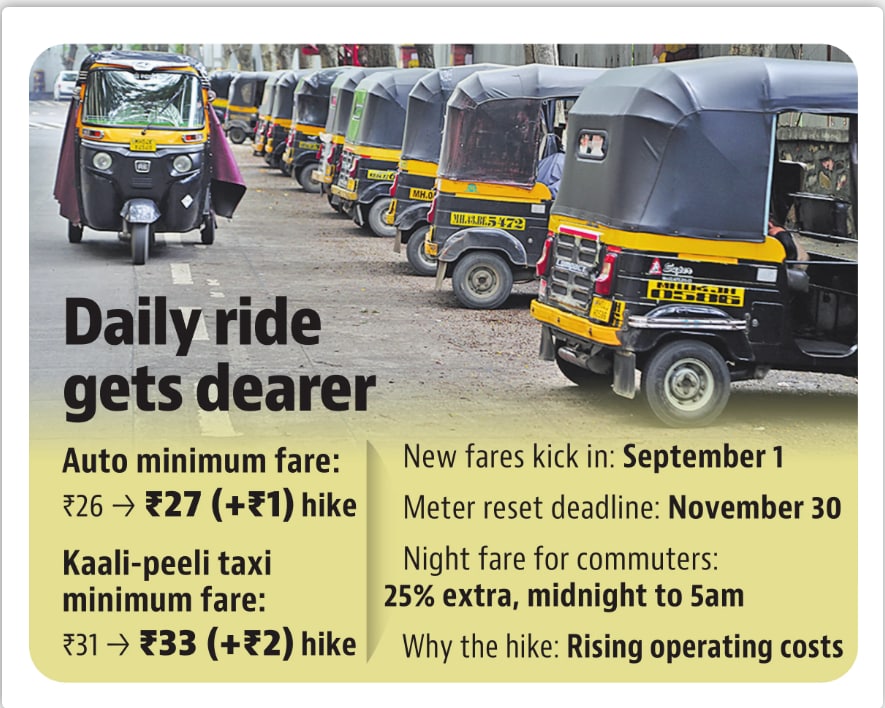
The minimum fare for CNG-run autorickshaws will rise from ₹26 to ₹27, while the base fare for black-and-yellow taxis will increase from ₹31 to ₹33.

 Prefer HTon Google


Commuters across the Mumbai Metropolitan Region (MMR) will have to pay more for autorickshaw and kaali-peeli taxi rides from September 1, with the Mumbai Metropolitan Regional Transport Authority (MMRTA) approving a fare hike of ₹1 for autos and ₹2 for taxis on Wednesday.
The minimum fare for CNG-run autorickshaws will rise from ₹26 to ₹27, while the base fare for black-and-yellow taxis will increase from ₹31 to ₹33. The revised fares will apply to the first 1.5 km.
The MMRTA has, however, given auto-rickshaw and taxi owners until November 30 to recalibrate their electronic meters. Those who fail to do so could face penal action from December 1.
Also read | Mumbai commuters bear the brunt as Marathi rule sparks autorickshaw strike
According to sources, the MMRTA approved the revised fares and laid down guidelines for their implementation on August 26. The revised fares will apply to auto-rickshaws and taxis across the Mumbai Metropolitan Region.
New fares from September 1
With the new fares coming into effect from September 1, electronic meters will have to be recalibrated accordingly. Senior Regional Transport Office (RTO) officials said drivers have been given until November 30 to complete the process.
“Those who fail to update their meters within the deadline could face penal action from December 1. Until the meters are recalibrated, drivers have been instructed to charge passengers according to the revised fare chart,” said a RTO officer.
Also read | Mumbai taxi, autorickshaw fares to rise next week after 18-month freeze
The scale of the exercise could prove challenging. There are currently around 5 lakh registered auto-rickshaws and 45,000 black-and-yellow metered taxis in the MMR. However, only 15 to 20 centres are available across the region for meter testing and recalibration.
The unions have claimed that this could pose a major challenge for the RTOs, with such a large number of vehicles required to have their meters recalibrated within just three months. Drivers may also have to wait for appointments at authorised centres, where the process can take considerable time.
“Auto-rickshaw and taxi drivers who fail to recalibrate their meters by November 30 could face penal action from December 1. A penalty of ₹50 per day may be imposed on vehicles whose meters have not been updated, subject to a maximum fine of ₹5,000,” said another RTO officer.
Drivers who miss the deadline may therefore face an additional financial burden. The recalibration process begins with an authorised dealer removing the old seal on the meter. An updated chip containing the revised fare rates is then installed in the electronic meter.
The dealer conducts the first-level test of the new meter and issues a certificate. Based on this certificate, a real-time road test covering 1.5 kilometres is conducted in the presence of RTO officials.
If the meter is found to be functioning accurately and in accordance with the prescribed standards during the test, the auto-rickshaw or taxi is allowed to charge fares according to the revised rates displayed on the recalibrated meter.
The hike comes after the previous fare revision in February 2025. The increase has been sought by auto-rickshaw and taxi unions in view of rising operating costs.
Night fares attract a 25% surcharge between midnight and 5am. On the revised minimum fares, this works out to ₹33.75 for an auto and ₹41.25 for a taxi for the minimum stage.


Stay updated with all the Breaking News and Latest News from Mumbai. Click here for comprehensive coverage of top Cities including Bengaluru, Delhi, Hyderabad, and more across India along with Stay informed on the latest happenings in World News.


