
 E-Paper



Cost structure, adequate funding needed for regional airlines: Experts
While the future of Alliance Air looks stable, concerns regarding longevity of privately-funded airlines remain.


In early January, a pilot-turned-entrepreneur commenced a new airline in a segment which has seen only failures in the country’s aviation space because of myriad reasons. Consider this, between 2011 and 2018, as many as five private regional airlines –Air Mantra, Air Costa, Air Pegasus, Air Carnival and Air Odisha—started services promising to change the regional aviation landscape in the country, but today, in a span of almost eight years, none of them can be seen flying in the skies, as all have shut shop.
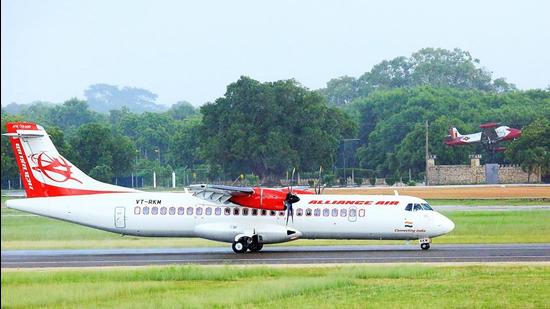
At present there are seven carriers, including disinvestment-bound Air India’s regional arm Alliance Air, operating in the country under regional flying permit.
While the future of the most established player in the lot —Alliance Air —looks stable considering it has a strong parent (promoter) in the form of Government of India, concerns regarding the longevity of the remaining privately-funded airlines to sustain operations will depend on a number of factors, as viability of a regional carrier has always been under question.
Reason for failures
Aviation research and consultancy firm Centre for Asia Pacific Aviation (CAPA), during a webinar on “reinventing regional aviation” had noted that despite undoubted potential of regional aviation in the country, the sector continues to be severely under penetrated, with the market delivering a string of failed regional airlines.
Enhancing regional connectivity through fiscal support for a fixed period and infrastructure development is one of the objectives of the National Civil Aviation Policy (NCAP) that the Central government had announced during its first term in 2016.
According to Alliance Air’s former chief executive officer (CEO) KS Subbiah, regional airlines are an absolute necessity but they are failing due to inadequate hub networks as point-to-point travel is not enough.
The government had in its 2016 policy introduced a new category of airlines — scheduled commuter airline with low capitalisation threshold, and also allowed airlines operating on regional routes under its Udey Desh Ka Aam Nagrik (UDAN) scheme to form codeshare partnerships with the carriers operating on major routes to make regional airlines somewhat viable. But the entry of the established domestic airlines in the play has nullified that possibility.
Ratings agency ICRA said the concept of codeshare of regional airlines seems to have not worked as it has not seen codesharing on domestic routes.
Citing inadequate capital to fund operations in the long-term as another reason for the failure of regional carriers, Subbiah said, “The promoters must be ready to step in [to capitalise the airline] during crises like Covid-19 or fuel price hike, among others.”
CAPA too said regional carriers were succumbing to factors like under-capitalisation, sub-scale operations, mixed fleet of aircraft and demand risks.
The major reason for the failure of these regional airlines is unsustainable cost structure, said Kinjal Shah, vice-president of ICRA.
“Fuel cost accounts for 30-40% of the total cost of airlines. While this cost on a per kilo litre basis is the same across airlines (full-service carrier or low-cost or regional airline), considering the target audience for regional airlines, air fares have to be kept much lower so as to attract more passengers for maintaining adequate passenger load factors (PLFs),” Shah said.
She also pointed out that there is hardly any difference in the airport, landing and navigation charges across big airports and regional airports in India. “This, thus, results in higher cost per available seat kilometre for regional airlines, while their revenue per available seat kilometre is also lower,” Shah pointed.
Aid from government
Under the Regional Connectivity Scheme (RCS), the aviation ministry has been providing subsidies and viability gap funding to help bridge this gap. Airlines selected under the scheme have to offer lower fares for 50% of their total aircraft seats, for which they receive a subsidy or viability gap funding from the Centre and the state government concerned.
Shah said RCS provides a good opportunity for regional airlines to stabilise their troubled operations using the fiscal support being provided.
“The subsidy or viability gap funding was valid only for three years. Apart from three-year exclusivity, the question is what will be the government’s support after that period gets over for a long-term commitment and survival? This is important as many routes are becoming unviable after the three-year support is withdrawn, leading to closure of the airline,” said Subbiah.
According to Shah, the airlines have also allegedly resorted to ‘lower pricing’ to maintain their PLFs in an environment of increasing capacities, which has resulted in overall deterioration in industry economics and financial stress. Since air fares on regional routes have to be lower to compete with alternate modes of transport, the cost structure for regional airlines also needs to be lower than that of the national airlines, she added.
The Indian aviation industry is characterised by high fixed costs, with 35-42% of the airlines’ expenses being fixed in nature.
“Since a substantial portion of air travel, both business and leisure, is discretionary, the airline industry tends to experience high volatility in passenger traffic/load factors and consequently adverse financial performance during economic downturns. Thus, airlines need a strong balance sheet to sustain operations,” ICRA stated.
Stay updated with all the Breaking News and Latest News from Mumbai. Click here for comprehensive coverage of top Cities including Bengaluru, Delhi, Hyderabad, and more across India along with Stay informed on the latest happenings in World News.


