
 E-Paper



Diwali AQI spikes to 400-plus, settles at moderate
Despite the average AQI numbers, some neighbourhoods saw air quality plummet to the severe category between Sunday night and early on Monday

 Prefer HTon Google


MUMBAI: Mumbai witnessed one of its worst air quality spells of the season starting Sunday evening through Monday, with a sharp overnight spike in pollution levels due to widespread bursting of crackers for Diwali. While nine air quality monitoring stations recorded poor AQI at 7am on Monday, the number rose to 11 by evening.
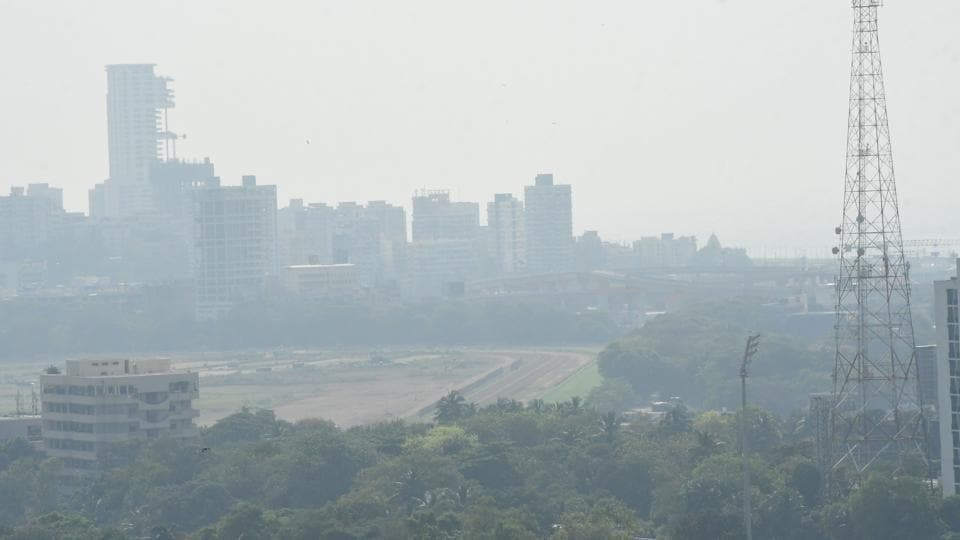
At 4pm on Monday, the city’s 24-hour average AQI remained in the moderate category, with 11 of the 25 monitoring stations recording poor AQI; 12 were in the moderate category and only two recorded satisfactory air quality. PM2.5 remained the primary pollutant.
Despite the average AQI numbers, some neighbourhoods saw air quality plummet to the severe category between Sunday night and early on Monday. In these areas, AQI spiked beyond 400. Navy Nagar was worst, at 497, followed by Sewri at 452 and Shivaji Nagar at 444. Ghatkopar, Chakala and Chembur too recorded AQI in the 400-plus category.
According to the Central Pollution Control Board’s classification, an AQI of 0-50 is considered good; 51-100 satisfactory; 101-200 moderate; 201-300 poor; 301-400 very poor; and 401-500 severe.
The 24-hour average AQI in BKC rose from 169 to 240, while Chembur recorded an increase from 168 to 208. Deonar’s AQI climbed from 161 to 228, and Ghatkopar recorded a rise from 177 to 226. Kherwadi recorded one of the highest 24-hour averages, with its AQI rising from 196 on Sunday to 266 on Monday. Malad (west) also saw a sharp rise from 139 to 199, while Worli’s AQI increased from 135 to 195. Shivaji Nagar recorded an increase from 183 to 209.
“Westerly disturbances over the coastal region, coupled with low wind speeds are restricting the dispersion of pollutants, causing them to remain trapped over the city. Firecrackers are also a major contributor to the deterioration in air quality, adding to the pollution load. These conditions are likely to persist over the next few days,” said Dr Gufran Beig, scientist at the Indian Institute of Tropical Meteorology.
AQI on Diwali night
On Sunday night, as Mumbai celebrated the festival of DIwali and burst firecrackers, pollution levels spiked on the intervening night of Sunday and Monday. A thick haze enveloped the city.
Through Sunday night, readings at several locations crossed 400, pushing air quality in those neighbourhoods into the severe category. At BKC, the AQI was 206 at 10pm on Sunday before rising sharply between 11pm and 3am, remaining in the range of 344 to 360. Even at 7am on Monday, it stood at 232.
Chembur recorded similarly high readings, with AQI rising to 334 before subsequently rising to 401 at night. By 7am, the reading had fallen to 216.
Navy Nagar was worst-affected. Its AQI, already high at 359 around 10pm, remained around the 400-mark through the night, peaking at 497 at 2am. At 7am, it stood at 274. At Shivaji Nagar, AQI spiked to 444 at 11pm. It remained comparatively lower in the hours before and after the spike, standing at 223 at 7am.
Sewri also witnessed a significant deterioration in air quality. Its AQI stood at 255 at 9pm before climbing to 452 by midnight. It subsequently dropped to 277 at 1am and stood at 226 by 7am.
Ghatkopar recorded poor air quality, with the reading standing at 221. It rose sharply through the night, touching 257 at midnight before spiking to 421 at 1am and remaining elevated at 362 at 2am.
Chakala, which recorded 178, also witnessed a sharp overnight deterioration, with the reading climbing to 408 at 2am and 302 at 3am. Byculla recorded 188, with readings remaining particularly high through the night, fluctuating between 300 and 450 from 10pm to 2am.

Stay updated with all the Breaking News and Latest News from Mumbai. Click here for comprehensive coverage of top Cities including Bengaluru, Delhi, Hyderabad, and more across India along with Stay informed on the latest happenings in World News.


