E-Paper



After Agra incident, pan-UP drive to identify, plug inactive borewells
The Uttar Pradesh government will undertake a 10-day, pan-UP, extensive drive to cover open borewells and manholes in the state

 Prefer HTon Google


The Uttar Pradesh government will undertake a 10-day, pan-UP, extensive drive to cover open borewells and manholes in the state. It has ordered all district magistrates to undertake this ‘time-bound’ and ‘important’ drive in both rural and urban areas of their districts between June 20 and June 30 on top priority and ensure that no open borewell holes remain in any district, officials said.
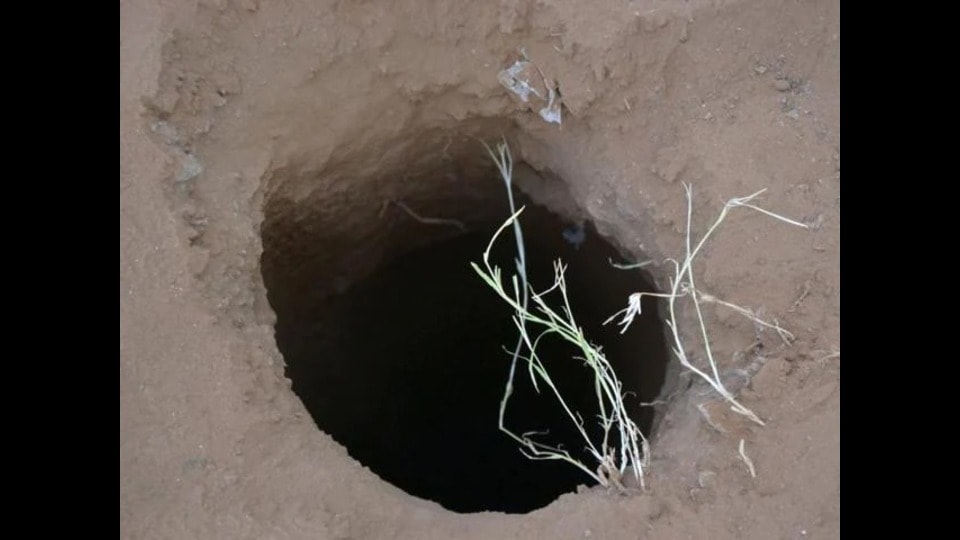
The move follows UP CM Yogi Adityanath taking cognisance of the latest incident in which a four-year-old child fell into a 150-foot-deep open borewell while playing, in Dhariyai village, in Agra, on June 14, necessitating a rescue operation that lasted eight hours, they added.
Additional Chief Secretary (revenue) Renuka Kumar in a missive dated June 17 and marked ‘Time-bound/Important’ sent to all DMs, has also instructed that the DMs provide date-wise information regarding open or unsafe borewells identified and made safe as part of the exercise and the count of remaining borewells that are yet to be made safe in the given format through e-mail after the conclusion of the drive.
Kumar also reminded the district officials that the UP relief commissioner, through his missive dated June 6, 2019, has provided the districts a copy of the standard operating procedure prepared by the National Disaster Response Force (NDRF) to be followed in case of an incident concerning an open borewell.
The exercise will be undertaken involving lekhpals, gram pradhans and gram secretaries besides beat constables and sanitation staff as desired by the state government to identify open borewells and to plug them, a district administration official in the know of the development, said.
Children falling into open borewells are not new to Uttar Pradesh. Even before the June 14 Agra incident, a number of children have fallen into borewells and many have lost their lives.
A four-year-old boy had fallen into a borewell in Budhaura village of Mahoba on December 2, 2020 and could not be saved despite an 18-hour rescue operation. Likewise, a five-year-old boy had fallen into a 100-feet deep borewell at Agaryala village of Mathura while plucking fruits on April 13, 2019 and could be saved only after an eight-hour rescue operation.
On April 4, 2019, another eight-year-old girl Seema had fallen into a 60-foot borewell, in Rashidpur village, in Farrukhabad district and could not be saved despite a two-day rescue exercise. In 2012 as many as 19 children had lost their lives in Uttar Pradesh by falling into borewells.
In February 2010, the Supreme Court had issued guidelines directing all borewell owners to notify the DM concerned to fill up abandoned borewells. The NDRF recommends filling these holes with mud, pebbles and clay.
The Problem
A borewell is a deep, narrow hole drilled into ground from which water is drawn using a pipe and pump
Borewells are usually small in diameter ranging from 4.5 inches to 12 inches
India has over 27 million borewells with several now abandoned because they no longer supply water
When a borewell dries up, its cover is removed and the pipe pulled out, leaving behind a naked hole that causes accidents.