E-Paper



Seven years on, Assam’s crime tracking system’s objectives ‘unachieved’
CCTNS is a ‘mission mode project’ under the national e-Governance plan of govt of India aimed at creating a comprehensive and integrated system for enhancing the efficiency and effectiveness of policing.


The Comptroller and Auditor General (CAG) of India tabled its report last week in the Assam assembly after reviewing the implementation of ‘Crime and Criminal Tracking Network System (CCTNS)’ in Assam and noted, “Due to incomplete data capture, the very objective of providing information repository to help the police officials in analysing crimes and detection of criminals and track remained unachieved.”
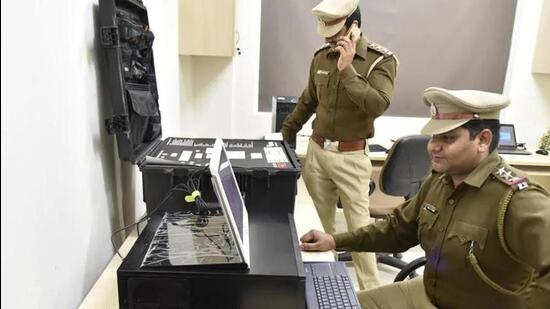
Assam’s CCTNS project, an advanced project aimed at improving tools of investigation for police in analysing crime patterns, and detecting and tracking criminals, still remains unaddressed even after seven years of its implementation, the CAG report mentioned.
Also Read: PM Modi to address 108th Indian Science Congress today. 10 things to know
“The manual system (of recording crimes and information on criminals) still remains present, with only certain mandatory fields being recorded in the system, leading to the discrepancy of data between CCTNS and manual records,” the report stated.
The report stated that only a few of the citizen-centric services were operational and their “utilization was not optimum”.
CCTNS is a ‘mission mode project’ under the national e-Governance plan of govt of India aimed at creating a comprehensive and integrated system for enhancing the efficiency and effectiveness of policing. It has a core application system, which is common for all states and union territories but can be customized at the state level.
According to guidelines issued to all states by the union home ministry, nine important services related to police functioning, including solutions for law and order, crime prevention and traffic were to be covered under CCTNS. But CAG detected that as of February 2021, only four of these services were in function in the state. They included solutions to registration, investigation, prosecution and reporting.
In Assam, CCTNS was implemented first as a pilot project in two districts namely Kamrup (metropolitan) and Kamrup (rural) in January 2013 and subsequently covered all districts in one year.
CAG noted that despite signing agreements with service providers and allocation of funds ( ₹67 crore), 28 of the total 502 locations (348 police stations, 154 higher offices) remained unconnected.
The audit report revealed discrepancies and errors in using several key features of CCTNS, including registration of first information reports (FIRs), maintenance of case diaries, final reports and charge sheets as well as uploading of photographs of missing persons and unidentified dead bodies.
The report also mentioned inaccurate entries in the database which defeated the very purpose of implementing CCTNS. “It also made online monitoring of FIRs difficult.”
The CAG found that while Assam police proposed to train 23,659 personnel for implementation of CCTNS, till February 2021, only 10,595 were imparted training. And while 4,461 investigation officers were selected, only 1,291 got the required training to work using CCTNS.
There was “poor implementation” of citizen services as well by the police, the report noted, adding “...Of the 1,753 complaints received between January 2014 and March 2021, only 468 were entertained.”
Also Read: Goa airport logs its highest flight traffic on Jan 1: AAI
There was also a shortfall of human resources for the delivery of citizen services and police data digitization.
The CAG recommended steps to do away with the parallel system of maintaining both manual forms and CAS forms in a phased manner and suggested doing away with a manual system of creating and maintaining records.
Recommendations were also made to review the quality of data entered in CCTNS, timely processing of citizen services and adequate and required training to all staff of Assam Police for proper implementation of CCTNS.
“While CCTNS is working well in some areas there are some points which need to be addressed better. There are multiple factors for the same ranging from the inadequate deployment of human resources, lack of training and delay in approval at government level for the requirement of manpower,” said a senior police official on condition of anonymity.
“Efforts are already underway to ensure proper implementation of CCTNS in the state,” he added.
At present, the home department, under which Assam police functions, is under the control of chief minister Himanta Biswa Sarma. While a lot of focus has gone into recruitment, modernization of the force as well as repair and construction of existing infrastructure, the CAG report shows that a lot of work needs to be done on CCTNS.