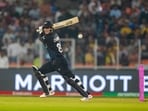
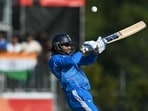
Chris Cairns grew up around the game in an unusually direct way, the son of Lance Cairns, one of New Zealand's most beloved all-rounders of the 1970s and 80s. Power was never in short supply when the younger Cairns walked to the crease or charged in with the ball. A destructive right-hand batter and lively fast-medium bowler, he had the ability to change a game in a matter of overs and became one of New Zealand's most dangerous all-rounders, in some ways even surpassing his father's own reputation.
Cairns made his Test debut against Australia in 1989 and spent much of the early part of his career establishing himself as a genuine all-round option. His ability with the ball developed alongside his batting, and he became particularly effective when given the freedom to attack. By the late 1990s, he had established himself as one of the most important players in New Zealand's side.
His finest moments came on the biggest stages. At the 1999 World Cup, Cairns played a key role in New Zealand's run to the semi-finals, contributing with both bat and ball. A year later, he produced one of the defining performances of his career in the final of the 2000 ICC KnockOut Trophy against India in Nairobi, a tournament later rebranded as the Champions Trophy. Chasing a target of 265, Cairns smashed an unbeaten 102 to guide New Zealand home and win the Player of the Match award, helping the side lift its first-ever ICC title.
In March 2004, he became only the sixth player in cricket history to complete the all-rounder's double of 3,000 Test runs and 200 wickets, joining an elite group that includes Ian Botham and Kapil Dev. Cairns retired from Test cricket in 2004 and brought his full international career to a close in 2006. He was later honoured as an Officer of the New Zealand Order of Merit for his services to cricket.


 Live Score
 Cricket Teams
 Cricket Players
 NEW ZEALAND