
 E-Paper



Delhi government’s nod likely today for 1,000 e-buses
Touted as one of Aam Aadmi Party (AAP) government’s biggest decisions to boost public transport and curb pollution, the project is likely to be cleared by the cabinet, chaired by chief minister Arvind Kejriwal, on Saturday.


The Delhi government’s decision to get 1,000 electric buses and run then for 10 years in the national Capital is likely to cost Rs 6,000 crore.
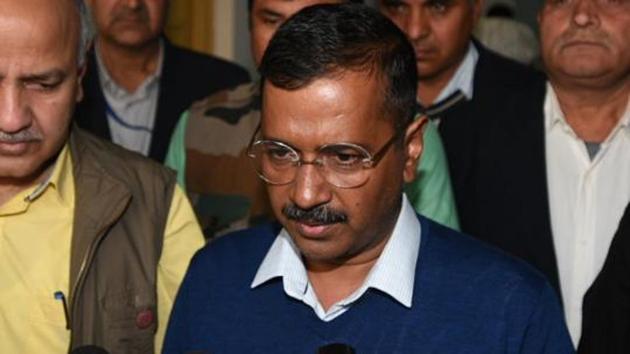
Touted as one of Aam Aadmi Party (AAP) government’s biggest decisions to boost public transport and curb pollution, the project is likely to be cleared by the cabinet, chaired by chief minister Arvind Kejriwal, on Saturday. On Friday too, the cabinet had met and approved the reimbursement cost of fitting hydraulic lifts in 1,000 standard floor CNG buses, a move aimed at benefitting differently-abled people.
Documents on the e-bus project accessed by Hindustan Times (techno-financial assessment report and departmental communications) stated that the initial cost of the project for the first year will be around Rs 2,400 crore.
The complete roll-out, including operations and maintenance over a period of 10 years, is likely to go up to ₹6,000 crore, data indicated.
Reports stated that the project will be highly subsidised. The Delhi government is likely to bear an upfront cost of Rs 750 crore (Rs 75 lakh per bus) for the 1,000 e-buses.
Subsequently, the government is likely to bear Rs 500 crore every year for 10 years. Officials said the subsidy pattern could change after the Union Cabinet on Thursday cleared the Rs 10,000 crore FAME-II scheme under which 7,000 buses across India will get subsidy.
The techno-financial assessment report submitted by consultant Delhi Integrated Multi-Modal Transit System (DIMTS) has suggested two models of e-buses. One, where the bus will be charged once a day, preferably overnight, and operate during the day. One such bus would cost Rs1.75 crore. Second, is where the buses would require charging even during its operational period. This type of bus would cost ₹1.5 crore each.
A senior government official, on condition of anonymity, said a decision on whether both the models will be allowed or either of the two, will be taken by the Cabinet on Saturday.
The report also stated that the e-buses will have a running range between 120 kilometres and 180 kilometres per day. The cost of setting up charging infrastructure is likely to go up to Rs 320 crore.
To park these buses, the transport department will construct bus depots at six locations — East Vinod Nagar, Burari, Rohini Sector 37, Mudhela Kalan, ITDR Sarai kale Khan and Bamnauli.
In November last year, the Delhi government had given its in-principle approval for running 1,000 low-floor AC electric buses in the city and appointing DIMTS as the consultant for the project.
Delhi at present has less than half the fleet of 11,000 buses that is needed to support the city’s population.
The Cabinet in its Friday meeting, which was chaired by Kejriwal, approved the proposal of the transport department for reimbursing the incremental cost of fitting hydraulic lifts, including annual maintenance cost for 10 years, to the concerned concessionaires.


Stay updated with all top Cities including, Bengaluru, Delhi, Mumbai and more across India. Stay informed on the latest happenings in World News along with Delhi Election 2025 and Delhi Election Result 2025 Live, New Delhi Election Result Live, Kalkaji Election Result Live at Hindustan Times.


