
 E-Paper



India's energy security goes beyond producing more oil | Number Theory
The second part will bring in other parts of India’s energy economy to explain why energy security is about more than just securing petroleum supplies
Updated on: Aug 12, 2026, 06:35:37 IST

 Prefer HTon Google
Share via


Copy link

The first part of this series looked at numbers on India’s production and trade of petroleum and explained the importance of the new policy by the union cabinet to boost domestic petroleum production in India. The second part will bring in other parts of India’s energy economy to explain why energy security is about more than just securing petroleum supplies.

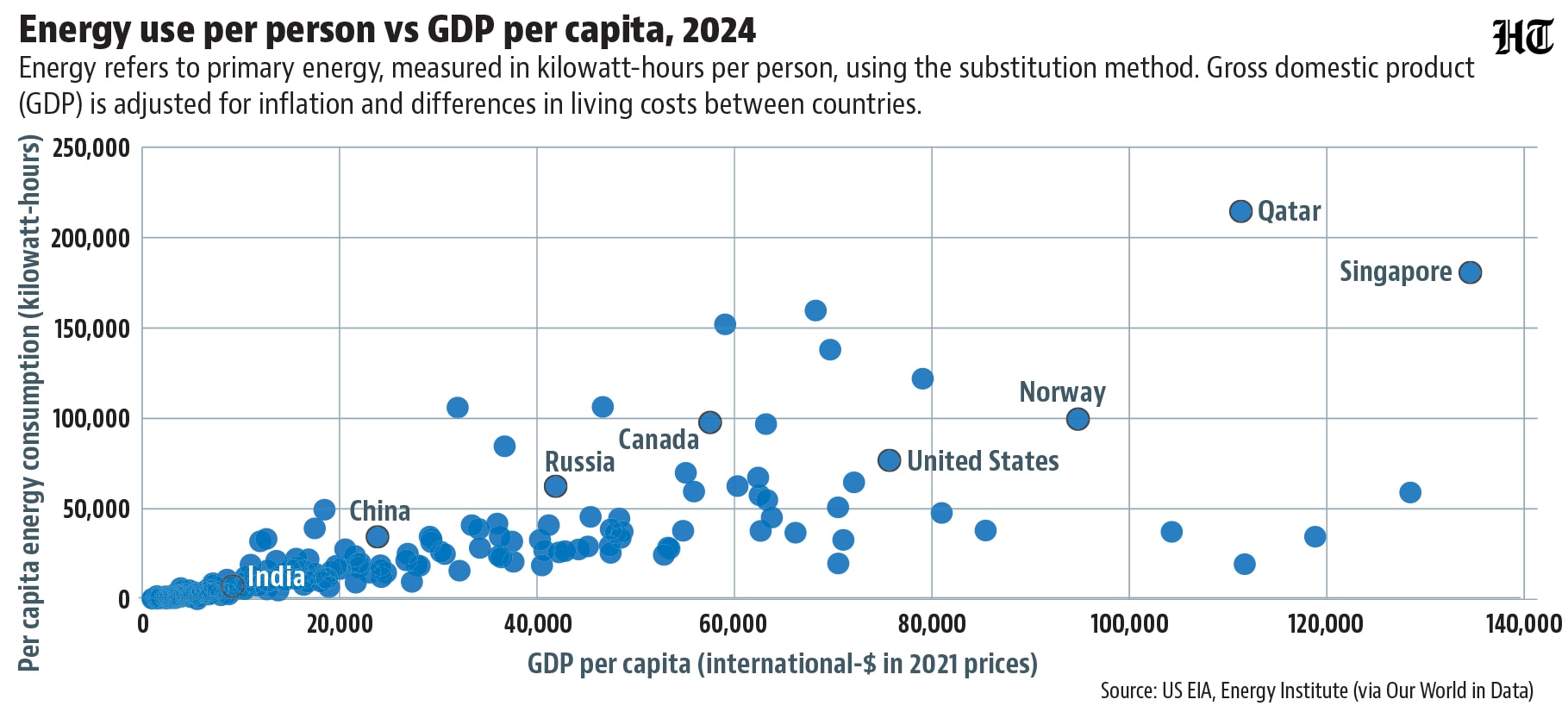
 India’s energy consumption will only increase going forwardEnergy consumption in a country is strongly linked to the economic fortunes of its people. This means that per capita energy consumption increases sharply with a rise in per capita GDP of a country. As expected, India is currently ranked much lower in per capita energy use, even though it ranks third globally in overall energy use. As India’s GDP and per capita GDP increases—India really wants them to—its energy requirements will increase as well.
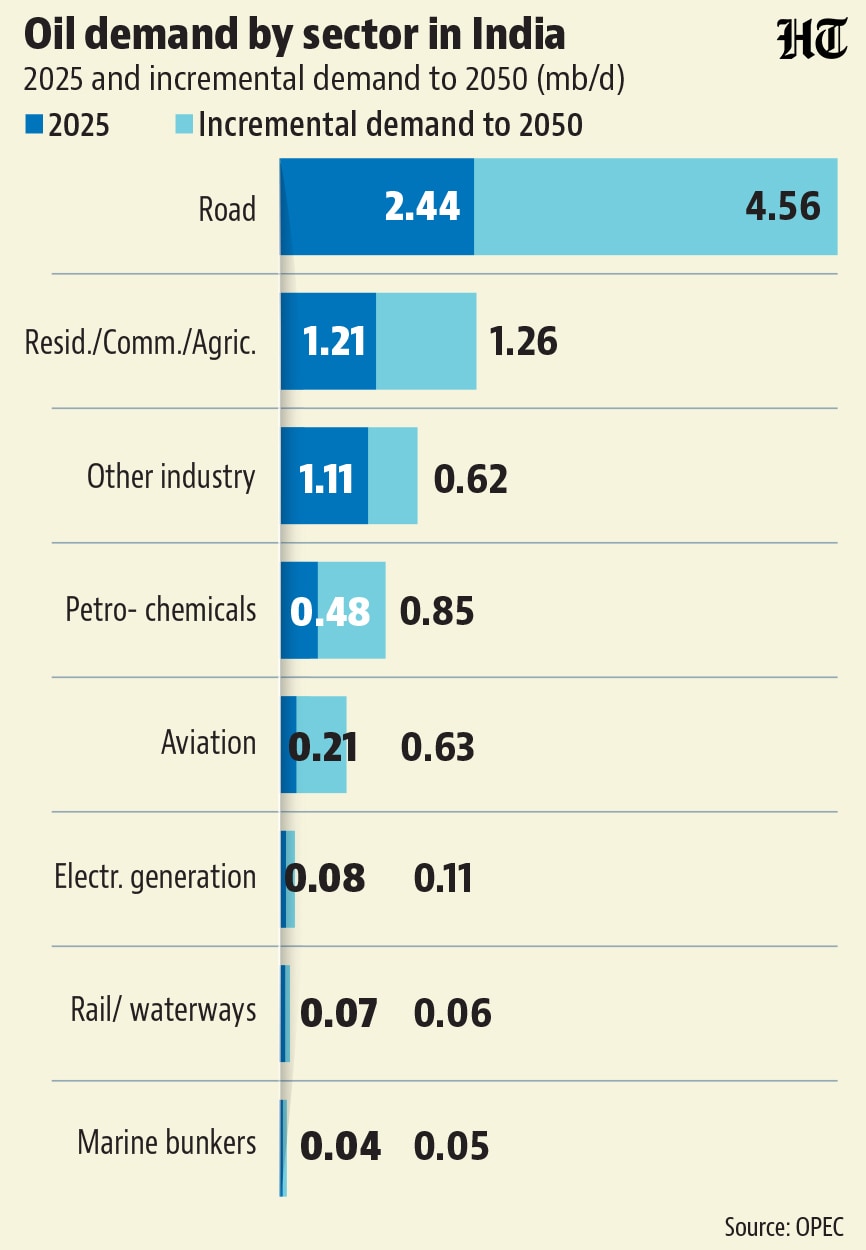
- India’s largest additional demand for petroleum is expected to come from automobilesWhere India uses petroleum in the future matters almost as much as how much it uses. OPEC expects road transport to be by far the largest source of additional oil demand in India. From 2.44 million barrels per day in 2025, road demand is projected to rise by another 4.56 million barrels per day by 2050. That is around 56% of the entire increase in India’s oil demand over this period. Historical consumption data from India’s petroleum ministry already points in this direction with consumption explicitly classified under transport increasing from 34 million tonnes in 2005-06 to nearly 55 million tonnes in 2024-25, accounting for around 22% of total oil consumption. Even this understates transport’s actual petroleum footprint because most diesel is recorded under resellers or retail rather than by its final use. In 2024-25, while only 4.25 million tonnes of diesel was classified directly under transport, another 80.1 million tonnes was recorded under resellers or retail. A 2013 end-use study by the Petroleum Planning and Analysis Cell had found that nearly three-fourths of diesel sold through retail outlets was consumed by transport. In other words, India’s future petroleum problem is increasingly a mobility problem.
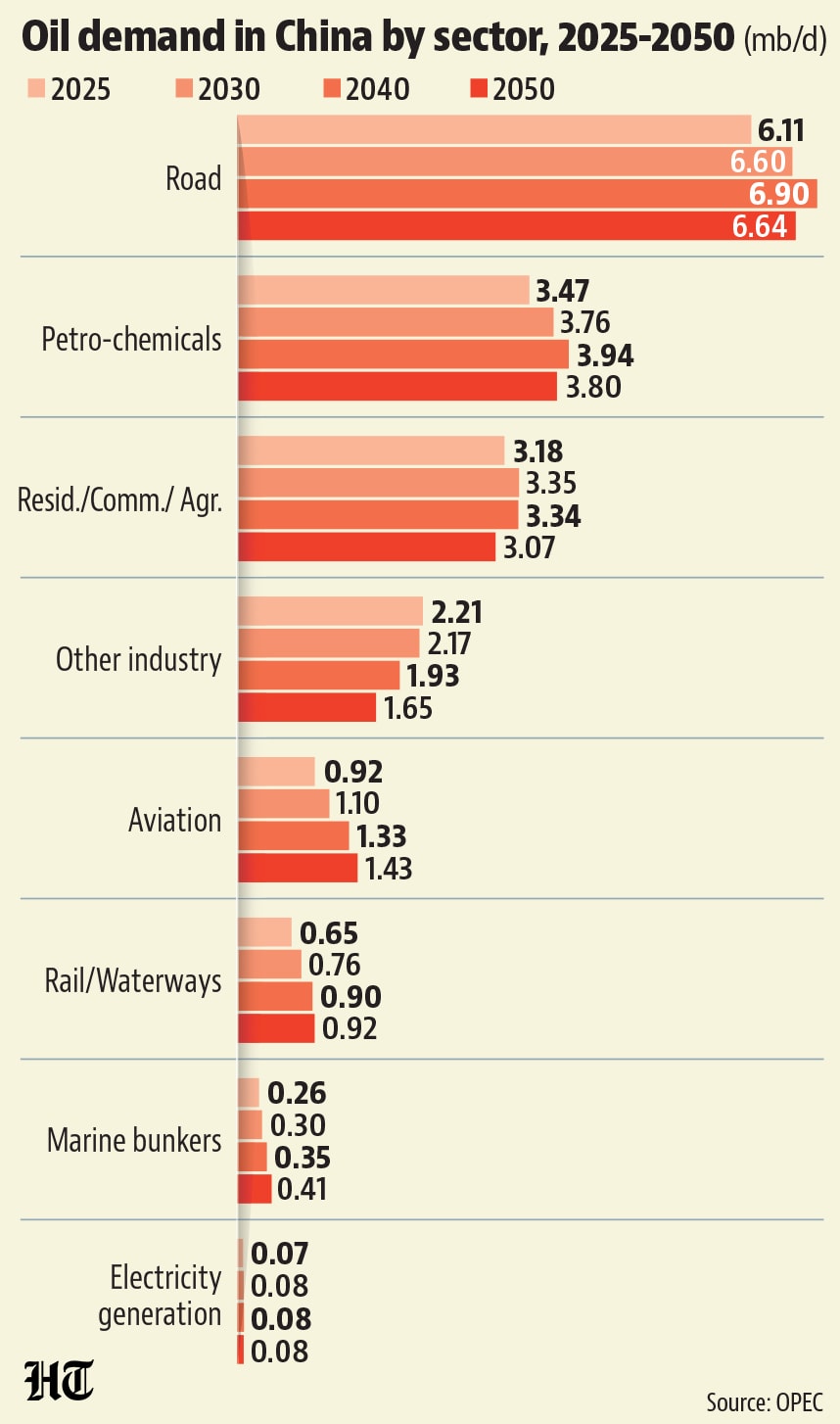
- This is unlike China, where the automobile-component of petroleum demand is expected to fallOPEC expects China’s road transport oil demand to rise from 6.11 million barrels per day in 2025 to a peak of around 6.9 million barrels per day around 2040, before falling to 6.64 million barrels per day by 2050. India, in contrast, is expected to add 4.56 million barrels per day of road demand over the same period. China adds barely 0.53 million. A large part of this difference comes from electric vehicles (EVs), which accounted for 55% of total car sales in China in 2025, according to the IEA, compared to just 4% in India. OPEC expects China’s EV fleet to increase from around 37 million vehicles in 2025 to 241 million by 2050. India’s is expected to grow too, but from just 1 million to 28 million over the same period. China therefore shows what happens when growing transport infrastructure becomes increasingly detached from petroleum consumption. Its roads will continue to get busier, but they will eventually stop adding much to oil demand. India is still at an earlier point in this transition.
- This is why India’s energy security strategy cannot stop at producing more petroleum. If Samudra Manthan results in increased production, it can reduce the vulnerability created by import dependence, but the other half of the equation is reducing how much additional oil India needs as it grows. Electrifying transport, expanding public transit and shifting more of the energy system towards domestically generated renewable electricity can make economic growth less dependent on imported hydrocarbons. As China shows, rising energy requirements, especially in transport, do not necessarily have to mean proportionately rising oil consumption.



Unlock a world of Benefits with HT! From insightful newsletters to real-time news alerts and a personalized news feed – it's all here, just a click away! -Login Now!


