
 E-Paper



Terms of Trade: The melancholy of critical cynicism
The bigger picture today is getting more and more fuzzy if not completely unintelligible.

 Prefer HTon Google


I have now worked in a newsroom for more than a decade. I still do not perfectly fit into the category of a reporter. Breaking news doesn't really excite me, though I do analyse it in real time for my daily bread. Part of the reason is my training as an economist, not a journalist. My only skill set useful to a newsroom is perhaps the ability to connect current events to the bigger picture: linking a data point from today’s news to a larger set of numbers, or to contradictions and dynamics that could be unleashed or left unnoticed.
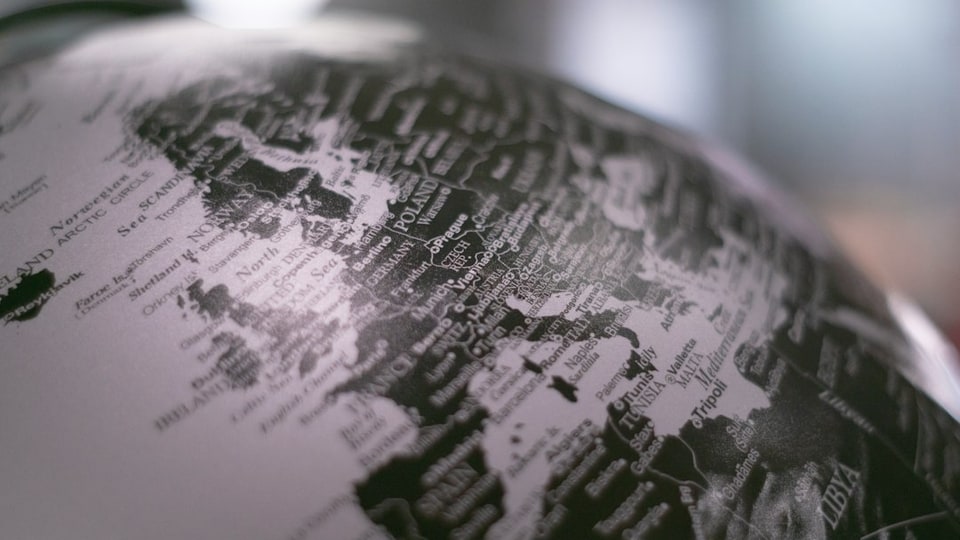
The bigger picture today is getting more and more fuzzy if not completely unintelligible. A subject nerd might get extremely excited about ongoing developments in Artificial Intelligence or the related play in financial markets. A scholar of geopolitics might try to deconstruct existing theories vis-à-vis the ongoing Sino-US great power competition or the generational churn in West Asia. A politician or an activist would seek to exploit the almost omnipresent ferment in democracies to advance their cause. All of these are pursuits which are eminently justifiable from an individual’s perspective.
I am neither a nerd nor a theoretician and definitely not a conniving politician or a rabble-rousing activist. While I am, like any other white collared salaried worker, materially invested in the status quo of today’s economy, I am not wedded to it intellectually. This often creates an intellectual raison d'être dilemma when I set out to write this column, which, ideally speaking, is meant to be my take on a major news cycle event from the past week. Sometimes, the temptation to equivocate rather than argue conclusively is too strong to resist. This week happened to be one such.
Let us look at the highlights of the news cycle.
We are probably at the cusp of yet another round of escalation in the ongoing war in West Asia. It has now become a war, where the Iranian regime is the proverbial “dead men walking” against an adversary realising the limits of its power because its strategy is plagued by a “delusion of force”. The two phrases in quotes are borrowed from extremely well written long essays by a former CIA analyst and a retired four star American general. Israel, on the other hand, is fighting its own battles, not just against Iran and its proxies but the very idea which defined that country. A long story in the Financial Times details how the Israeli elections are taking place in a country deeply polarised and equally fearful of a demographic threat from ultra-Orthodox Jews living inside the country, not just hostile Arabs and Persians outside it. The bullets that killed Yitzhak Rabin – perhaps the most reasonable voice from Israel for a just two-state solution with Palestine – two decades ago, continue to pierce the Israeli body politic even today. Israel is a country that seeks war because it knows it has lost peace forever through its own actions.
In Europe, the right-wing commentariat would have us believe that the French protests mark a watershed in the marriage between liberal democracy and multiculturalism. The protestors do not look French is the assertion. The insinuation is that they are immigrants and Muslims. With the political centre collapsing, the battle will be between white nationalism and left anarchism, we are being told. If only things were so simple.
Uniformity of religion or descent is hardly enough to preserve peace in societies; Brazil shows us how. In the recent elections, the left-leaning incumbent president Lula surprisingly lost to his main right-wing opponent Flávio Bolsonaro. Bolsonaro's father and Lula have been arch rivals for a long time. The biggest fault line which explains the Brazilian elections is not some inter-faith divide but an intra-faith one. “Among evangelicals, Lula trails Mr Bolsonaro by 33 percentage points”, The Economist wrote in an analysis of the current political dynamics in Brazil. Maybe Elon Musk, world’s richest man, who believes Europe is on the brink of a civil war because of a cultural clash will enlighten us about the socio-political rupture in Brazil which is rooted in competing worldviews on Christianity rather than Christianity versus Islam.
China, which has regained its global geo-economic mojo – never mind the usual ‘economy is collapsing’ commentaries – with resurgent exports and shrewd controls, did something that would sound pretty petty in terms of scale: banning exports of tunnel boring machines, which are used for things such as building metro rail lines. Where does the weaponisation of exports or supply chains end? Does it mean a country must make everything it needs? Can it trigger a war? It will not end well, another excellent essay in the latest issue of Foreign Affairs argues.
Should India consider making tunnel boring machines given the circumstances? The new converts to industrial policy will tend to agree. Was Jawaharlal Nehru wrong in investing independent India’s extremely scarce resources in building an industrial base, because his worldview was shaped by memories and fears of hostile supply chains rooted in a history of imperialist subjugation and not textbook comparative advantage theories which appeared so sensible until export controls arrived on the scene?
Was Mao Zedong – October 22, 2026 marked 90 years of the victory of the Long March, the precursor of the Chinese revolution under his leadership – absolutely bang on in instilling the fear of foreign domination in his country above all? Does this absolve him of his other failures including the Cultural Revolution and the Great Leap Forward, in which millions of his own comrades and citizens perished? Is China’s prowess today a legacy of this painful revolution?
Did India win political peace only to lose the war regarding becoming a great power?
Have we, in India, now reduced the revolution to a paparazzi equivalent where living-room radicals obsess over rookie activists who ended up signing peace bonds while pretending to be politics’ new James Bonds? Is activism now an elite enterprise in India while the mass of the underclass is too busy seeking a palliative cure to its entrenched precarity?
These are all, as the readers would notice, extremely critical and cynical questions. To ask them is not to claim self-righteousness or malign the protagonists in each of these questions. They are, if one were to paraphrase Chinua Achebe’s cult classic novel, an admission of a state of mind that sees beliefs fall apart. There is no grand narrative which explains things right now. What we have are half-baked assertions and conspiracy theories.
This author has always considered Italian communist Antonio Gramsci’s dictum of ‘pessimism of the intellect, optimism of the will’ as a cherished philosophical anchor. In a world that increasingly shows disorder along with delusion, one often feels closer to the philosophical existence described by Hegel’s unhappy consciousness: “the alienated Soul which is the consciousness of self as a divided nature, a doubled and merely contradictory being”. Often, this helps generate a dispassionate critical take on things. But sometimes it also creates a deep intellectual melancholy. Hopefully, next week will be better.
(Roshan Kishore, HT’s Data and Political Economy Editor, writes a weekly column on the state of the country’s economy and its political fall out, and vice-versa)


