
 E-Paper


For over a decade, the Hindustan Times Digital Streams – Education Desk has been a trusted source for accurate, in-depth, and timely news on education and careers. We bring the latest updates on board exams, competitive exams, results, employment news, study abroad, scholarships, and school and college admissions, helping students, job seekers, and educators make informed decisions. Our Coverage Areas 1. Board Exams & Results: Comprehensive reporting on CBSE, CISCE, and state board exams (UP, Bihar, Maharashtra, West Bengal, Rajasthan, Andhra Pradesh, Telangana, Karnataka, Tamil Nadu, and others), including schedules, admit cards, answer keys, results, and career opportunities. 2. Competitive Exams: Insights into major exams like UPSC, JEE, NEET, GATE, CAT, SAT, and state and central government services. Exam Results: Timely updates on UPSC, SSC, SBI, IBPS, NTA, IIMs, and other competitive exam results. 3. Employment News: Notifications on government and private sector jobs, vacancies, eligibility, application processes, and results. 4. Study Abroad: Information on top universities, courses, tuition fees, scholarships, visa regulations, and career prospects for international students. Features & Analysis: Opinion pieces, expert explainers, deep-dive reports, and interviews with key figures in education. 5. Breaking Education News: Real-time updates on major policy changes, institutional reforms, and trends shaping the education sector. 6. With a commitment to factual, unbiased journalism, HT Digital’s Education Desk has seen continuous growth in readership, offering credible and engaging content tailored for students, parents, and professionals. Meet the Team 1. Nilesh Mathur – News Editor A journalist with 24 years of experience, including 18+ years at Hindustan Times, Nilesh leads editorial planning, ensures factual accuracy, and enhances audience engagement through strategic content. 2. Papri Chanda – Deputy Chief Content Producer With over a decade of experience in education journalism, Papri specializes in exam-related content, study abroad insights, and education trends. She also explores new opportunities in education that benefit students. 3. Bishal – Senior Content Producer Active in the education and jobs sector since 2019, Bishal focuses on tracking developments, analyzing trends, and crafting informative content for students and job aspirants. 4. Gaurav Sarma – Deputy Chief Content Producer A multimedia journalist with 9+ years of experience, Gaurav is skilled in research-based storytelling, feature writing, and reporting on competitive exams, online courses, and education trends. At Hindustan Times Digital Streams – Education Desk, we strive to be the go-to platform for students and professionals navigating the dynamic world of education and careers.
IIT Madras researchers develop method for enhanced Vitamin E production
The study, published in the Biochemical Engineering Journal, noted that in its most active form known as alpha-tocopherol, vitamin E helped prevent tissue damage from certain toxic chemicals produced in the body known as reactive oxygen species.


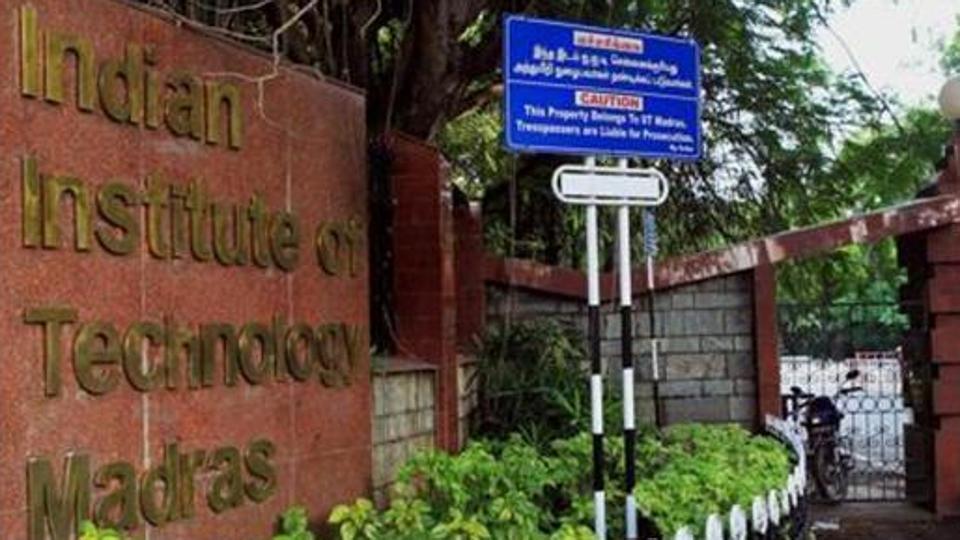
Researchers at the Indian Institute of Technology (IIT) Madras have engineered sunflower plant cells to enhance their production of Vitamin E by ten times, an advance that may pave the way for effective and efficient commercial production of the vitamin with fewer unwanted side products.
The study, published in the Biochemical Engineering Journal, noted that in its most active form known as alpha-tocopherol, vitamin E helped prevent tissue damage from certain toxic chemicals produced in the body known as reactive oxygen species. However, according to the researchers, the form of alpha-tocopherol synthesised chemically in labs was less active than its natural form found in plants.
The researchers said that an alternative to chemically synthesising the vitamin was to culture the plants under controlled conditions in the lab to create a uniform mass of cells that could sustainably produce alpha-tocopherol. In the study, the researchers inserted genes involved in vitamin E production from sunflower into a plant called Arabidopsis that is commonly used as a model organism in genetics research.
Using insights from computational simulations on the metabolic processes within the Arabidopsis cells, the researchers tinkered with the genetically engineered cells to make it produce high quantities of alpha-tocopherol. The combined approach using computer modelling and cellular engineering -- also called rational approach -- helped the researchers estimate which key enzymes in the engineered Arabidopsis cells when produced in higher quantities, led to the production of more alpha-tocopherol. When the researchers experimentally increased the expression of one such enzyme in the tinkered cells, it led to a ten fold higher alpha-tocopherol yield in one of the lab grown cell lines, compared to the normal non-engineered cells. They noted that the amount of vitamin E produced was also almost 1.3 times greater than that from the seeds of the parent plant procured from Tamil Nadu Agriculture University (TNAU).
While there are existing methods for the production of vitamin E from engineered cells, the researchers mentioned that these were tedious trial and error approaches where different sets of cells were made, and the ones producing large quantities of alpha-tocopherol were selected.
However, in the new rational method, they said that the computational approach helped identify the enzymes that could be targeted to increase the yield of vitamin E in the engineered cells. “The simulation-driven approach to engineering plant metabolism is advantageous over the conventional ‘hit and trial’ methods as it can save valuable resources, time and money during process optimization,” Karthik Raman, the principal investigator of the study from IIT Madras, told PTI. “This model-based technique can act as a platform technology in which we can produce desired products such as biofuel from any plant once we know the metabolic network within the cells,” Smita Srivastava, co-author of the study from IIT Madras, told PTI. The researchers added that the rational method involving both computational and engineering approaches can be applied to produce valuable plant-based compounds of medicinal value such as anti-cancer drugs. “Such drugs are produced from many endangered plants, which are endangered now because of extensive uprooting. So, if we want to come up with an alternative, sustainable process independent of nature, without a hit and trial approach, the rational method can be applied,” Srivastava said.


