
 E-Paper



This frustrated film school graduate sent Anurag Kashyap a long Instagram DM, got his first break: ‘You can join me’
Award-winning short film Bhed Bakri Bhoot writer-director Shivam Shankar called Hanuman Ansh’s ₹2 crore budget its biggest strength.

 Prefer HTon Google


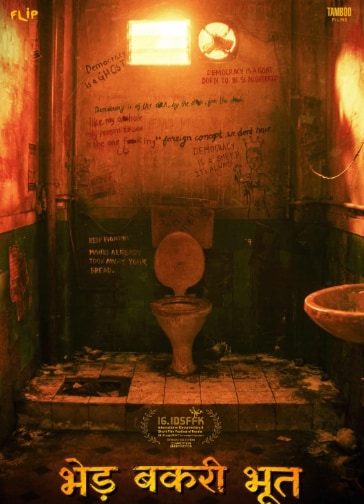
Filmmaker and writer Shivam Shankar calls Anurag Kashyap his “teenage hero”, and his short film Bhed Bakri Bhoot carries hints of the filmmaker's dark, witty, and unabashedly raw world. The film, which is now streaming on YouTube, had a successful festival run, including Best Short Film at IIFSA Toronto and Best Indian Short Film at Yellow Stone.
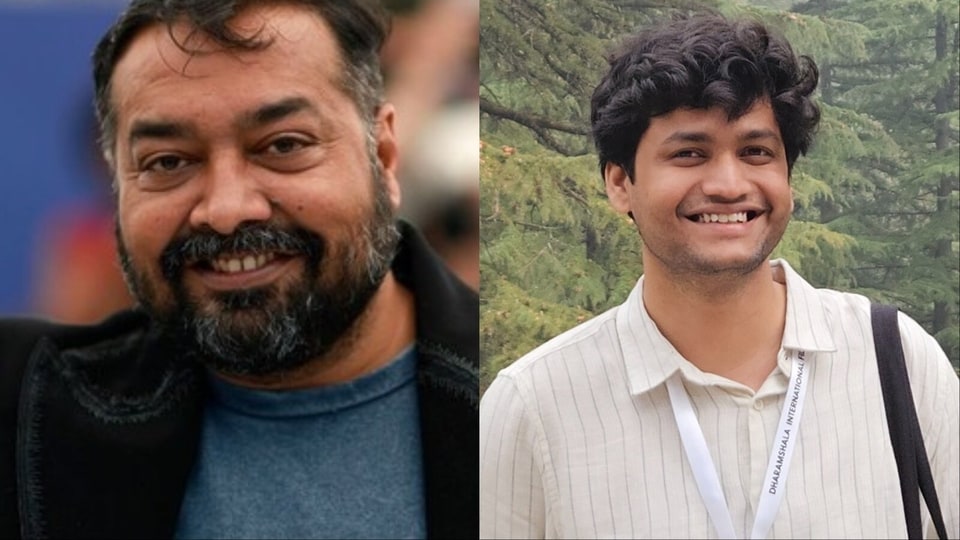
In a recent interaction with Hindustan Times, Shivam spoke about how a single Instagram message helped him land a job with Anurag Kashyap, how young filmmakers like himself view their audiences, and why he believes Hanuman Ansh benefited from its small budget.
Excerpts:
How did this idea to set a film in a public washroom come to you?
The germ initially came from the urge to make a short film because that is where we can practice direction as a medium. As a new filmmaker, there are a lot of restrictions that we have to respect. We have to limit the film to a single place. I had written films set in a flat and a restaurant. But that was not really exciting. Then this idea came -- why not set something in a washroom, because that is a public place where people of different class, culture collide. I think it's a very modern Indian aesthetic that we ignore. While researching, I came across a few short films that are already set in a washroom. So, it was like people have attempted this setup as well. Also, I read in a book that had a very beautiful line -- 'More revolutions have happened on the walls of toilets than in parliament.' That is how it began.
As a young filmmaker, are you wary of expressing your thoughts in today's easily offended climate?
I don't think so. It really comes from a lot of naivety. You are not thinking of the consequences when you are 25. It also was a lot of innocence, and obviously, my intent was never to attack someone. There is no direct attack on someone. I'm really trying to have a conversation about the country. So there is a left side; there is a right side. Between both of these walls, I really wanted to talk about democracy. The idea was never to attack any religion, any person, any caste, creed, nothing. It was simply that I wanted to have a conversation. Do I understand the complete politics of this country? No. Maybe I am still on the way.
When I was writing this, I was very aware that I could not reach a conclusion. All I was trying to do was between all this chaos, between all these sides, the state of the place is getting degraded every day. What are we doing about that? The change begins with us. If you see in the entire film, no one even cleans one aspect of the washroom. Everyone has a very strong opinion. So I as a filmmaker and writer, I took a step back and I didn't want to have an opinion but to reflect and put a mirror to what I have seen growing up.
Your audience embraces the violence of Mirzapur The Movie while also turning up for a spiritual story like Hanuman Ansh. How do you understand this diversity in their tastes?
My first thought is, 'Am I keeping the audience engaged?' Because only then can I have a dialogue and show them what I want to talk about. The second part is that I don't really want to sugarcoat, at least at this level. Because I was aware I was making a short film, I have a certain kind of freedom, and I am not a well-established filmmaker. I know the eyes are less on me. I take that responsibility of showing it in the purest form that I have seen it.
I was very aware while shooting this because, in the country I have grown up in, every other curse word is related to a woman. The film has a lot of a regressive approach in terms of abuses and a lot of sex references. I come from Bihar and I have seen that this is such a common thing on walls in this country. So I just wanted to paint a picture of what we see and ask: what are we doing about it? Did anyone even take a step to erase it? Because everyone had a medium to write on the wall, but no one erased it. In the end, everything was whitewashed. So that was the idea.
And then obviously, entertainment, because I wanted to be very loud and very subtle through the songs at the same time. These three aspects I was really trying to focus on while I was directing it and writing it.
You are from Bihar, where debates around vulgar songs and cultural identity have intensified, especially after the recent sexual assault case. What do you make of that contradiction?
Since childhood, I have seen a lot of good people in Bihar, but that's again another male privilege as a man in Bihar — I'm pretty sure it's not the case for women. But I feel if there needs to be a gaze on Bihar, it really needs to talk about the hypocrisy. Because the same people who are making so cheap songs, the same people are making devotional songs. I don't understand the audacity and the graph of it. What really are we promoting? Because Bihar is actually a very beautiful landscape. I also feel the regressive way in which we are trying to save our culture; that is the biggest reason our culture is diminishing. Maybe we should loosen it up a bit and let people be.
You call Anurag Kashyap your “teenage hero”. How did you eventually end up working with him?
I really like Anurag Kashyap as a person, because back when I was in Bihar, filmmaking was a far-fetched dream, but we could see someone from our roots doing something in the dream industry. So for a kid who was 16 or 17, that became hope that there is a possibility and a different kind of cinema that is being made. Entire India knows who started that seed of parallel cinema in modern times.
When I was approaching my graduation at the film school, I made a short film as our graduation project, and I made a very terrible film, and I deleted it. I was feeling very low, so one night I wrote him a text on Instagram — it was a very long text. And he was kind enough to reply that whenever you are in Mumbai, you can join me, so that is how it began.
You have worked in both commercial and parallel cinema. Where do you see yourself fitting in?
We cannot ignore the part that one really needs to sustain themselves in this city. Sometimes it's funny to me that we are doing creativity in the financial capital of this country. In my personal taste, I'm really trying to find my way between both commercial and parallel cinema. If you see Bhed Bakri Bhoot, it has a lot of indie/parallel sensibility but is told in a very commercial, mainstream way. People at film festivals have hooted for my film. I really want to tap an area where any class of person can see the film and enjoy it, without needing to be educated in art.
Hanuman Ansh has crossed ₹400 crore on a ₹2 crore budget. What do you think its success says about filmmaking?
I have not seen the film yet, but from my little understanding of the business, the budget was something that really worked for them. If you cut down the budget to the basics, there are chances that you can recover because the film was never loaded with vanity and financial burdens; that is why it bloomed.
What's next for you?
I'm completely focused on directing a thriller film that I have written and have been struggling to make for the last 3 years. But I am not giving up hope.
Bhed Bakri Bhoot is streaming on YouTube.

Get more updates from Bollywood, Taylor Swift, Hollywood, Music and Web Series along with Latest Entertainment News at Hindustan Times.


