
 E-Paper



Ricky Kej on upcoming India tour, says BTS should compete for Grammys' mainstream categories | Interview
In an interview with Hindustan Times, Ricky Kej discussed his India tour, the Grammys’ Asian music category, and making traditional Indian music more immersive.

 Prefer HTon Google


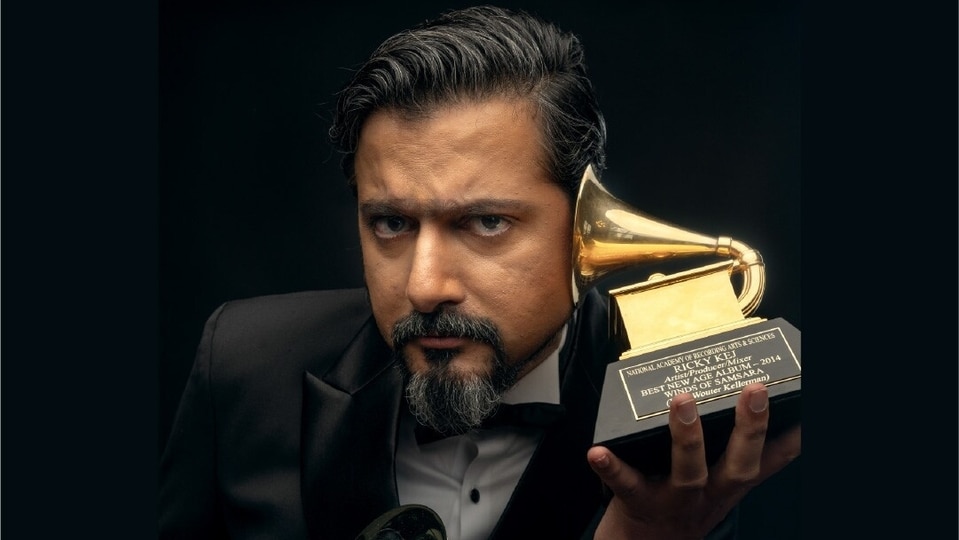
Three-time Grammy Award-winning composer and environmentalist Ricky Kej is taking his biggest Indian live show yet to audiences across the country. Titled DAMROOH – Dance To The Cosmic Spirit, the arena tour will bring together orchestral music, electronic sounds, Indian folk and traditional music with an immersive visual production.
The tour, staged in support of UNICEF, will travel across India between October and December 2026, with shows announced in Bengaluru, Delhi NCR and Mumbai, alongside upcoming dates in Ahmedabad and Chennai. Unlike a conventional concert, DAMROOH is designed as a fully seated symphonic experience, with Ricky bringing together a large ensemble of musicians and a production built around sound, visuals and technology.
The idea behind the tour comes from something much older than the technology that will power it. Ricky has built the show around the damru, an instrument closely associated with Lord Shiva and Indian spirituality. For him, it also connects naturally with the environmental themes that have been central to his music for years.
In an interview with Hindustan Times, Ricky spoke about why the damru became the starting point for the tour, his concerns about the way Asian music is represented at the Grammys, and why he believes traditional Indian musicians need to rethink the live concert experience.
Why the damru became the starting point
Environmental awareness and sustainability have been at the centre of Ricky’s work for much of the past decade. With DAMROOH, he wanted to connect those ideas with something deeply rooted in Indian culture.
"For me, most of my music, you know, for the last 10 years has been about the environment. It's been about sustainability, positive social impact around those areas," Kej explains. "So the thing is that, for me, DAMROOH was a beautiful concept simply because it is the first sound of creation. And also it's an ancient sound very representative of Indian culture and most importantly, like you know, the damru is associated with the deity Lord Shiva."
For Ricky, the instrument's spiritual meaning also aligns closely with his interest in the environment and coexistence. "Lord Shiva is considered to be the protector of the five elements of nature and the embodiment of coexistence," he adds. "So all of that seamlessly came together, of you know, environmental consciousness and spirituality."
The scale of DAMROOH is considerably larger than a conventional orchestral concert. The show is being designed around a fully seated audience, a large ensemble and an elaborate production setup. That also means the musicians have to work with considerable precision to make the different elements of the performance come together.
Ricky on Asian music and the Grammys
Ricky’s perspective on the global music industry is shaped by his own Grammy journey. A three-time Grammy winner, including two wins forDivine Tides, he has experienced the awards from within rather than simply observing them from the outside. That experience informs his views on how Asian music is categorised and represented at the Grammys, particularly amid the discussion around the newly introduced Asian Pop category and BTS submitting their album ARIRANG for consideration.
Ricky questions whether region-specific categories can truly capture the enormous diversity of music coming from the continent. "I feel that the people who advise the Grammys and the people who are probably sitting on these committees are people who are Asian people but they are but they've lived in America all their lives so they are very much entrenched within the American system of the music industry rather than understanding ground realities that are in Asia because they've overlooked so many things," he notes.
For Ricky, the issue is not simply about K-pop or any one genre. He believes Asia's musical identity is far broader, encompassing Indian classical music, folk traditions, and music from several regions that do not necessarily fit neatly into a single category. He also feels that artists who have achieved worldwide recognition should be able to compete in categories that carry the same broad recognition and history as the Grammys’ established mainstream fields.
"If I were BTS and I were to submit my music for the Grammys, I would like to submit it in a category which has some historical significance, like Best Pop Album, Best Pop Performance, or Best Pop Group, you know, performance," Ricky says.
He draws on his own Grammy experience to explain why he prefers categories that are open to artists regardless of where they come from. He adds, "The categories which I won, they are mainstream categories like I won in best new age, which anybody from any region in the world can win that particular award, and similarly, I won for best immersive audio album, which also anybody can win because the immersive audio album I won against Christina Aguilera and The Chainsmokers."
The recognition has also changed the way Ricky approaches his own work. Having already received some of the industry's biggest honours, he says he no longer feels the same need to seek outside validation before making creative choices. He says, "I do not need to prove myself in any possible way, you know, because I can just do whatever I feel like doing when it comes to creativity and when it comes to music. I do not need to look for validation from anybody anymore."
Why Indian music needs to feel exciting on stage
Ricky believes India is slowly changing the way it views its own cultural heritage. However, he feels that years of associating Western culture with modernity or aspiration have affected how traditional Indian art forms are perceived. "We've been constantly taught that anything to do with our culture is uncool and anything the more Western we are, the cooler we are, but now things are changing, things are getting much, much better," he observes.
He points to Pandit Ravi Shankar to explain what he sees as the gap between recognising an artist's importance and actually engaging with their music. He says, "Even if I ask anybody on the street, everybody will acknowledge that he's one of the greatest musicians ever in the history of India... but you ask that same person who acknowledged that he's the greatest musician. You ask them to name one of his albums, and he's done more than 70. Nobody can name an album. And you ask them to name one of his songs. Nobody will be able to name a song."
For Ricky, this does not necessarily mean audiences are uninterested in traditional music. Instead, he believes the way the music is packaged and presented needs to evolve with audiences. A great musician can still deliver an exceptional performance, but Ricky feels that today's concertgoers increasingly expect something more from the music. That could include technology, visuals, storytelling and a stronger sense of occasion.
"Audiences right now are looking for experiences; they're not just looking at coming to an event and just listening to good music. They want an overall experience," he urges.
He believes traditional and classical musicians can benefit from collaborating with technologists and production companies to create shows that preserve the music's authenticity while making the overall experience more engaging. That is the space DAMROOH is attempting to occupy. The tour brings together Ricky’s interest in Indian traditions, technology, environmental consciousness and large-scale live performances, while using the damru as its central symbol.
What Ricky wants people to remember
For Ricky, DAMROOH is not only about creating a visually impressive concert. The larger ambition is to give audiences an experience that stays with them and, ideally, prompts them to think about the ideas behind the music.
The tour also gives him an opportunity to bring an Indian-rooted musical experience to audiences at a scale usually associated with international arena productions. With electronic music, traditional sounds, orchestral arrangements and immersive technology coming together, Ricky wants the concert to feel both contemporary and connected to its cultural roots.
As the tour travels across India, he hopes people leave with more than memories of the performance. "Not only are we going to give them a lasting experience which will last in their memories for a very long time," he concludes, adding, “But also something that they will think about for a very long time.”


Get more updates from Bollywood, Taylor Swift, Hollywood, Music and Web Series along with Latest Entertainment News at Hindustan Times.


