E-Paper



BJP’s state-by-state push for UCC raises a key question: Is it ‘uniform’ code?
Amit Shah wants UCC in all 21 NDA-ruled states by 2029. The state route is constitutional, but tribal exemptions and differing rules test what uniform means.

 Prefer HTon Google


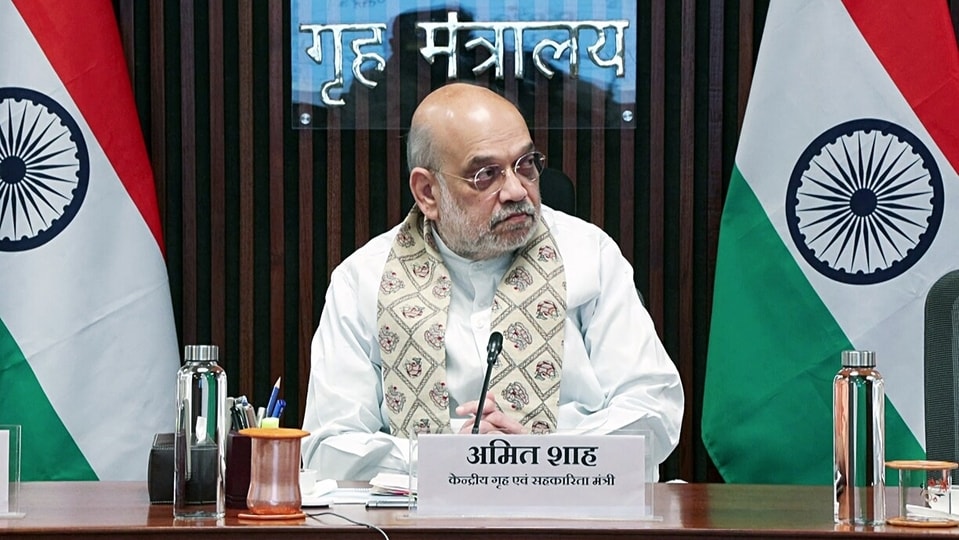
Union home minister Amit Shah’s announcement last week that the Uniform Civil Code (UCC) will be implemented in all 21 states governed by the BJP-led National Democratic Alliance (NDA) before 2029 was telling of how the party was pursuing one of its longest-standing ideological promises.
Instead of going through Parliament to enact a single national code, the Union government and states with BJP in governance were attempting to build a common civil-law framework one state at a time, beginning with Uttarakhand and now moving through Assam and Madhya Pradesh, with Gujarat preparing to follow.
The approach raises a fundamental constitutional question: if Article 44 speaks of securing a UCC “throughout the territory of India”, why is the project being pursued primarily through state legislatures?
What is UCC?
UCC is essentially a common set of rules governing personal civil matters irrespective of a person’s religion. These include marriage, divorce, adoption, maintenance, guardianship, inheritance and succession.
India currently does not have such a uniform regime. Different communities are governed by a combination of secular statutes and personal laws. Hindu personal law has largely been codified through statutes such as the Hindu Marriage Act, 1955 and the Hindu Succession Act, 1956. Christians and Parsis have separate marriage and divorce laws. Muslim personal law remains substantially uncodified, although the pre-Independence central legislature enacted laws such as the Muslim Personal Law (Shariat) Application Act, 1937 and the Dissolution of Muslim Marriages Act, 1939.
The constitutional basis for the UCC is Article 44, which states that “the State shall endeavour to secure for the citizens a uniform civil code throughout the territory of India”. But Article 44 is part of the Directive Principles of State Policy and is therefore not enforceable by a court. Article 37 expressly says that the Directive Principles are not enforceable, while also declaring them fundamental to the governance of the country and making it the State’s duty to apply them in making laws.
Article 44 sets out a constitutional objective, not a directly enforceable right to demand a UCC. The Supreme Court has repeatedly acknowledged the importance of that objective, but has also made clear that the choice of whether and how to achieve it belongs principally to the legislature.
Another crucial constitutional provision underpins state-led passage of UCC.
Entry 5 of the Concurrent List in the Seventh Schedule expressly covers “marriage and divorce; infants and minors; adoption; wills, intestacy and succession; joint family and partition”, as well as matters in which parties were historically subject to personal law.This means both Parliament and state legislatures have legislative competence over these subjects.
So, constitutionally, states are not trespassing into an exclusively parliamentary field by legislating on the UCC. The more difficult question is whether a patchwork of state-level codes can ultimately satisfy the constitutional aspiration of a uniform code across India.
Also read: Uniform Civil Code bills await President’s nod in Assam, Gujarat, Madhya Pradesh
What Supreme Court has said about UCC
The Supreme Court’s engagement with the UCC goes back at least to the landmark Shah Bano judgment of 1985. While dealing with a Muslim woman’s claim for maintenance, the court expressed regret that Article 44 had remained unimplemented and said a common civil code would help national integration by removing contradictions arising from different personal laws.
A decade later, in Sarla Mudgal Vs Union of India (1995), the court again highlighted the problems created by conflicting personal laws, particularly in the context of conversion and bigamy, and urged the government to reconsider Article 44. But it later clarified that the Sarla Mudgal judgment did not amount to a judicial direction to the government to enact a UCC.
In Ahmedabad Women Action Group Vs Union of India (1997), the top court declined to undertake a broad examination of discriminatory provisions of personal laws, treating the issue as substantially one of legislative policy. In Lily Thomas Vs Union of India (2000), it again made clear that the judiciary could not simply issue a direction enforcing Article 44 and that the legislature had to take the necessary steps.
The judicial position, therefore, has contained two seemingly competing strands: the court has repeatedly endorsed the constitutional desirability of greater uniformity while recognising the limits of judicial power in compelling Parliament to legislate.
This position resurfaced in a different form in March this year, when a bench headed by Chief Justice of India Surya Kant, while hearing a challenge to Muslim inheritance rules, suggested that a UCC could provide the legislative answer to gender discrimination in personal laws. The bench also cautioned against judicially striking down an existing personal-law rule without knowing what legal regime would replace it. The concern was pressing in relation to Muslim inheritance, where abolishing the statutory recognition of Shariat-based rules without a replacement could create a legal vacuum.
The bench’s broader message was consistent with the court’s earlier jurisprudence that courts can examine particular discriminatory practices, but sweeping reform of personal laws cutting across communities may ultimately require legislative wisdom rather than judicial legislation.
The Law Commission’s record also illustrates the unsettled nature of the issue. The 21st Law Commission, in its 2018 consultation paper on reform of family law, concluded that a UCC was “neither necessary nor desirable at this stage”, arguing instead for reform and codification of family laws to eliminate discrimination and inequality.
The 22nd Law Commission reopened the issue in 2023 and invited views from the public and recognised religious organisations. Its public notice did not result in a final UCC report before the commission’s term ended; and the 23rd Law Commission was constituted in 2024.
Why states are taking the UCC route
The answer lies partly in the constitutional distribution of legislative power and partly in political strategy.
Since personal-law subjects are in the Concurrent List, a state can enact its own law on marriage, divorce, succession and allied matters. But there is a constitutional complication where a state law conflicts with an existing parliamentary law.
Article 254 generally gives precedence to parliamentary legislation on a Concurrent List subject. However, under Article 254(2), a state law on such a subject that has been reserved for the President and has received presidential assent can prevail within that state, although Parliament remains free to subsequently override it.
This is why presidential assent has become an important part of the current UCC story. Uttarakhand’s Bill received presidential assent in March 2024, and the law came into effect on January 27, 2025. Its rules establish a framework covering marriage, divorce, inheritance, adoption and succession, among other matters.
The state’s experience has effectively become a prototype. Uttarakhand’s law goes beyond simply harmonising marriage or inheritance rules, it also regulates live-in relationships, including mandatory registrations. Those provisions have already generated constitutional challenges involving privacy, autonomy and the State’s intrusion into personal choices. The Uttarakhand high court has been seized of several such challenges. Petitions against different provisions of the state law are also pending before the Supreme Court.
In Gujarat, an expert committee headed by retired Supreme Court judge Ranjana Prakash Desai submitted its draft report in March 2026, recommending a common framework covering marriage, divorce, inheritance and adoption. The state assembly passed its UCC Bill in the same month, and presidential assent is awaited.
Assam and Madhya Pradesh have since followed. Assam’s assembly passed its UCC Bill in May this year amid objections over mandatory registration of live-in relationships and the exemption granted to Scheduled Tribes.
Madhya Pradesh passed its Bill in July, also providing for mandatory registration of live-in relationships and equal inheritance rights while excluding tribal communities. This Bill, too, has been reserved for presidential consideration.
The state-by-state strategy has an obvious political advantage. It allows the BJP to demonstrate a working model without first having to negotiate the formidable political and constitutional complexities of a single national law. It also permits different states to accommodate local variations, particularly tribal and customary practices, that make an identical code across India considerably harder to frame.
That flexibility could also be a vulnerability. If every state develops its own UCC, there may eventually be uniformity within states without uniformity across India. The Uttarakhand, Assam and Madhya Pradesh models already contain differences and exemptions, particularly for Scheduled Tribes.