
 E-Paper



11 more questions, caste, Aadhaar, mobile number, Covid-19 vaccine status: What’s new in Census 2027
A first nationwide caste count, new questions, and a two-phase rollout, what you should know before the enumerator arrives.

 Prefer HTon Google


India's Census will, for the first time since Independence, ask citizens their caste — and record it exactly as they state it, with no pre-set list to choose from.
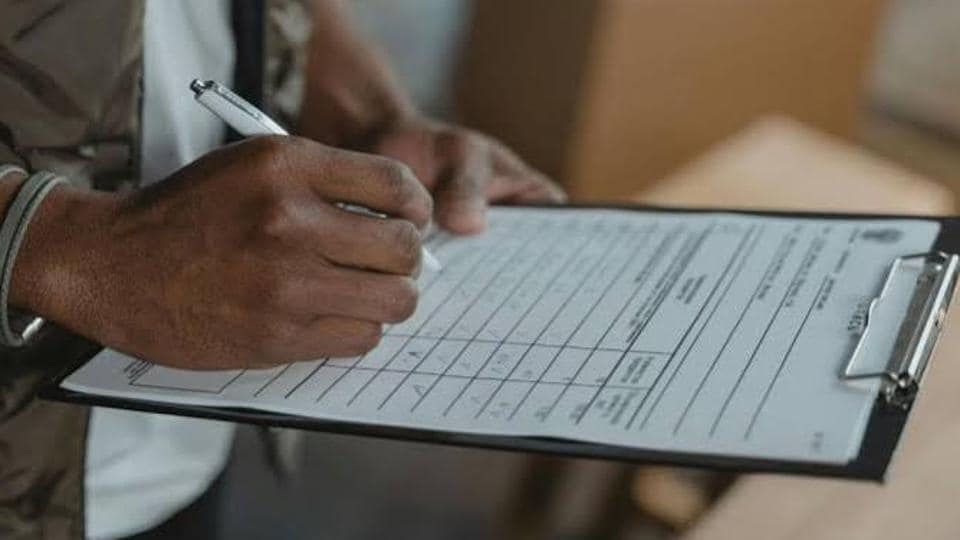
The Registrar General of India (RGI) on Friday notified 40 questions for the population enumeration (PE), the second and final phase of Census 2027.
Self-enumeration for the phase begins on Monday, August 17, in Ladakh and the snowbound areas of Jammu and Kashmir, Himachal Pradesh and Uttarakhand — regions where winter forces an early start.
Enumerators will follow up door-to-door from September 1 to 30. The rest of the country will be counted in February 2027.
Forty questions
Caste is question 10 on the household schedule, clubbed with the query on Scheduled Caste/Scheduled Tribe status. Census officers have been instructed to record whatever caste a respondent declares, rather than tick it off a prepared list — a format that was also used in the 2011 Socio-Economic Caste Census (SECC).
The number of questions has grown each decade: 22 in 1981, 23 in 1991, 23 again in 2001, and 29 in the last full Census, in 2011.
This round adds 11 more.
The decision to count caste came from the Cabinet Committee on Political Affairs on April 30 last year, ahead of the Bihar assembly election, when the Opposition had made a caste census its central demand. A state-run caste survey in Bihar had found backward communities made up nearly two-thirds of its population, intensifying pressure on the Centre to conduct a national count.
The Bihar and Telangana caste surveys had each used a pre-prepared, state-wise list of castes that respondents simply ticked one off. Census 2027 does not.
Also read: Centre notifies 40 questions for Census Phase 2 starting next month
What else is new?
Several questions have never featured in the Census before.
Enumerators will now ask for a respondent's mobile number, Aadhaar number and Voter ID, where these exist, along with passport numbers and driving licence status. They will also record where a person received their Covid-19 vaccination and how many bank accounts they hold.
The broader questionnaire covers the familiar questions on name, sex, date of birth, marital status, religion, mother tongue, disability status, migration history and permanent address.
On education and work, the Census will ask about literacy — including digital literacy — school attendance, highest qualification, occupation, industry type and whether a person worked in the past year.
Married, widowed, divorced and separated women will additionally be asked how many children they have had, including how many were born in the past year.
This is also the first Census conducted through a dedicated mobile app rather than paper forms alone, though the door-to-door model remains intact for anyone who has not self-enumerated online.
How the count is being run
Census 2027 unfolds in two stages.
The first, house listing and housing operations (HLO), ran from April 1 to September 30 and mapped every structure, house and household in the country against 33 questions on living conditions — drinking water source, toilet access, cooking fuel, internet and vehicle ownership among them.
By late June, HLO had been completed in 23 states and Union territories, with Kerala, Nagaland, Himachal Pradesh, Gujarat, Jammu and Kashmir, Ladakh, Puducherry and Uttar Pradesh among those still running field operations.
Delhi's HLO phase began on April 16, split into separate 30-day windows for areas under the NDMC and Delhi Cantonment, and under the Municipal Corporation of Delhi.
Both phases offer a self-enumeration option – residents can log onto a dedicated website, answer the notified questions themselves and generate a code, which they then hand to the enumerator who visits for verification. The step was designed to cut down the time spent at the doorstep.
States and Union territories were each given a 15-day self-enumeration window followed by a 30-day field-visit window to complete HLO between April and September.
The reference date for the Census — the point at which all the data collected is treated as valid — is March 1, 2027, for most of the country. Ladakh and the snowbound, non-synchronous areas of Jammu and Kashmir, Himachal Pradesh and Uttarakhand — counted early because of weather — will instead use October 1, 2026, as their reference date.
Also read: Ladakh to lead Census race, complete enumeration by September
Why it has taken this long
Census 2027 was originally due in 2021 but was postponed because of the Covid-19 pandemic, making this the first count in 16 years. The last Census was held in 2011.
India's map has changed in this time period — Telangana was carved out of Andhra Pradesh in 2014, Jammu and Kashmir and Ladakh became separate Union territories in 2019, and Dadra and Nagar Haveli merged with Daman and Diu.
The government has budgeted an expenditure of ₹11,718 crore for the country’s eighth Census since Independence.
While field data collection is due to conclude by March 1, 2027, the Registrar General's office has said collating and publishing the final results will take a further two to three years.


