
 E-Paper



Home visits for flagged voters, ECINet review and Form 7 cap — SIR changes since ECI controversy broke
Since a report of dissent by two election commissioners, the ECI has eased SIR hearings, ordered an ECINet review and capped Form 7 objections.

 Prefer HTon Google


The Election Commission of India (ECI) has dropped a contested declaration from the online voter-registration form in states where the Special Intensive Revision (SIR) of electoral rolls has ended, ordered a review of the software that runs its voter database and eased hearings for voters flagged during the SIR. The changes have come in the weeks since news emerged that two of its three commissioners had objected on record to some SIR-related decisions allegedly taken without their knowledge.
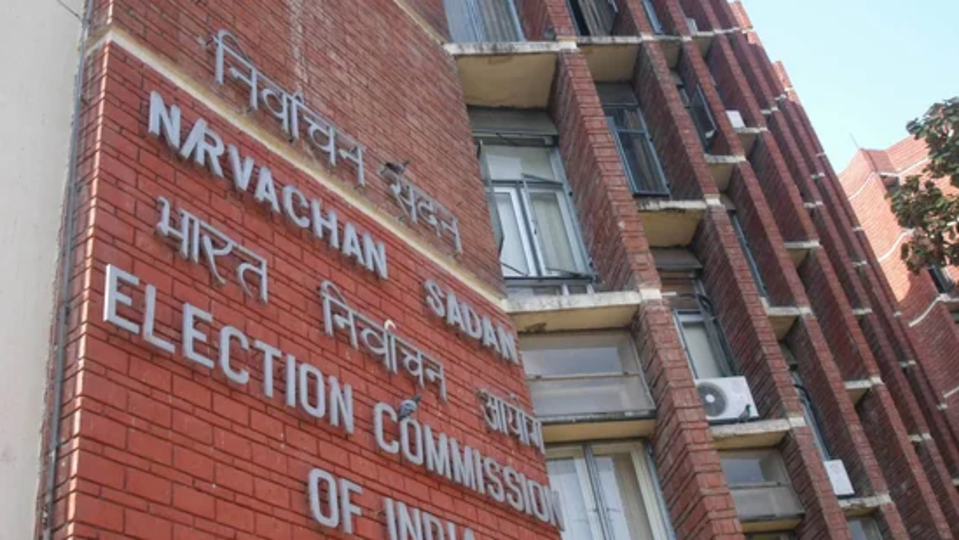
The Indian Express reported on September 23 that election commissioners Sukhbir Singh Sandhu and Vivek Joshi had objected at least 14 times over 10 months, four times on a single day, to decisions and some orders they said were issued without their knowledge or approval. According to the report, the objections concerned new voter registration, the deletion and restoration of names, and the custody and security of the electoral roll. Those objections were also copied to chief election commissioner Gyanesh Kumar.
The ECI's response, issued the same day, said disagreements during internal deliberations were part of its standard decision-making process and that all decisions of the full commission over the past year had been unanimous. It said its digital platforms, including ECINet, operate under strict data security protocols, and officials defended the Form 6 declaration as legal.
Three days later, the commission issued a press note announcing the first of the changes. A look at the changes announced since:
ECI's internal functioning
The September 26 press note, issued "with the approval of the full Commission" after a meeting of all three commissioners, said agendas will now be circulated before every commission meeting and minutes issued afterwards. All directions from the commissioners to officers "shall be meticulously complied with". Foreign travel by officers will need the commission's approval, and new IT modules and portals will go to the Committee of Officers before the commission approves them.
The Express also reported that Sandhu and Joshi wrote separately to the cabinet secretary, objecting to a change in work allocation that, in effect, removed a layer of oversight over the IT backbone of the electoral rolls. The ECI said the letter "was not related to any policy matter of the Commission or IT division but related to working of an officer on deputation to ECI". The officer's orders "were not actually implemented after the orders of the two Commissioners”, it said, and the deputy election commissioner's oversight of the IT division "was never actually withdrawn".
ECINet and Form 6
A committee headed by the senior deputy election commissioner, with an independent expert from IIT/IIIT, will review ECINet, the ECI's online platform for managing electoral rolls, "to double-check that it complies with the provisions of the Acts and Rules", and report to the commission. The ECI said field officers have role-based access to the platform in line with their statutory powers.
Form 6 is the application for enrolling as a voter for the first time, prescribed under the Registration of Electors Rules, 1960. In July, the online version on ECINet gained a new declaration. It asked applicants whether they, or a parent or grandparent, appeared in the roll from the last SIR.
Joshi had warned on file in May that the form could not be changed this way without the government amending the 1960 Rules, and Sandhu agreed, according to the report. After the change went through, Sandhu recorded on August 13 that it was "unauthorised and illegal" and "must be removed immediately", the Express reported.
On September 26, the ECI said the Supreme Court had upheld the declaration for the SIR, and that outside the SIR period, the forms prescribed under the 1960 Rules will apply. This month, the Supreme Court – hearing a fresh clutch of petitions filed since – said it has neither approved nor disapproved any modifications to Form 6.
The declaration has since been removed from the online Form 6 in states where the SIR has concluded.
Form 7
On October 9, the ECI capped the number of Form 7 applications, the forms used to object to a name on the roll or seek its deletion, that one elector can file. The limit is 10 across the claims-and-objections period and five a month during continuous updating.
The order followed reports of bulk objections from Karnataka and Odisha. Before deciding an objection, the ERO must now hear the objector in person, record a separate statement for each form, and give the voter whose name is challenged a chance to be heard.
Online filing was already limited, as electors could file at most six Form 7 applications at a time, subject to disposal. But there was no number set for physical forms filed in bulk, and EROs dealt with such cases at their own discretion.
Notices and hearings
In the SIR, electors are mapped, or linked, to their own entry or a relative's entry in the roll from the last intensive revision, which in several states was held in the early 2000s. Those who could not be mapped, or whose records showed what the commission calls "logical discrepancies", were served notices and had to establish their eligibility before an electoral registration officer (ERO). They will no longer be called to the ERO's office.
Instead, booth level officers (BLOs) will collect their documents at home and upload them to ECINet for the ERO to decide. Hearings will be held only in exceptional cases, as decided by the ERO, and preferably online. An adult family member may attend on the elector's behalf. District election officers will also set up help desks and special camps for the homeless, labourers and people living in night shelters.
Special drive for left-out voters
In an October 1 letter to the chief electoral officers (CEOs) of all states and Union territories, the commission ordered a special drive for left-out and first-time electors. BLOs will compare the current roll with the pre-SIR roll, list the names missing from it, and visit those homes to help people file Form 6, covering 20 to 25 electors a week over about a month.
The SIR is complete in 20 states and Union territories, including Bihar and West Bengal, and the special drive and the reversion of Form 6 apply to them.
State-by-state accounts
Delhi: At the request of Delhi's CEO, the deadline for claims and objections has been extended to October 30, and the deadline for disposing of notices, claims and objections to November 30.
Maharashtra: The September 26 note extended the claims deadline to October 12. On October 12, the commission extended it again, to October 26. The disposal deadline stays at November 10, and the final roll will be published on November 16.
Goa: The Express had reported that 97 voters cleared by local officers were missing from the final roll. The ECI says 81 of them have now submitted Form 6, and the Goa CEO has been directed to facilitate their inclusion.


