
 E-Paper



India’s path to eliminating thalassemia through prevention and awareness
This article is authored by Dr Chandrakant Agarwal, president, Thalassemia and Sickle Cell Society.

 Prefer HTon Google


India finds itself at the crossroads of its journey in the field of health. Today, almost 45 million people in the country are thalassemia carriers. Annually, 15,000 children are born with thalassemia major. In other words, 15,000 children are born every year with a condition that could have been prevented. It’s not just about health care. It’s the story of families that are stretched too thin, children in hospital beds, and healthcare systems pushed to the breaking point.
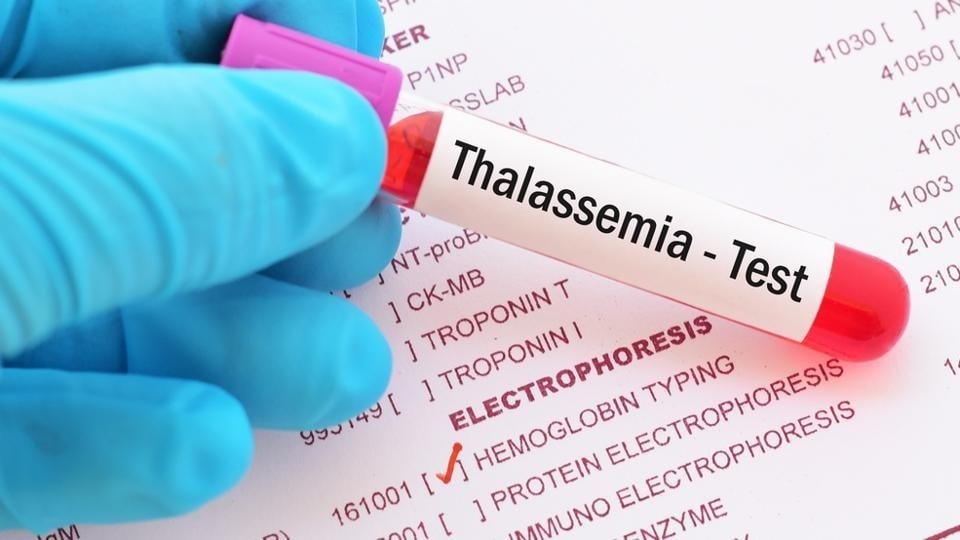
Thalassemia is a genetic blood disorder that influences the production of haemoglobin in the body. Looking at figures on paper, the carrier rate in the national carrier is 3 to 4%, though in some parts, it is much higher. What these figures point to are real-life families. Every single child with thalassemia major needs transfusions every 15-20 days and also undergoes lifelong chelation therapy in order to shed iron.
The only thing that's been proven effective as a treatment is a bone marrow transplant, but that's very pricey and most families can’t afford that. Some gene therapies are promising, but those are only options within a lucky few. Then there's just prevention, which is the best option at this point.
In other countries all over the world, nations such as Cyprus as well as Iran have completely changed the face of the struggle against thalassemia. This has been achieved by screening as well as awareness. India can also achieve this, in fact it can achieve even more. The best weapon in our arsenal lies in antenatal screening. Every pregnant women should be screened during antenatal visits. If the woman is a carrier, her partner should be screened as well. We will be able to screen at-risk pairs early in order for them to have a choice regarding whether new cases of thalassemia major can be prevented.
The positive change has already started. The Mahbubnagar district of Telangana is the first in India to have ensured 100% prenatal screening for pregnant women, with a further target of having no children with thalassemia major born in the district. Other states, such as Gujarat, Punjab, Maharashtra, Madhya Pradesh and Delhi, are also following suit. They have proved that with proper screening, counseling and awareness, it is possible to see satisfactory results at a large scale.
The National Health Mission is already in place and has given the framework. It emphasises the importance of antenatal screening, diagnostic centers, genetic counselling, making the population aware and improving the strength of blood transfusion services. It looks like the puzzle pieces are coming together. It is a matter of linking them together.
But within the next five years, we can realistically look towards a thalassemia-free future. Every pregnant woman should be screened as part of her routine practice. Within two years, we should be able to reach 80% coverage. At the same time, more prenatal diagnosis centers should be established, perhaps in every medical college and district hospital, particularly in high-risk areas. Genetic counsellors can guide families to make the right decisions compassionately.
Screening should not merely halt at antenatal screenings. In schools and colleges, adolescents should also be encouraged to undergo screenings as a normal health checkup. Once couples know their carriers prior to marriage, it is finally possible to put an end to the chain of transmission.
We should, however, enhance the blood ecosystem. Safe and effective transfusions, strong blood supply chains and affordable chelation therapies should be made a continued reality for those living with this condition. We could use a thalassemia registry to monitor those affected, resources and follow-through in a way that converts information into intelligent actions.
Research equally has to move ahead. India can be at the forefront in the development of inexpensive treatments. Through public-private partnerships, highly advanced treatments like bone marrow transplantation and gene modification can also become a reality for many people.
However, the battle for success cannot be won by science alone. The trick to making real progress is to have the entire community behind it. Prevention starts with talking and it’s done at the family level, the school level and the physician level. The community, the counsellor, the youth groups and the religious community can all have a part in the demystification and promotion of testing. This should be as simple as a blood test and the fear will completely melt away.
That future is within reach. The science is ready. The system is adapting. Now it’s about will and awareness. With clarity of purpose, collaboration and compassion, India can set an example for the world showing how smart health policy and human empathy can together change millions of lives.
This article is authored by Dr Chandrakant Agarwal, president, Thalassemia and Sickle Cell Society.


