
 E-Paper


‘Bhajji is clueless about jewellery, so I shop myself’: Geeta Basra
Geeta Basra shares her Dhanteras jewellery ritual,while Harbhajan Singh recalls memorable Diwalis and talks about passing family traditions on to their children

 Prefer HTon Google


For actor Geeta Basra, Dhanteras is the one occasion when she makes an exception to her otherwise limited interest in jewellery shopping. “I am not really a jewellery person, but if I have to buy something, then it’s always on Dhanteras,” she says.“I bought myself a mangalsutra last year, and the year before that, a delicate diamond-and-gold necklace. I like pieces that I can wear anytime, even every day,” says Geeta, adding with a laugh that her husband, former cricketer Harbhajan Singh, is “clueless about these things”, so she prefers choosing her own jewellery.
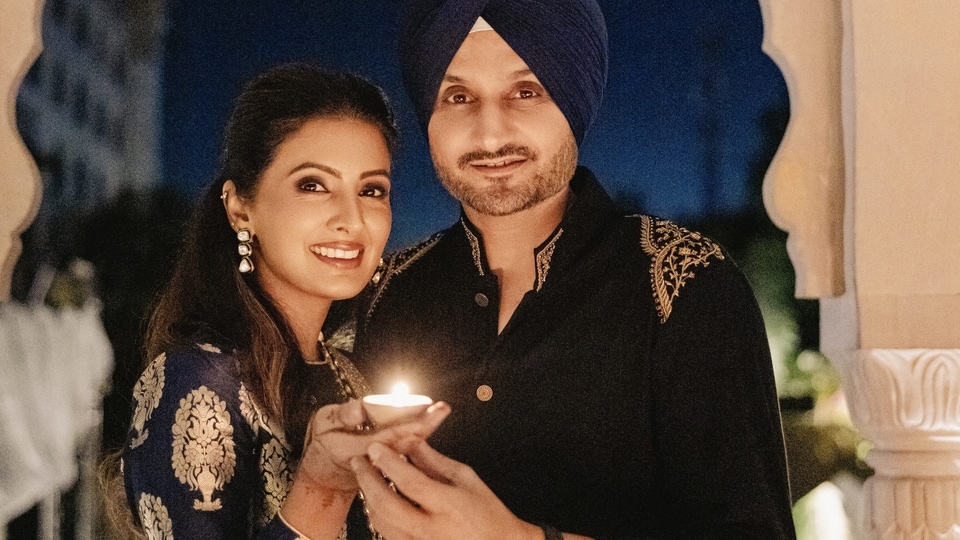
For the couple, Dhanteras also marks the beginning of celebrations that bring back memories of their first Diwali as a married couple in Jalandhar. “It was just a few days after our wedding. The whole family was together, the house was decorated, there was food, dhol, friends coming over and everyone dancing. It was a very beautiful Diwali,” recalls Geeta.
Having grown up in England, where Diwali celebrations were more intimate, Geeta says she has brought some of those childhood memories into her own home. She has also introduced a puja, while Harbhajan’s family follows the tradition of lighting the first lamp at the Gurudwara before lighting diyas at home. “We try and bring both together and celebrate both ways, cultures together,” she says.
“While Geeta says she takes barely 10 minutes to get ready, Harbhajan takes considerably longer. ‘I’m the one who’s up, ready, and getting all the arrangements done,’ she says, adding that he takes his own sweet time to get dressed.”
Harbhajan also shares some of the lesser-known rituals followed by his family during Diwali. “We make pakodas on that day. They say it is very important to light the mustard oil,” he says. Another custom involves placing a knife on the lamp and applying black kohl to the eyes to ward off the evil eye. These are the small practices, he suggests, that make the festival special for a family.
For Harbhajan, who sometimes spent Diwali away from home while touring with the Indian cricket team, the festival has also been about finding family wherever he is. Recalling one Diwali in Ahmedabad, when the team won a match and he scored a century, he says, “We missed festivals when we were on tour, but the team was like family. We would book an Indian restaurant and have a meal together.”
Now, the couple want their children to understand the meaning behind these rituals rather than simply see them as festive activities. “If they don’t see it, they don’t learn,” says Harbhajan. “We have to make them sit together for the puja so they understand why we do it and what the importance of Diwali is. This is our tradition, this is our culture. We don’t want to forget this.”
And while the festivities may involve shopping, food and decorations, Geeta believes the real wealth lies elsewhere. “I am grateful for my family, my children, my husband, my parents, our health and our home. Everything else is materialistic and secondary. This is my most important thing,” she says.


