
 E-Paper



From joint secretary-level meet to Indian Army chief’s visit to Ladakh: Latest updates on India-China border face-off
Experts have said that the restoration of status quo in the Finger Area on the north bank of Ladakh’s Pangong Tso will determine the success of efforts to cool tensions along the contested India-China border.

 Prefer HTon Google


The tension between India and China after the deadliest border clash in more than half a century, which left 20 Indian Army soldiers dead in Galwan Valley in eastern Ladakh last week, is still simmering.
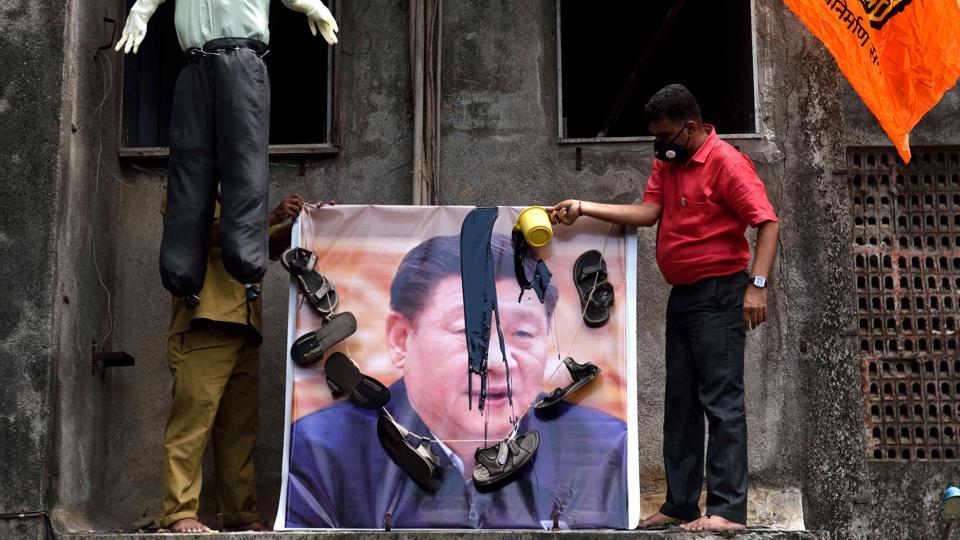
Both the countries have held several meetings to resolve the confrontation along the Line of Actual Control (LAC). Another meeting will take place on Wednesday.
Here are the latest updates on the border row:
* Members of the Working Mechanism for Consultation and Coordination on India-China border affairs (WMCC) will meet and attempt to resolve the stand-off at four points in east Ladakh.
* During the joint secretary-level WMCC meeting, the Indian side will have maps and charts ready and revoke to old treaties to make their point about how the claim by the People’s Liberation Army (PLA) on the border is wrong and why the status quo ante must be restored for a strong bilateral relationship.
* Indian Army chief General MM Naravane, who is on a two-day visit to Ladakh, will go to forward locations in the eastern Ladakh area on Wednesday, according to news agency ANI. Gen Naravane will also interact with troops on the ground there, ANI reported.
* ANI has also reported, citing US intelligence assessment, that a senior Chinese general authorised his forces to attack Indian troops in the Galwan River valley last week, resulting in a brutal skirmish that killed dozens and dramatically escalated tensions between the two neighbours.
* Before Wednesday’s talks, an 11-hour meeting between top commanders at Moldo on the Chinese side of the LAC was held on Monday to cool tensions and thin the military build-up on both sides of the border. Indian and Chinese military commanders reached a “mutual consensus to disengage” from all “friction areas” along the contested LAC.
* Experts have said that the restoration of status quo in the Finger Area on the north bank of Ladakh’s Pangong Tso will determine the success of efforts to cool tensions along the contested border.
* PLA has set up permanent bunkers, pillboxes and observation posts between Fingers Four and Eight and getting it to pull down those structures and move back to their original positions at Finger Eight will be the toughest part of the disengagement process, said an official asking not to be named. The Finger Area refers to a set of eight cliffs jutting out of the Sirijap range that overlooks the Pangong Lake.
* India has increased technical drone surveillance of the area and the Indo-Tibetan Border Police (ITBP) has inducted more battalions into the sector to support army along the LAC.
* India has also deployed its specialised high-altitude forces along LAC to repel any transgression in the western, middle or eastern sectors, officials have said.
* The violent face-off in the Galwan Valley resulted in 20 deaths on the Indian side and the PLA suffered 43 casualties, according to Indian officials, but Beijing has not confirmed the fatalities. A Chinese spokesperson on Tuesday dismissed such reports as “fake news”.
* China had deployed up to 10,000 troops in these areas with the military buildup including fighter jets, helicopters, tanks, artillery guns, missile systems and air defence radars. India has matched the neighbour’s military moves.


